

Australia ATC Staffing Shortage Disrupts Sydney Flights
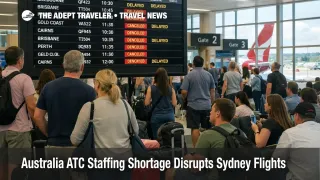
A sharp air traffic control staffing shortfall is disrupting flights across Australia, with the most visible impacts at Sydney Kingsford Smith Airport (SYD). On January 15, 2026, airlines canceled at least 25 flights after Airservices Australia imposed longer separation intervals between aircraft to maintain safety with fewer controllers on duty. Those measures effectively cut runway throughput, triggering rolling delays that have continued into the following days during Australia's peak summer travel season.
The immediate change is not a technical failure or weather event, but a human capacity constraint. With fewer qualified controllers available, Airservices Australia has limited how many aircraft can safely depart or arrive per hour. That reduction compounds quickly at a hub like Sydney, where tightly timed departure and arrival waves depend on precise sequencing to keep the network moving.
Who Is Affected
Travelers departing from or connecting through Sydney are the most exposed, particularly on domestic routes feeding Melbourne, Brisbane, and Perth. Passengers flying with Qantas, Jetstar, and Virgin Australia have seen cancellations and extended delays, with airlines urging customers to check flight status frequently and allow extra time at the airport.
The impact is not confined to Sydney alone. When flights are canceled or delayed at a primary hub, aircraft and crews arrive late or out of position at secondary airports. That ripple raises the risk of further cancellations later in the day in cities that were not initially constrained by ATC staffing. International passengers are also affected, especially those relying on domestic connections to reach long haul departures.
What Travelers Should Do
Travelers scheduled to fly through Sydney in the coming days should add buffer time wherever possible, especially if holding separate tickets or short connections. Early morning departures tend to be less exposed to cascading delays, while afternoon and evening flights carry higher risk as the system absorbs earlier disruptions.
If a trip is discretionary, consider shifting travel to a different day while airlines still have flexibility to rebook without heavy penalties. For essential trips, monitor airline apps and SMS alerts closely and arrive earlier than usual, as gate changes and last minute retimings are more likely when capacity is constrained.
Over the next 24 to 72 hours, watch for updates from airlines and Airservices Australia regarding staffing levels and any temporary traffic management initiatives. A return to normal schedules depends less on weather and more on whether enough controllers can be rostered to restore standard separation intervals.
How It Works
Air traffic control staffing directly determines how many aircraft can safely operate in a given airspace. When staffing falls below planned levels, controllers must increase the distance and time between aircraft to maintain safety margins. Each additional minute between movements reduces total runway capacity, even under clear skies.
At a major hub, that first order reduction at the runway quickly propagates. Flights miss their departure slots, crews approach duty time limits, and aircraft rotations slip. Downstream, airlines face fewer recovery options because later flights are already full in peak season. Hotels near airports, ground transport providers, and even international schedules feel the second order effects as delays spread through the network.