

Guatemala State of Siege Risks Guatemala City Transfers
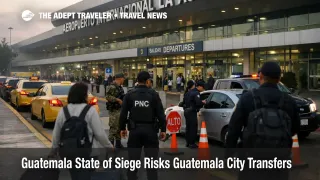
Guatemala has declared a nationwide 30 day state of siege after coordinated gang violence, including attacks on police in Guatemala City. Travelers are most likely to feel the change as heavier security presence, faster shifting road conditions, and more frequent checkpoints that can add friction to airport transfers and intercity moves. If your itinerary relies on tight ground timing, especially a same day arrival then onward transfer, plan now for longer drive times, more screening, and short notice reroutes.
The practical traveler issue is not paperwork, it is predictability. A state of siege expands the government's powers to restrict certain civil liberties and to accelerate security operations, which can translate into sudden traffic controls on major corridors and more stops for identification checks. Reporting on the declaration links it to prison unrest and retaliatory gang attacks, with visible military and police patrols in the capital and wider precautionary steps such as school suspensions.
Who Is Affected
Travelers transiting La Aurora International Airport (GUA) are the most exposed to operational knock on effects because even modest road friction can turn a normal transfer into a missed departure. This includes early morning international departures, late evening arrivals, and any itinerary that assumes a short hop from the airport to a hotel, a bus terminal, or a domestic check in window.
Visitors heading onward by road to Antigua or Lake Atitlán should treat the first day as the highest risk segment. When authorities increase patrols and checkpoints, traffic compression often concentrates at choke points, and detours can push vehicles onto slower urban routes. That is where second order impacts show up, missed tours, abandoned shuttle departures, and unplanned hotel nights while travelers wait for conditions to stabilize.
Travelers flying onward to Flores for Tikal face a different failure mode. If road conditions delay the inbound airport transfer, you can miss the domestic flight, then lose a same day tour pickup on the Flores side. Because these small chains are tightly timed, a single delay at the front of the trip can cascade into multiple rebooks, and extra costs.
If you want a baseline for Guatemala's pre existing risk posture and why road disruption already matters, see Guatemala Travel Advisory, Level 3 for U.S. Travelers for how advisories frame crime risk, roadblocks, and airport access planning.
What Travelers Should Do
If you are arriving into Guatemala City today or within the next 72 hours, increase your transfer buffer immediately. For departures, aim to reach La Aurora early enough that a surprise checkpoint or gridlock still leaves you time to check bags and clear security, and for arrivals, avoid stacking a fixed time commitment right after landing.
Use a decision threshold instead of hoping conditions cooperate. If your onward plan requires a tight same day connection, for example landing then driving to Antigua for a late check in, or landing then catching a domestic flight to Flores, rebook or add a contingency night in Guatemala City when your margin is thin. The point is to trade a planned cost for avoiding a messy chain of missed reservations.
Over the next 24 to 72 hours, monitor official advisories and credible local updates for changes in enforcement posture, including any expansion of checkpoint activity on major arterials and any new restrictions on movement or public gatherings. U S Embassy security alerts around the initial violence, including temporary shelter in place instructions for personnel, are a useful signal that conditions can change quickly even when airports remain open.
For a recent example of how emergency decrees in Guatemala have translated into real road travel friction outside the capital, Guatemala Emergency Decree Disrupts Sololá Roads shows how checkpoints and sudden closures can become the actual trip breaker, not the headline itself.
How It Works
A state of siege is a formal legal switch that gives authorities broader latitude to restore public order for a limited period, including restricting specific constitutional rights and accelerating detentions and searches. In this case, government and media explanations of the decree describe restrictions that can include limits tied to movement, assembly, and related liberties, alongside faster operational coordination between police and the military.
The first order travel impact starts at the source, concentrated security operations and heavier patrols in and around Guatemala City following gang attacks and prison related unrest. That posture tends to spill outward into traffic control decisions, ad hoc checkpoints, and intermittent congestion on the corridors travelers rely on, including airport access roads.
The second order ripple hits the travel system's timing math. When transfers become slower or less predictable, airlines see more late arrivals at check in, more misconnects, and more rebooking requests, even if flights operate normally. Hotels then absorb extra unplanned nights when travelers decide not to move onward late in the day, and tour operators face no show volatility when guests arrive hours behind schedule or choose to postpone departures. That cascade is why the right planning move is not panic, it is building slack into the itinerary so a checkpoint becomes an inconvenience rather than a trip ending event.
Sources
- Death toll from Guatemala gang attacks rises to nine police officers
- Death toll rises to 10 in gangsters' attacks on Guatemalan police as state of emergency is declared
- Security Alert: January 18, 2026, U.S. Embassy in Guatemala
- Security Alert Update: January 18, 2026, U.S. Embassy in Guatemala
- Estado de sitio en Guatemala: 5 respuestas para entender el Decreto Gubernativo 1-2026
- Travel advice and advisories for Guatemala