

Mayon Volcano Daraga Flights Canceled By CAAP NOTAM
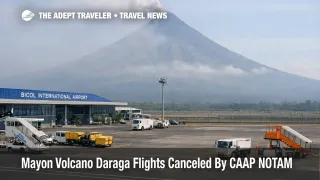
Air access into Albay tightened after the Civil Aviation Authority of the Philippines (CAAP) extended a Notice to Airmen (NOTAM) restricting flight operations near Mayon Volcano. Travelers headed to the Legazpi and Daraga area, including those arriving from Ninoy Aquino International Airport (MNL) and Mactan Cebu International Airport (CEB), are the most exposed to rolling cancellations and limited reaccommodation options. The practical next step is to treat Bicol arrivals as time sensitive, reroute early when seats exist, and build a buffer night if you have a fixed tour start.
The Mayon volcano Daraga flights canceled pattern matters because the NOTAM window can remove multiple departures from the schedule at once, which reduces same day backup options and pushes travelers into either later flights, or overland substitutes that do not match airline block times.
Who Is Affected
Travelers flying into Bicol International Airport (DRP) for Albay hotels, Mayon viewpoints, and Bicol region tours face the most immediate disruption, especially when plans assume a same day airport arrival followed by a timed pickup, a fixed check in cutoff, or a prepaid excursion the next morning. When multiple sectors cancel in a narrow window, the problem is not just the canceled flight, it is the shortage of replacement seats on the next departures and the knock on effects as aircraft rotations and crews get out of position.
Families and small groups are especially likely to feel the squeeze because rebooking availability often reappears as single seats across scattered flights, while tour operators and hotels may hold stricter penalties for late arrival in peak occupancy weeks. Travelers on separate tickets, for example an international arrival into Manila followed by a separate domestic ticket to DRP, carry higher misconnect risk because airline protection is weaker across disconnected itineraries.
The NOTAM driven restriction is also a reminder that this is an aviation safety system reacting to volcanic risk, not a routine airline schedule adjustment. CAAP has issued repeated volcano related advisories, including earlier notices that specified vertical limits from the surface up to 11,000 feet around Mayon, and guidance to avoid flying close to active summits.
What Travelers Should Do
If travel is within the next 24 hours, shift from waiting to seat hunting. Look for a single ticket reroute that keeps your flights under one airline booking reference, and accept earlier departures even if they are less convenient, because later waves tend to be the first to collapse when the day is already behind. If you must stay on the same dates, price the cost of one buffer night in Manila against the cost of last minute private transfers and missed hotel nights in Albay.
If you have a fixed tour start date in Albay, set a decision threshold. When you see multiple cancellations into DRP, or when the next available replacement seat pushes arrival past mid afternoon, it is usually smarter to rebook to the next morning and protect the tour, rather than trying to force an overland transfer that arrives late, tired, and vulnerable to road friction. Overland trips from Metro Manila are long even in ideal conditions, and demand spikes can make reliable vehicles scarce at the exact moment travelers need them most.
Over the next 24 to 72 hours, monitor three things in parallel, the CAAP NOTAM time window, credible local reporting on flight assistance at DRP, and any escalation language around Mayon activity that could extend restrictions again. If you are building a wider Luzon itinerary, treat Albay as the flexible segment and lock the harder to change pieces, like international departures and nonrefundable island connections, only after air access looks stable.
For related context on how volcanic hazards can propagate through flight networks, see Mayon Volcano Albay Alert Level 3 Limits Access and Bali Flight Cancellations After Mount Lewotobi Eruption: What Travelers Need To Know.
How It Works
A NOTAM is the aviation system's way of pushing time bound hazard information to flight operators, dispatchers, and pilots, and volcano related NOTAMs often specify both a lateral avoidance area and a vertical limit, because ash, gas, and ballistic fragments can be hazardous to aircraft even when an airport is physically outside the immediate danger zone. When Mayon activity prompts a restriction window, airlines may cancel sectors that would intersect the protected airspace, or they may retime flights to operate when conditions, routings, or safety margins are acceptable.
The disruption then propagates through the travel system in layers. First order effects are immediate capacity loss and last minute cancellations into DRP, which compress rebooking options and increase the odds that travelers arrive a day later than planned. Second order ripples spread into ground transport, as travelers shift to buses and private vans out of Manila, tightening supply, raising prices, and increasing the chance of missed hotel check ins. A third layer hits the visitor economy, hotels juggle staggered arrivals and cancellations, tours lose guests who cannot position on time, and travelers who do arrive may shorten stays to preserve the rest of their itinerary.