

Severe Weather North Island Flights and Ferries Jan 21-22
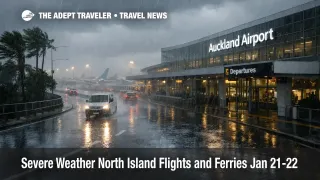
Heavy rain and strong easterly winds are driving a short fuse disruption window across parts of New Zealand's upper North Island, especially Northland, Auckland, and the Coromandel Peninsula. Travelers are most exposed if they are relying on Auckland Airport (AKL) for same day domestic connections, island ferries out of central Auckland, or coastal highway drives that have limited detour options. Treat today's plans as flexible, add time to airport transfers, and be ready to shift departures earlier, or postpone exposed road legs if warnings escalate or closures expand.
North Island severe weather flights are at higher risk because MetService has issued severe weather warnings and watches that highlight flooding, slips, and severe gale potential, with the most hazardous conditions expected to peak from Wednesday afternoon and evening into early Thursday morning in New Zealand Daylight Time. In practical traveler terms, that means operators may cut services late in the day, road access can fail quickly, and recovery can take longer than the rainfall peak because crews need daylight and safe conditions to clear debris and assess slips.
The most itinerary breaking change for Coromandel travelers is that State Highway 25 can become impassable with little notice. NZ Transport Agency Waka Kotahi reported SH25 closures between Discovery Drive and Simpson Beach, and at the SH25 intersection of Wade Road, which can leave Whitianga inaccessible from both the north and the south until flooding recedes. This matters even if your booking is not in Whitianga, because SH25 disruptions can cascade into missed accommodation check ins, broken tour routing, and late returns that collide with next day flights.
In Auckland, the combination of heavy rain, saturated ground, and strong winds increases the odds of localized surface flooding, fallen trees, and power or signal interruptions that slow airport access and harbor operations. MetService has also flagged that easterly winds may approach severe gale in exposed places, which is the kind of wind profile that often triggers ferry pier changes, speed restrictions, and cancellations when conditions cross safety thresholds.
Who Is Affected
Travelers in Northland, Auckland, Great Barrier Island, and the Coromandel Peninsula are the core exposure group, especially those moving on Wednesday evening, January 21, 2026, and overnight into Thursday, January 22, 2026, when warnings and watches overlap the most. Visitors driving to coastal towns, beach communities, and peninsula itineraries should assume some roads may be closed by flooding, slips, or fallen trees, even if conditions look manageable at the start of the day.
Air travelers are affected in a different way. When weather hits the upper North Island, small delays often become missed connections because domestic schedules rely on tight aircraft rotations and short turn times. The first order effect is a delayed departure or cancellation into or out of Auckland, but the second order ripple is that aircraft and crews arrive late for later sectors, which thins rebooking options and can force an overnight in Auckland even for travelers who were not originally planning to stop there.
Ferry passengers and day trippers, especially those using central Auckland harbor services, face meaningful timing risk because wind and swell decisions can change quickly. Fullers360 has already posted weather related operational changes for some services, which is a useful signal for travelers that pier assignments and timetables may not hold. Even when a sailing runs, load management and longer boarding windows can create a slow moving queue effect that pushes other connections later.
What Travelers Should Do
If you are traveling today or tonight, move your "no fail" item earlier and pad every transfer. Plan to arrive at Auckland Airport earlier than you normally would, because wet weather plus localized flooding can turn routine drives into stop and start traffic, and a single closure can force long detours. If you are ferry dependent, check operator alerts before you leave your hotel, and again just before you depart, because pier changes and cancellations often post close to sailing time when the latest wind observations come in.
If you are deciding whether to rebook or to wait, use a clear threshold tied to your exposure. If your itinerary includes SH25 segments on the Coromandel Peninsula, or any drive that must cross exposed coastal roads with limited alternates, postponing the drive is usually the safer choice once red warnings are in force or when closures have already begun, because recovery is uncertain and towing support can be delayed. If your flights are on one ticket and you have generous connection time, it can be reasonable to monitor and hold, but if you have a tight domestic connection through Auckland, or separate tickets, shifting to an earlier departure, or booking a later travel day, reduces the chance that one cancellation breaks the entire itinerary.
Over the next 24 to 72 hours, monitor three things, and act on the first one that worsens. Watch MetService warning updates for upgrades, extensions, and new wind messaging, and treat a red warning as a trigger to avoid non essential road travel. Watch NZ Transport Agency Waka Kotahi bulletins for new closures and the specific phrasing about access being cut off, because that is your signal that detours may not exist. Watch airline and ferry operator alerts for schedule trimming, because once services are cut, rebooking capacity tightens fast, and hotels in Auckland and regional centers can fill quickly.
How It Works
MetService severe weather warnings are designed to flag conditions that can cause disruptive, and sometimes dangerous, impacts like flooding, slips, and severe winds. The travel system effect starts at the source, rainfall rates and wind gusts that exceed operational thresholds, then propagates outward across transport layers.
For roads, the first order effect is flooding over low points, blocked culverts, and slips on steep cuttings, which can force immediate closures. The second order ripple is that closures funnel traffic onto a smaller set of routes that are not built for diversion volume, increasing travel times and crash risk. Once a peninsula corridor like SH25 is compromised, some towns become functionally islanded for travelers, which breaks same day hotel changes and pushes demand into the nearest larger center that still has inventory.
For aviation, heavy rain and wind can reduce arrival and departure rates, increase spacing, and slow ground handling. Even modest disruptions matter because domestic networks in New Zealand often run with limited spare aircraft and limited same day rebooking capacity outside peak seasons. When one aircraft rotation fails, later flights are exposed, and travelers can be rolled to the next day if there is not enough capacity to absorb the backlog.
For ferries, the decision is often about safety margins, berth conditions, and whether wind and swell make certain approaches unsafe. When a harbor operator changes a pier, or cancels a sailing, the traveler facing effect is not only the missed crossing, it is the knock on delay to tours, dinner bookings, and next day flights that assumed the crossing would run. That is why travelers should treat ferry segments as fragile during severe wind watches, and build buffers that allow for a same day plan B.
Sources
- Latest MetService Weather Warnings And Watches
- Weather Warnings And Watches
- NEMA Advice, Red Weather Warnings Are Serious Business
- Flooding Closes SH25 Whitianga To Tairua
- Rangitoto Island 20 January 2026 All Sailings Pier Change
- Weather Alert, U.S. Mission New Zealand, Heavy Rain And Flooding
- Tāmaki Makaurau Weather, Stay Up To Date And Take Care
- Severe Weather In New Zealand's North Island Prompts Evacuations
- Solar Storm Australia New Zealand GPS Disruption Risk