

U.S. Immigrant Visa Pause, 75 Countries, Starts Jan 21
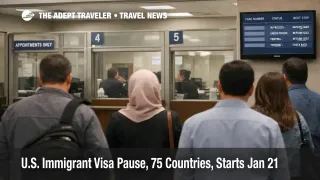
The U.S. State Department is pausing immigrant visa issuance for nationals of 75 countries, with the change taking effect January 21, 2026. The people most affected are family reunion and relocation travelers who had near term interview plans, medical exams, and travel bookings timed to visa issuance at a U.S. embassy or consulate. The practical next step is to keep your case progressing where possible, but replan any departure timeline that assumed a visa would be issued immediately after interview.
The U.S. immigrant visa pause changes the end of the consular pipeline, interviews can continue, but immigrant visas will not be issued to affected nationals while the pause is in place.
State Department guidance says immigrant visa applicants who are nationals of the listed countries may still submit applications and attend interviews, and posts can continue scheduling appointments, but no immigrant visas will be issued during the pause. The same guidance notes an exception for dual nationals who apply using a valid passport from a country not on the list. It also says the pause does not revoke already issued immigrant visas, and it does not apply to tourist visas because those are nonimmigrant visas.
For travelers, the real disruption is that consular processing often functions like a timed relay, interview, medical, final eligibility checks, visa issuance, then travel. When issuance is paused, every downstream booking that assumed a fixed move date becomes a floating problem, and costs accumulate quickly.
Who Is Affected
Applicants outside the United States seeking immigrant visas, meaning visas that lead to lawful permanent residence, are the core group. That includes spouses, children, parents, and other family based applicants, plus employment based immigrants whose start dates, housing, and school plans are tied to arrival. The State Department list spans 75 countries across multiple regions, and the pause applies based on nationality as described in the guidance, not simply where a person is interviewing.
Travelers who booked "one way, then settle" itineraries are usually the most exposed. Many families time lease start dates, school enrollments, and moving logistics to the expectation that a passport will return with the immigrant visa shortly after the interview cycle completes. Under this pause, the interview can still happen, but the expected trigger for travel, the issued immigrant visa, does not arrive on schedule.
A second group that often gets surprised is people routed to third country processing posts. In recent guidance, the State Department has emphasized interviewing in the consular district tied to residence, with limited exceptions, and it notes that existing appointments generally will not be rescheduled or canceled under that residence based framework. That matters because some applicants may be tempted to shop for faster posts, but the system is designed to limit transfers and preserve orderly scheduling through the National Visa Center.
What Travelers Should Do
Start with triage on money and timing. Stop any new nonrefundable commitments that depend on a specific U.S. arrival date, including one way flights, prepaid short term housing, movers, and school deposits, until you have clarity on when issuance might resume. If you already have bookings, move them toward refundable or changeable inventory where possible, and keep documentation of every fee or fare difference, because policies and waivers often depend on proof of disruption.
Next, separate the interview step from the travel step. State Department guidance indicates interviews and scheduling can continue even though issuance is paused, so skipping an interview automatically can create its own delay if you fall out of the scheduling queue. The decision threshold is practical, if attending the interview requires high cost international travel or time off work, and you cannot absorb a long wait after the interview with no visa issuance, you may be better off delaying the interview travel, but only if you can formally reschedule without losing your place. If attending is low cost, or you are already in the processing location, keeping the appointment may preserve momentum even if the departure timeline slips.
Over the next 24 to 72 hours, monitor three channels and treat rumors as noise. Watch the specific embassy or consulate handling your case for operational instructions, monitor the National Visa Center processes for any transfer or scheduling changes, and track State Department updates to the guidance itself. Also watch document timing, medical exam validity windows, police certificates, and passport logistics can become the limiting factor once issuance resumes, so build buffers now and be ready to refresh documents if the pause extends.
Background
Immigrant visas are issued through U.S. embassies and consulates abroad after a case clears multiple steps, usually document qualification, interview scheduling, a medical exam, and final eligibility checks. In normal operations, issuance is the moment the system converts an approved case into a travel ready passport, which is why travelers build entire relocation timelines around that step.
A pause at the issuance stage propagates through the travel system in predictable ways. First order effects show up at the source, applicants attend interviews but cannot receive visas, passport return timelines become uncertain, and planned departures slip. Second order ripples spread into airlines, housing, and regional travel demand. Airlines and long haul itineraries become harder to book efficiently because travelers avoid locking in dates without an issued visa, which can reduce seat predictability on certain corridors while increasing last minute demand when travelers finally get clearance. Housing markets near U.S. arrival cities can also see churn as families delay move in dates, extend temporary lodging, or cancel short leases, and those changes often cascade into school enrollment decisions and employer start dates.
There is also a congestion effect inside the consular system itself. When issuance is paused but interviews continue, cases can stack up in a holding pattern. When issuance restarts, posts may need to work through a backlog, and travelers should expect uneven release patterns by post, category, and document readiness. That dynamic is similar to smaller consular disruptions, such as a one day shutdown that forces appointments and passport returns to roll forward, as seen in Havana U.S. Embassy Visa Shutdown January 16, 2026, but at larger scale when a policy pause affects many nationalities across many posts.
Sources
- Immigrant Visa Processing Updates for Nationalities at High Risk of Public Benefits Usage
- Adjudicating Immigrant Visa (IV) Applicants in Their Country of Residence
- Trump administration to suspend immigrant visa processing for 75 nations
- US will suspend immigrant visa processing from 75 countries over public assistance concerns