

Fire Island Ferry Suspensions Disrupt Service Jan 25
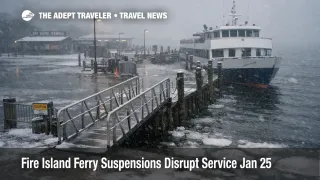
Fire Island ferry operators suspended passenger service as storm conditions and bay icing risk increased across the Great South Bay. Fire Island Ferries, based in Bay Shore, New York, announced that all passenger ferry service would be cancelled beginning Sunday, January 25, 2026, and continuing until further notice. The carrier also flagged freight impacts, with freight service suspended for Monday, January 26, 2026, while conditions are monitored and reassessed.
For travelers, the key operational reality is simple, when scheduled ferries pause, Fire Island becomes a last mile dead end for most visitors, and many residents, because the normal chain of rail or road to terminal, then ferry to community, breaks at the waterline. Even if flights are running and roads are passable on the mainland, the island side of the itinerary can remain inaccessible until operators confirm navigation is safe and docks can be worked.
Who Is Affected
The most directly affected travelers are anyone planning same day arrivals or departures to Fire Island communities served by Fire Island Ferries out of Bay Shore. Those routes include winter access to communities such as Kismet, Saltaire, Fair Harbor, Atlantique, Dunewood, Ocean Beach, Seaview, and Ocean Bay Park, all of which are listed in the operator's schedule navigation and service footprint.
Travelers heading to central Fire Island via Sayville should also plan for cancellations. Sayville Ferry Service serves Fire Island Pines, Cherry Grove, Sailors Haven and the Sunken Forest, and Water Island, and local reporting indicates the operator also announced service cancellations tied to the storm setup and ice risk.
This is not only a passenger movement problem. When freight or package movements are constrained, the ripple effects hit travelers in less obvious ways, such as delayed grocery replenishment for rentals, postponed luggage or bulk item transfers that travelers assumed would move as freight, and disrupted contractor or maintenance deliveries that can matter for longer stays. Meanwhile, as travelers re time plans on the mainland, parking lots, rideshare pickup zones, and nearby road links can see sudden demand spikes.
What Travelers Should Do
Travelers with same day departures to Fire Island should treat January 25, 2026, as a no go day unless an operator explicitly restores service, and confirms it for your specific route. Contact your lodging host or property manager before leaving the mainland, and align on a decision, either shift the trip, or add an extra mainland night, because "getting close" to the terminal does not help if the water leg is suspended. Keep essential medications, cold weather gear, and a simple overnight kit with you on the mainland in case service resumes later than expected.
For near term decision thresholds, rebook instead of waiting if your trip depends on a tight check in window, a one night stay, an event ticket, or a nonrefundable service on the island. In those cases, even a brief suspension can erase the value of the trip. If your plans are flexible and you can absorb an extra day, waiting can make sense, but only if you have a confirmed mainland fallback, and you are not relying on freight to move essentials. If you must travel, prioritize arrangements that keep you on the mainland until the operator posts a clear return to service notice for passenger runs, and for freight, if you need it.
Over the next 24 to 72 hours, monitor three things in parallel, the operator update pages, marine hazard messaging for the Fire Island Inlet and adjacent waters, and the practical state of the bay, especially icing that can linger after snowfall ends. Fire Island Ferries specifically cited anticipated snow accumulation and potential bay icing as the operational trigger. Marine forecasts for the local zones also flagged hazardous conditions, including warnings and advisories that can align with ferry safety suspensions.
Background
Ferry suspensions in winter storms often outlast the worst radar returns because safe operations depend on more than visibility. Ice formation can narrow channels, reduce maneuvering margins near docks, and slow loading and unloading even when winds ease. That first order hit, suspended sailings, immediately strands travelers on the wrong side of the bay and stops predictable arrival times for check ins, check outs, and connections back to the mainland.
The second order ripple spreads across at least two layers of the travel system. First, lodging gets pressured, as travelers add mainland nights near Bay Shore or Sayville, or lose island nights and attempt to rebook later dates. Second, ground transport demand shifts, as travelers compete for rideshares, taxis, and parking around ferry staging points, and as Long Island Rail Road riders concentrate into fewer viable arrival windows. When a broader regional winter event is also disrupting flights and highways, these local ferry outages can become the final constraint that prevents itinerary recovery even after airports begin to normalize, which is why travelers should pair local operator updates with wider storm monitoring, including related disruption coverage such as Winter Storm Fern US Flights, Waivers Expand Jan 23.