

Antarctica Pack Ice Frees Scenic Eclipse II
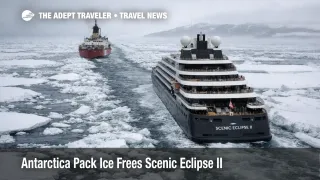
A Scenic Eclipse II expedition cruise in Antarctica encountered heavy pack ice in the Ross Sea, and the ship requested assistance from the U.S. Coast Guard Cutter Polar Star, a heavy icebreaker operating in the region. The incident matters most to passengers on expedition style itineraries where sea ice can slow transits and compress shore landing windows, and to travelers connecting flights and hotels around fixed embarkation and disembarkation times. If you are sailing Antarctica soon, build larger time buffers around your gateway flights, treat daily plans as adjustable, and keep documentation of schedule changes for refunds, insurance, and onward rebooking.
Scenic Eclipse II Pack Ice conditions meant the ship became beset in ice roughly eight nautical miles from McMurdo Sound, and Polar Star cut a path through the ice to help it reach open water on January 17, 2026. The Coast Guard said Polar Star made two close passes to break the vessel free, then escorted Scenic Eclipse II about four nautical miles until it reached open water.
The key traveler takeaway is not that an ultra luxury expedition ship is unsafe, but that "ice strengthened" is not the same as "icebreaker." Scenic Eclipse II is designed for polar cruising, but it is not built to continuously break thick, pressured pack ice the way Polar Star is. When the ice regime changes quickly, progress can drop from a normal transit speed to a crawl, which is where schedules start to fail, and where ship operators may coordinate with icebreakers already working in the area.
Who Is Affected
Guests currently booked on expedition voyages that operate near heavier sea ice, including parts of the Ross Sea and routes that may reposition near McMurdo Sound, are the most directly affected. Even when a ship can keep moving, slower speeds can force the operator to reorder landings, shorten time ashore, or cancel a planned stop to protect the rest of the itinerary.
Travelers planning fly cruise chains are the next group at risk, especially those using tight turnarounds with same day flights after disembarkation. A delay measured in hours at sea can turn into missed flights on land because many Antarctica itineraries rely on limited flight inventory and fixed transfer windows in gateway cities. If a ship returns later than planned, that can also create congestion at baggage handling, transfers, and check in counters, which then increases misconnect risk across the whole trip.
There is also a second order ripple across the operator network. When a ship loses time in heavy ice, it can affect crew flow, provisioning cadence, and the timing of pilots, tenders, and port services at the next planned call. That matters because expedition cruising runs on narrow weather windows, and once a schedule slips, it can be hard to "make up" time without trading off something else, like an evening landing, a scenic cruising segment, or a next day excursion slot.
What Travelers Should Do
If you are onboard or sailing imminently, assume the day's plan can change, and prioritize the parts you care about most. Keep essentials ready for landings, but do not anchor your day to a single announced time, because ice, visibility, and operational constraints can shift the window quickly. When you get an update, capture it, screenshots of app messages and photos of the daily program can be enough to document what changed.
Use a simple decision threshold for your flight and hotel chain. If your itinerary has less than one buffer night before embarkation, or you are booked on a same day flight right after disembarkation, move one element now rather than waiting for a late change. The earlier you add a buffer night, the more inventory you can access, and the less you will pay, especially in peak season windows where flights and hotels are limited.
Over the next 24 to 72 hours, monitor three streams in parallel. Watch the operator's official updates for itinerary sequencing, watch ice and marine conditions that influence speed and routing, and watch your gateway logistics, including flight status, hotel check in flexibility, and transfer timing. If you need a reference point for how cruise remedies and passenger options tend to be framed when operational realities force change, compare the structure of policies like Greenland Promise Covers HX Cruises If Trip Is Canceled, and the way knock on logistics can break embarkation timing in Winter Storm Fern, U.S. Cruise Homeports Disrupted.
How It Works
Pack ice is not a single uniform surface, it is a moving field that can raft, ridge, and compress under wind and current. For cruise ships, the operational risk is less about a single dramatic moment and more about sustained loss of speed and maneuvering room. When a vessel becomes beset, it may be able to inch forward, but progress can be slow enough that itinerary timing fails, especially if the ship must avoid putting pressure on the hull, propellers, or rudders.
The first order effect is at the source, slower transit means fewer hours available for planned landings, helicopter operations where applicable, or scenic cruising segments that guests expect. The second order effects spread outward through the travel system. Connections can break because gateways used for polar cruises have limited same day alternatives, and rebooking can trigger hotel compression as more travelers are forced to stay extra nights. On the operator side, schedule slip can ripple into later voyages if the ship needs to reposition to meet the next embarkation window, which can force route edits, port swaps, or shortened calls even after the ice has eased.
In this case, the Coast Guard said the U.S. Coast Guard Cutter Polar Star was already conducting icebreaking operations in support of Operation Deep Freeze 2026, and it used its heavy icebreaking capability to open a channel and escort Scenic Eclipse II to open water. Scenic's operator characterized the event as coordinated navigation through changing pack ice, and said the ship was not in need of rescue services, which is consistent with the idea that the practical consequence was voyage delay risk rather than immediate danger.
Sources
- U.S. Coast Guard Cutter Polar Star marks 50 years of service, begins Operation Deep Freeze 2026
- USCGC Polar Star (WAGB 10) escorts an Australian-owned cruise ship out of pack ice in the Ross Sea
- U.S. Coast Guard Pacific Area photo, Polar Star escorts cruise ship out of pack ice
- Scenic Eclipse II, Ultra Luxury Cruise Ship
- Watch: Amazing footage of Scenic Eclipse II being freed from pack ice in Antarctica
- Cruise ship stuck in thick ice gets rescued by U.S. Coast Guard