

Winter Storm Fern, U.S. Cruise Homeports Disrupted
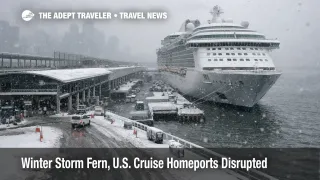
Winter Storm Fern cruise homeports are seeing knock on impacts this weekend as snow, ice, and extreme cold disrupt port operations and, more importantly, passenger access to terminals. Travelers sailing from Galveston, Baltimore, and New York are the most exposed on January 25, 2026, because road conditions, port safety restrictions, and airport irregular operations can compress embarkation windows. The practical move is to treat this as a logistics problem first, arrive earlier than you planned, and follow cruise line instructions closely, because cutoff times often do not move even when roads slow down.
Royal Caribbean's Harmony of the Seas shortened its Western Caribbean sailing out of Galveston, canceling a planned Cozumel call and returning early to get guests off the ship ahead of worsening conditions in the region. Reporting based on guest communications indicates the ship aimed to reach Galveston earlier than originally scheduled to protect disembarkation and ground travel safety.
Carnival Cruise Line flagged Mid Atlantic impacts around Baltimore, where snow and port conditions have affected Carnival Pride's turnaround timing. Carnival's public facing communications around the sailing indicate the port advised a later docking, which in turn shortens the next cruise and shifts passenger timing at the terminal.
In New York, MSC has warned guests booked on MSC Meraviglia that heavy snowfall and freezing temperatures may not stop the ship, but can still delay passengers trying to reach the terminal and complete check in on time. The line's statement emphasizes that the biggest risk is the journey to the port, not necessarily the vessel's ability to sail once guests are aboard.
Who Is Affected
Same day arrival cruisers are the first group at risk, especially anyone flying in the morning of embarkation and relying on rideshares, taxis, or self drive access to the terminal. Winter storms break cruise plans in two ways, the travel segment to the port, and the port's ability to run safe, predictable loading operations when roads ice over and staffing, pilots, tug availability, or channel conditions become constrained.
Families and groups with fixed hotel checkout times are also exposed, because a later docking can create a squeeze where outgoing guests linger onboard longer while incoming guests arrive early to avoid road delays. That overlap often produces longer curbside queues, slower bag drops, and tighter security and check in throughput, even when the ship ultimately sails.
Travel advisors and travelers on separate tickets face additional fragility. If a cruise line shifts boarding or shortens a sailing, the ripple is not limited to the ship, it can cascade into nonrefundable hotel nights, repositioning flights, prepaid transfers, and missed excursions at the start of the itinerary. When airlines are also canceling flights in the same weather footprint, alternate seats and last minute hotel inventory can disappear quickly around the homeport region.
What Travelers Should Do
If you are sailing today or within the next 48 hours, bias toward arriving earlier than your normal routine and assume road travel will take longer than mapping apps predict. Keep your cruise documents and check in times offline on your phone, and bring essentials in carry on, including medication and a change of clothes, in case luggage delivery slows at the pier or your arrival gets pushed later in the day.
Use a decision threshold for rebooking versus waiting. If your inbound flight, train, or drive would place you inside a heavy snow window, or within a few hours of a port advisory that could delay docking, moving your travel to the prior day is usually safer than trying to thread the needle. If you cannot arrive earlier, choose flexible ground transport, avoid tight connections, and plan a backup route into the terminal area in case bridges, ramps, or local streets close. National Weather Service winter warnings and marine advisories are a useful reality check for whether conditions are likely to degrade or improve on the timeline you need.
Over the next 24 to 72 hours, monitor three layers that change quickly during winter operations, cruise line text and email alerts, local port conditions and city travel advisories, and airline irregular operations in the region you must transit. If you are combining air travel and a cruise, the patterns in Winter Storm Fern US Flights, Waivers Expand Jan 23 and Flight Delays and Airport Impacts: January 23, 2026 can help you judge whether the system is stabilizing or sliding into multi day recovery mode.
How It Works
Cruise disruptions during winter storms usually start on land, not at sea. At the source, homeports depend on predictable arrival and departure windows to turn a ship safely, meaning they need pilots, tugs, dock crews, terminal staff, and road access to function on schedule. When snow and ice reduce staffing or create unsafe working surfaces, ports can slow or pause operations, and lines may choose early returns or delayed dockings to avoid putting guests and workers into high risk conditions.
Second order effects spread fast because cruise operations are tightly timed. If a ship returns early, it can compress disembarkation into a narrower window, which increases congestion at rideshare pickup zones, parking facilities, and nearby highways. If a ship docks late, the next sailing can lose a port call or a full day, and hotel demand can spike as passengers who planned same day travel rebook flights or add unplanned nights near the port.
There is also a network effect through aviation and ground transport. When a large storm drives flight cancellations and road closures across multiple states, cruise passengers compete for the same limited recovery resources, open seats, rental cars, and available hotel rooms. That is why a storm can disrupt a Caribbean itinerary even when the ship is nowhere near snow, because the constraint is the traveler's ability to reach the gangway before check in closes.
Sources
- Closures, Cancellations As Epic Winter Storm Spreads East
- Freezing Spray Advisory
- Royal Caribbean ends cruise early to avoid Winter Storm Fern
- Carnival Warns Guests of Potential Delays in Baltimore Due to Snow
- CARNIVAL PRIDE GUESTS PLEASE CHECK YOUR EMAIL BOX AND TEXT ALERT
- MSC Warns of Potential Delays in New York City
- Cruise Lines Make Adjustments Due to Winter Storm Fern