

TSA ConfirmID Fee For Flights Starts Feb 1, 2026
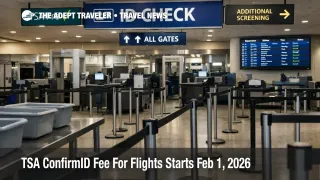
A new Transportation Security Administration option called ConfirmID begins February 1, 2026, for air travelers who arrive at the checkpoint without a REAL ID compliant license or another acceptable form of identification. Travelers aged 18 and older who do not have acceptable ID can prepay a $45.00 (USD) fee through Pay.gov, then present the payment receipt to a Transportation Security Administration officer at the checkpoint as they start the identity verification process. The key operational change is that the cost of that extra processing is being shifted to the traveler who triggers it, and the agency is warning that even with prepayment, additional screening and delays may still occur.
The ConfirmID payment covers a 10 day travel period that starts after payment, which matters for longer trips or frequent flyers who might otherwise assume it works like a permanent credential. Travelers who do not prepay can still be directed to pay at or near the checkpoint in many airports, but Transportation Security Administration messaging has emphasized that day of travel payment can mean longer waits, and a higher risk of missing a flight during busy departure periods.
Who Is Affected
The policy primarily affects domestic U.S. flyers aged 18 and older who show up with a noncompliant driver's license or state ID, or who have lost, forgotten, or cannot access an acceptable alternative such as a passport. Transportation Security Administration reporting puts that population at roughly 6% of travelers at checkpoints, with about 94% already using REAL ID compliant IDs or other acceptable identification.
Travelers with tight itineraries are the most exposed. Any added screening time is most punishing when you have a short curb to checkpoint window, a bag drop cutoff, an early morning first bank departure, or a same day connection that depends on making one specific flight. Travelers on separate tickets, which often have no protected connection, face compounding risk because a missed first leg can strand the rest of the itinerary, including hotels and tours that assume on time arrival.
Airlines and airports also feel indirect effects. When more passengers miss flights due to checkpoint delays, rebooking lines and call center demand rise, gate agents spend more time reissuing boarding passes, and standby lists tighten. That pushes a disruption from the checkpoint into the broader system, where missed departures can cascade into late arrivals, disrupted aircraft rotations, and crew scheduling constraints that affect later flights on the same equipment.
What Travelers Should Do
If you have upcoming travel on or after February 1, 2026, verify your ID now, not on departure day. The lowest risk path is still traveling with a REAL ID compliant license, or another acceptable form of ID listed by the Transportation Security Administration, because ConfirmID is a mitigation tool, not a fast lane. If you truly cannot present acceptable ID, prepay through Pay.gov, keep the emailed receipt accessible offline, and plan to arrive earlier than you normally would.
Use a clear decision threshold for rebooking versus waiting. If you are within 24 hours of departure and you do not have acceptable ID in hand, treat the trip as high risk if you cannot add time buffer at the airport. For last flight out itineraries, separate ticket connections, and nonrefundable downstream bookings, it can be smarter to shift to a later departure window or another day than to gamble on a checkpoint process that the Transportation Security Administration says can take up to about 30 minutes, and can still involve additional delays.
Over the next 24 to 72 hours before departure, monitor three things that determine whether this becomes a minor annoyance or a trip breaking event. First, confirm whether your state ID is REAL ID compliant, which usually means a star marking, and if not, identify which acceptable alternative you will carry. Second, check your itinerary for hard cutoffs, including bag drop times and boarding door close timing, because those are the moments where small delays become missed flights. Third, watch airport and carrier guidance for peak periods, because the difference between arriving with 90 minutes versus 150 minutes can be the difference between making the flight and getting pushed into a later departure bank.
For travelers managing multiple compliance deadlines this winter, the common failure mode is assuming you can fix paperwork at the airport. The same logic shows up in border rules like UK ETA Enforcement Feb 25, 2026, Denied Boarding Risk and fee disclosure changes like NYC Hotel Junk Fee Ban Starts Feb 21, 2026, where planning ahead is cheaper than airport day improvisation.
How It Works
REAL ID enforcement began May 7, 2025, which means federal agencies, including the Transportation Security Administration, require REAL ID compliant identification or an acceptable alternative for boarding domestic flights. In practice, travelers who cannot present acceptable ID are routed into an identity verification and enhanced screening path, which is why noncompliant travelers have been experiencing longer checkpoint processing since enforcement began.
ConfirmID adds a payment gate to that identity verification path. The traveler pays $45.00 (USD) through a Pay.gov form, receives a receipt, and presents that proof of payment at the checkpoint while the Transportation Security Administration begins identity verification and screening. The agency frames the fee as cost recovery so that the additional processing burden is paid by the traveler who triggers it rather than by taxpayers.
The first order effect is straightforward, some travelers will spend more time at the checkpoint, and some will pay an added fee to start the process before they arrive. The second order ripples spread across at least two other layers. Airline operations absorb the downstream impact when passengers miss flights and need rebooking, which raises queue pressure at customer service desks, tightens same day seat availability, and can force unexpected overnight stays. Airport ground operations also see knock on effects because longer checkpoints can push congestion back into check in halls and curbside flows, increasing stress on staffing, crowd management, and departure punctuality during peak banks.