

Munich Airport Terminal 1 Pier Opens April 2026
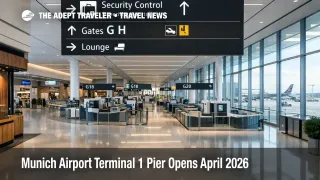
Munich Airport (MUC) will formally unveil its new Terminal 1 Pier on April 13, 2026, and it plans to begin handling passengers in the facility on April 21, 2026. The change matters most for travelers departing to non Schengen destinations from Terminal 1, where gates, security flow, walking times, and lounge access can shift as airlines begin using the new building. If you are traveling through Munich in late April or early May, treat this as an operational change window, double check your terminal routing, and add time for day of departure gate moves.
The Munich Airport Terminal 1 Pier opening expands Terminal 1 capacity for non Schengen traffic by adding a new pier designed around centralized processes, modern security technology, and additional gate positions. Munich Airport says the new pier adds capacity for up to 6 million passengers per year and is one of Bavaria's largest infrastructure projects, extending about 360 meters into the west apron and covering about 95,000 square meters in total.
For travelers, that scale shows up in two practical ways. First, more gate positions and more processing space can reduce pressure on older parts of Terminal 1 during peak departure banks, especially when irregular operations push crowds into holding areas. Second, the ramp and gate layout changes how aircraft are staged, which can affect boarding timing and the odds of last minute bus gates or gate swaps when the day is running behind.
Who Is Affected
Munich Airport says that from April 21, 2026, passengers flying on around 40 airlines serving non Schengen destinations from Terminal 1 will travel via the new pier. If your boarding pass, booking confirmation, or airline app shows Terminal 1 for a destination outside the Schengen area, you are in the group most likely to see a changed departure path.
The aircraft mix is another clue. The airport says the pier can handle up to 12 short and medium haul aircraft or, alternatively, 6 wide body aircraft at the same time, across a total of six levels. That means the opening is not only about short haul leisure flying, it is also set up to support wide body departures where boarding, passport control timing, and gate holds can create bigger schedule knock on effects.
The ripple effects extend beyond the pier itself. When a major terminal area comes online, even a well tested opening can shift staffing patterns, passenger distribution, and gate assignment logic. If a flight departs later than planned because a gate area is still settling into live operations, the second order effect can be missed onward connections, rebookings that push passengers landside, and extra hotel demand near the airport when late day departures spill into the next morning. Munich Airport's own trial operations program highlights that it tested the new facility under realistic conditions for months, including emergency drills and test passengers, which should reduce the risk of a messy start, but travelers should still plan for variability in the first weeks.
What Travelers Should Do
If you are traveling through Munich Airport around April 21, 2026, confirm your airline's Terminal 1 module, your departure gate, and your recommended arrival time the day before and again on travel day. Expect that gate assignments can shift as airlines transition into the new pier, and plan your curb to gate timing as if you might have a longer walk than your last Munich trip.
Use a clear decision threshold for tight itineraries. If you have a short connection, separate tickets, or a non Schengen departure where missing the flight would strand you overnight, build buffer time into your schedule and consider rebooking to a longer connection if your itinerary is already compressed. In the first operating weeks, the risk is not only a flight delay, it is a chain of small frictions, slower security adoption, longer walks, and border control timing, that can add up.
Over the next 24 to 72 hours before you fly, monitor your operating terminal, any schedule changes that could trigger a gate move, and whether your itinerary forces you to clear passport control during a connection. If your journey also includes hubs that have recently changed security rules, treat each airport separately, because CT scanners do not guarantee identical liquids and screening procedures across Europe, as shown by Heathrow Security Allows 2L Liquids in Carry Ons.
Background
A pier expansion is more than extra gates, it is a rework of passenger processing capacity and how flights are staged on the apron. Munich Airport's Terminal 1 Pier is built across six levels, with three levels dedicated to passenger processes, including centralized security checks using CT technology, waiting areas, retail and dining, and relaxation zones. The airport also says the facility was built with energy efficient systems, and it completed an extended trial operations period with test passengers and emergency drills to validate wayfinding, digital processes, and readiness before launch.
CT based screening generally improves the image quality of cabin baggage checks and can reduce rework at the belt, but rules still vary by airport. Munich Airport's own passenger guidance indicates that CT deployment is part of a broader modernization effort at its checkpoints, yet travelers should not assume a different liquids allowance just because CT scanners are present. The key travel system point is that even when screening is faster, demand tends to refill capacity quickly during peak banks, and any slowdown at security or passport control can propagate outward into late gate arrivals, boarding pressure, missed connections, and reaccommodation demand across airlines and nearby hotels.