

Freedom of the Seas Port Swap After PortMiami Evac
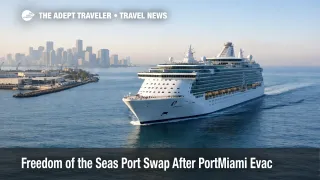
Freedom of the Seas returned early to PortMiami after onboard medical staff determined a guest needed urgent shoreside care, triggering a mid sailing schedule recovery and a port change. The ship had already called on Nassau, Bahamas, then headed back to Miami, Florida to disembark the guest, which effectively consumed the time margin needed to reach the next planned port on schedule. Royal Caribbean's onboard update indicated the itinerary would be adjusted by adding a sea day and swapping out the canceled call for a closer alternative later in the week.
In practical terms, the Freedom of the Seas port swap removes George Town, Grand Cayman from the plan and replaces it with Freeport on Grand Bahama Island, Bahamas. That is not a like for like swap for most travelers, because shore excursion choices, beach access, and transport setup differ substantially between a Cayman tender day and a Freeport pier day, and because many guests anchor dining, spa, and onboard plans around which days they expect to be ashore.
Who Is Affected
Passengers on the current five night sailing departing PortMiami are the direct impact group, especially anyone who booked shore time in George Town around a specific activity such as a stingray sandbar trip, a beach club reservation, or a timed third party tour. If you bought excursions through Royal Caribbean for George Town, the line's stated approach is to refund those bookings, typically as onboard credit first, then back to the original payment method if unused. If you booked independently, you are the one who must unwind the contract, meet cancellation deadlines, and prove that the ship did not call as planned.
Travelers with tight post cruise plans are the second group at risk, even when the cruise still ends on the original debarkation day. When a ship uses extra speed and resequences ports to recover from an operational disruption, arrival patterns can bunch, early morning clearance windows can change, and disembarkation group timing can drift. If you are flying out the same day from Miami International Airport (MIA), or you have fixed ground transfers, you should treat any timing change onboard as a signal to add buffer and confirm cutoffs again.
Advisors and families managing multiple reservations are also affected because a port swap creates a cascading rebooking problem, some excursions cancel automatically, others require manual action, and third party operators may respond slowly while they verify manifests and pier operations. The value leak is usually not the cruise fare, it is the stack of prepaid add ons that were built around the original port day.
What Travelers Should Do
Start with a fast inventory of what breaks when George Town is removed. Check the Royal Caribbean app for the updated itinerary, then immediately cancel or rebook any third party tours, beach clubs, and transport tied to the canceled call, because the best refund outcomes often depend on acting before an operator's deadline. Save screenshots of the original itinerary, the updated itinerary, and any onboard letter or push notification describing the change, because that evidence is what insurers and tour operators typically require.
Use a decision threshold for onward travel rather than hoping the day "works out." If you have a same day flight, a long drive, or a timed rail or hotel check in, build a larger buffer than you would on a normal cruise return day, and consider moving flights later if your fare rules allow it. If shifting the flight is expensive, price the alternative of an extra night in Miami, Florida, because a planned buffer night can be cheaper than a last minute rebook plus premium hotel rates if many passengers make the same change.
Over the next 24 to 72 hours, monitor three things, the ship's updated daily schedule in the app, any messages from Guest Services about excursion handling, and airline schedule changes that could tighten airport options. If Royal Caribbean posts a formal confirmation letter onboard, ask for it, or photograph the notice, because written confirmation tends to resolve disputes faster than a verbal explanation. For another recent example of how cruise disruptions can collide with post cruise travel timing, see Bayonne Odyssey Return Delayed, Royal Caribbean Impact.
How It Works
Medical diversions are one of the most common non weather reasons a cruise itinerary changes, and they propagate through the travel system in ways travelers do not always anticipate. At the source, a ship either coordinates a helicopter evacuation, a rendezvous with a smaller craft, or, as in this case, a return to a port with immediate ambulance access. That choice is primarily clinical, but it consumes distance and time that were allocated to the next port call, which is why the recovery move is often to add a sea day and replace a farther port with a nearer one that still fits customs, pilotage, and berth windows.
Once a port is canceled, the first order impacts are straightforward, your shore plans vanish, and the shipboard schedule changes. The second order ripple is where costs appear, independent tour contracts default to their own cancellation terms, taxi and private transfer demand shifts to different days, and travelers may suddenly compete for the same limited excursion capacity in the replacement port. If the replacement call is closer to the homeport, it can also change the onboard spending pattern, because travelers reallocate money from canceled tours into onboard experiences, specialty dining, and last minute shore options.
On the remedies side, cruise contracts generally allow itinerary changes for safety and operational reasons, so the typical guaranteed recovery is narrow, refunds for line sold excursions that will not operate, and sometimes a refund of certain port fees depending on how they were assessed. Royal Caribbean's onboard message cited automatic handling for pre paid Royal Caribbean excursions tied to the canceled call, which is helpful, but it does not automatically make third party purchases whole. That is why documentation matters. If you need a reference point for how cruise line remedies can evolve from initial messaging into defined credits or refunds, compare the pattern in Britannia Itinerary Change, P&O Adds 25% Credit.