

Nairobi Airport Strike Ultimatum Risks Flight Disruption
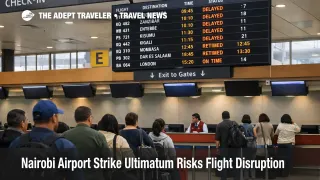
A strike threat is building around Nairobi, Kenya after the Kenya Aviation Workers Union issued a seven day ultimatum tied to labor disputes involving the Kenya Civil Aviation Authority and unresolved collective bargaining issues. Travelers transiting Jomo Kenyatta International Airport (NBO) are the most exposed because any work stoppage or staffing slowdown can degrade airport processing and airspace management at the country's main hub. The practical next step is to treat late January as a high risk window, add time buffers to connections, and line up a backup routing before seat inventory tightens.
The Nairobi airport strike ultimatum is a time bounded warning that could force schedule changes, missed connections, and overnight disruptions if talks fail and industrial action begins after the deadline window.
Who Is Affected
The first group is anyone flying into, out of, or connecting through Jomo Kenyatta International Airport, especially travelers on itineraries that rely on Nairobi as the single connection point between long haul arrivals and onward regional flights. When labor actions touch airport operations or air navigation functions, the impact is not limited to a single airline. Even modest constraints can show up as longer processing times at check in and baggage acceptance, slower aircraft turnaround on the ramp, and flow restrictions that push departures off their planned slots.
The second group is travelers connecting onward to time sensitive leisure products. Safari itineraries commonly stack a long haul arrival into Nairobi with a same day domestic or regional connection, plus a fixed transfer pickup at the far end. If the Nairobi leg slips, the rest of the chain breaks in multiple places, including missed light aircraft or regional departures, lost lodge check in windows, and excursion cancellations that are hard to rebuild when capacity is limited.
The third group is travelers on separate tickets, including those who self connect in Nairobi to reach secondary gateways. When the inbound flight arrives late or cancels, the onward carrier usually treats it as a no show. That makes your outcome dependent on last minute seat availability and fare rules, and it is why single ticket protection is disproportionately valuable during strike risk windows.
What Travelers Should Do
Start with immediate actions and buffers. If you are traveling through Nairobi within the next few days, pull up your ticket rules now, screenshot your booking confirmations, and check whether your itinerary is on one ticket or split across separate tickets. Add time on the front end, including earlier airport arrival and longer connection buffers, because disruption at a hub often looks like queues and processing bottlenecks before it looks like a posted cancellation.
Use a clear decision threshold for rebooking versus waiting. If missing your connection would force an overnight, cause you to miss a lodge check in that cannot be shifted, or strand you without a same day backup flight, rebooking earlier to a wider connection window, or to an alternate day, is usually the lower risk move. If your plans are flexible and you have multiple later same day options, waiting can be reasonable, but only if your carrier has a realistic reaccommodation path that keeps you on a protected itinerary.
Over the next 24 to 72 hours, monitor escalation signals rather than rumors. Watch for confirmation that the ultimatum is being withdrawn or extended, any notice that industrial action will proceed, and airline communications that open fee free changes or publish a waiver. Also track schedule retimes and early morning departure performance, because when the first wave runs late, the day often degrades from delays into cancellations as aircraft and crews fall out of position.
Background
Aviation labor actions propagate through the travel system in layers, and Nairobi is a classic amplification point because it concentrates long haul arrivals, regional connections, and domestic feed into one schedule bank. If staffing issues reduce the pace of airport processes, airlines may need more ground time per flight, gates can clog, and departure banks can unravel. If the dispute affects air traffic control functions, capacity management can meter departures and arrivals, stretching block times and pushing flights off their intended connection windows.
The second order ripple is aircraft and crew positioning. Airlines rotate aircraft through multiple sectors per day, and a missed slot in Nairobi can arrive downstream as a cancellation in another city because there is no spare aircraft or rested crew to cover the gap. That is why a Nairobi centered disruption can show up across East Africa as late inbound equipment, reduced same day reaccommodation options, and next day knock on effects that extend beyond the original strike window.
The third order effects land on hotels, tours, and transfers. When misconnects strand travelers overnight in Nairobi, hotel demand rises near the airport, ground transport queues lengthen, and tour operators lose the tight timing that safari products rely on. If you want a comparable example of how a short, time boxed aviation labor action can still cascade into misconnects and late ground transfers, see Verona VRN ATC Strike Delays Likely January 31, 2026. For a broader look at how airspace and staffing constraints can disrupt flights beyond the country where the labor action occurs, see French ATC Strike Warnings Could Hit Summer Weekends.
Sources
- Kenya Aviation Workers Union issues 7 day strike notice, Citizen Digital
- Aviation workers in clash with employer over wage stagnation, Kenya Broadcasting Corporation
- Aviation workers issue 7 day ultimatum over pay disputes, Eastleigh Voice
- Aviation workers issue strike notice over CBA, unresolved grievances, The Standard
- Kenya Civil Aviation Authority post on CBA talks, LinkedIn