

Western Mediterranean Port Closures Disrupt Cruises
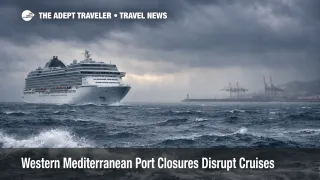
Severe winter weather is disrupting maritime operations across parts of the western Mediterranean, slowing terminals, limiting port movements, and forcing some vessels to shelter offshore until conditions improve. Cruise passengers are most likely to notice the disruption as itinerary tweaks, berth changes, and delayed turnarounds that can push debarkation later than planned. Ferry users are seeing a sharper version of the same problem, cancellations and suspended crossings on exposed routes, which can break island links even when airports remain open.
The practical shift is that Western Mediterranean port closures can derail timing without producing an obvious airline headline. When port productivity drops, ships may arrive late, pilots and tugs may be constrained, and terminals may stagger passenger flows, which then cascades into missed transfers, missed hotel check in windows, and fragile same day flights.
Who Is Affected
Cruise passengers on itineraries that call on Spain's Mediterranean coast, the Balearic Islands, and western gateways near the Strait of Gibraltar are the most exposed when high winds and sea state reduce safe berth operations or slow cargo and passenger handling. Reuters reporting on January 28, 2026 described terminals in the western Mediterranean halting work, and ships sheltering offshore, a pattern that often shows up for cruise guests as late docking, shorter port time, or a dropped call to protect the remainder of the sailing.
Ferry travelers face a more binary failure mode, a sailing is either operating or it is not, and the backlog can persist even after winds ease. In the Strait of Gibraltar, reporting tied to the Port of Algeciras described maritime activity being paralyzed under storm conditions, with ferry and port operations disrupted into the following day. In the Balearics, local reporting on January 28, 2026 described cancellations on key connections as Storm Kristin pushed rough seas into island corridors, including the Palma, Ibiza, and Dénia route family that many travelers use to stitch together multi stop trips.
Travelers combining ship timing with same day flights are the highest risk group, especially those departing from Josep Tarradellas Barcelona El Prat Airport (BCN), Palma de Mallorca Airport (PMI), or Málaga Costa del Sol Airport (AGP) after a cruise or ferry positioning leg. Even if an airport is running a normal schedule, a late all ashore, a longer customs and baggage cycle, or a delayed tender operation can erase the buffer that makes a same day flight workable.
There is also a second layer in southern Italy, where recent storm impacts have been severe enough to trigger emergency declarations, which matters because disruptions in that part of the basin can pull ships off schedule and strain port services across multiple days. Italy declared a state of emergency for southern regions after violent storms, and national civil protection messaging has warned of ongoing risks including strong winds, coastal impacts, and rough seas in affected areas.
What Travelers Should Do
Treat your port day timing as unstable, and act early on anything that depends on a fixed hour. If you are disembarking and flying the same day, move transfers earlier, pre book a private car when possible, and set an internal cutoff time for rebooking your flight, because once the ship is late, airport check in lines and road demand can surge together. If your ferry is part of a chain, confirm the sailing status before you travel to the terminal, because showing up early does not help when departures are suspended.
Use decision thresholds that prevent slow motion failure. If your ship has not been cleared to berth by mid morning for a same day afternoon flight, or your ferry operator has already cancelled a departure block on your route, shifting to a later flight, or an overnight, is usually safer than gambling on a weather window. If you are on separate tickets, raise the bar again, because neither the ferry operator nor the airline is obligated to protect the other booking when you misconnect.
Over the next 24 to 72 hours, monitor three things: official marine warnings for wind and sea state, port authority advisories about movement restrictions, and your operator's wording about "weather permitting" operations. Watch for signs of recovery that actually matter, consistent departures for several consecutive blocks, and ports reporting normal movements, rather than a single restarted sailing that can be cancelled again if conditions spike. If you need a reference point for how ferry suspensions and rolling restarts behave in this region, see Tangier Tarifa Ferry Suspensions During Morocco Storms. If your cruise timing shifts create claims and documentation issues, the workflow in MSC World Europa delay, claims and next steps is a useful template for receipts, letters, and escalation order.
Background
Ports do not need to "close" for travel to break. At the first order layer, high winds and heavy seas can stop pilots from boarding safely, restrict tug operations, and force terminals to pause crane work or passenger gangway operations, which reduces the number of ships that can berth and be turned efficiently. Cruise lines then manage the problem by holding offshore, resequencing calls, shortening time in port, or skipping a stop to protect the remainder of the itinerary, while ferries may suspend sailings outright on exposed routes until sea state drops.
The second order ripple is where travelers lose the most money and time. A delayed turnaround compresses debarkation and embarkation, pushes more people into the same ground transport window, and increases the odds of missed same day flights and missed hotel check in. When island links are suspended, demand shifts to limited alternatives, taxis, hotels near terminals, and next day departures, and the recovery can remain uneven even after headline weather improves because backlogs must clear and crew duty limits still apply. When the storm cycle also impacts southern Italy, the schedule instability can persist across multiple days, because ships, crews, and port services are being rebalanced at the same time emergency response is absorbing capacity.
Sources
- Maersk: severe weather disrupts cargo flows in Europe
- Storm Kristin knocks out power to 800,000 in Portugal and barrels into Spain
- El temporal paraliza la actividad marítima en el puerto de Algeciras
- Ibiza y Formentera en alerta por la borrasca Kristin, canceladas conexiones marítimas con la península
- Italy declares state of emergency after storms in southern regions
- Maltempo: allerta rossa in Sardegna, Sicilia e Calabria