

Tangier Tarifa Ferry Suspensions During Morocco Storms
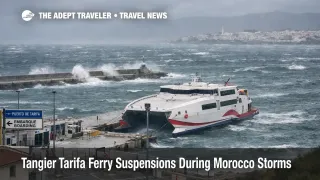
Storm conditions in the Strait of Gibraltar have repeatedly disrupted ferry operations between Tarifa, Spain, and Tangier City, Morocco, forcing cancellations and leaving some travelers unable to cross on their planned departure. Foot passengers on the fast crossing, vehicle travelers with fixed hotel check ins, and anyone chaining the ferry to a flight or tour schedule are the most exposed when sailings are suspended with little lead time. The practical move is to confirm sailing status before you travel to the port, then pivot early to alternate ports or an overnight buffer instead of waiting in a shrinking rebooking window.
The Tangier Tarifa ferry suspension matters because it removes the fastest, most direct link in this corridor, and the recovery often comes back in uneven steps as wind and sea state fluctuate across the day.
Who Is Affected
Travelers booked on the Tarifa to Tangier City route are the core group impacted, including day trippers, tour circuit travelers moving between southern Spain and northern Morocco, and passengers using the ferry as a positioning leg for onward travel. When cancellations extend across multiple departure blocks, the people most likely to lose control of their itinerary are those on separate tickets, such as a ferry booking paired with a same day flight from Tangier Ibn Battuta Airport (TNG), Gibraltar International Airport (GIB), Málaga Costa del Sol Airport (AGP), or Seville Airport (SVQ), because neither side is obligated to protect the other when you misconnect.
Vehicle passengers face a different constraint than foot passengers. Even when a restart window opens, the next operating sailing can fill quickly, and the queueing that follows can turn a nominally operating day into one where you still miss your practical crossing. If you are traveling with a car or a motorcycle, your best substitute is often not the next Tarifa departure, it is the earliest confirmable space on an Algeciras route, followed by a ground transfer plan that still gets you to your next hotel before check in closes.
Travel advisors and group leaders should assume knock on congestion when Tarifa is suspended. Demand shifts into a smaller pool of remaining departures, border processing can surge when several sailings are reinstated close together, and the lodging market near terminals can tighten on both sides as stranded passengers decide to stage overnight.
For comparable patterns where weather suspensions create backlogs and forced overnights, see Isle of Man Heysham Ferry Cancellations From High Winds and Storm Harry Malta Gozo Ferries Suspended, Backlogs.
What Travelers Should Do
Start by reducing wasted movement and uncertainty. Check the official departure board for Tarifa and Algeciras through the Port Authority of the Bay of Algeciras passenger information page, and cross check that against your operator channel, such as email, SMS, app alerts, or posted advisories, before you get in a car or commit to a long transfer into Tarifa. If the status is unclear, treat that as a no go signal, and delay your terminal arrival until you see a confirmed operating sailing that matches your ticket.
Set decision thresholds so you do not drift into a missed connection. If you must be on the other side of the Strait by a fixed hour, or you are protecting an onward flight, rebook as soon as your sailing is cancelled, even if the operator suggests a possible restart later in the day. Weather windows can close again, and the first stable sailing after a pause is often the first one to sell out. For vehicle travelers, if you cannot secure space within the same calendar day, shift immediately to an overnight plan rather than gambling on a late restart that leaves you without lodging options.
Over the next 24 to 72 hours, monitor three signals that predict whether the system is stabilizing or still brittle. First, watch the Spanish State Meteorological Agency bulletins for wind and coastal impacts tied to the current storm pattern, because sea state and crosswinds drive the go or no go decision more than rain. Second, watch port level status updates, including official port departure boards and verified port social channels, because they often reflect operational decisions faster than third party reposts. Third, watch whether cancellations begin to cluster into specific time blocks, which is a sign that operators are attempting limited windows rather than returning to full schedule.
How It Works
High speed ferry links in the Strait of Gibraltar behave like a tight tolerance system. The disruption typically starts with operating limits, not inconvenience. When wind direction and swell make approaches or berthing unsafe, ports and operators cancel blocks of departures to avoid loading passengers onto a sailing that cannot dock reliably. That is why you can see a day where early departures operate, then later departures are cancelled, or a day where a route is suspended entirely, even while other nearby routes continue.
The first order impacts are immediate at the terminals. Ticketed passengers cannot be processed onto a vessel that is not sailing, queues build at customer service points, and rebooking capacity compresses because the number of seats and vehicle slots is fixed per departure. Once several sailings are cancelled, the travel system shifts from a schedule problem into a capacity problem, and that capacity problem can persist after conditions improve.
Second order ripples show up quickly across multiple layers. On the connections layer, tour circuits and self built itineraries that rely on the Tarifa crossing can break because the ferry delay consumes the buffer that was meant for hotel check in, guided pickups, or onward transport. On the accommodation layer, unplanned overnight demand tends to cluster near Tangier City and in southern Spain staging towns, which can raise prices and reduce availability for late bookers. On the border processing layer, restart periods can create bursty arrival patterns, which can slow throughput and extend the time it takes to clear into onward ground transport, especially for groups.
The best mental model is that a ferry suspension is rarely one cancelled crossing. It is often a rolling disruption that ends only when several consecutive departures operate on time, and when the backlog has cleared enough that you can book a predictable slot again.
Sources
- Información al pasajero: Salidas, Autoridad Portuaria de la Bahía de Algeciras
- Aviso especial de fenómenos adversos número 07/2026, AEMET
- Puerto de Tarifa status updates on cancellations, X
- Canceladas algunas salidas desde Tarifa por la borrasca Harry, Cadena SER Radio Algeciras
- Nuevas cancelaciones en los ferris del puerto de Tarifa a Tánger por la borrasca Ingrid, Cadena SER Radio Algeciras
- Tarifa continúa sin actividad hacia Tánger por Ingrid, Ceuta Actualidad