

U.S. Hotel Trafficking Training, Free PACT Course
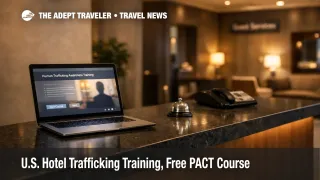
Hilton, Hyatt, and IHG Hotels and Resorts jointly launched a free human trafficking prevention training for the wider hospitality industry, hosted online by Protect All Children from Trafficking (PACT). The move matters most for travelers who spend time in hotels for work trips, events, and family travel, because staff awareness and response consistency can affect how quickly suspicious situations are recognized and escalated. Travelers do not need to take the course to benefit, but they should know what the program is, what it covers, and how to report concerns safely while on property.
The change is practical and immediate, U.S. hotel trafficking training is now available at no cost through 2026, which lowers the barrier for independent hotels, owners, operators, and brands to standardize training, and document completion with certificates.
The AHLA Foundation says the updated curriculum is survivor informed, uses live action video storytelling, and is available in English and Spanish on PACT's training platform. PACT serves as the training administrator, while Unboxed Training and Technology handled learning design for a scalable, multilingual experience that includes technical support, scheduled reminders, and a completion certificate.
Who Is Affected
Hotel guests are indirectly affected when more properties adopt consistent recognition and reporting steps, especially at the front desk, in housekeeping, and in security facing roles where unusual room patterns, coercive control, or repeated third party traffic can surface. The program is designed for industry use, so the biggest near term change is on the staff side, but travelers benefit when escalation paths are clearer and faster, and when employees are trained not to handle risky situations alone.
Independent hotels, franchisees, and management companies are also a core audience, because free access removes budget friction and makes it easier to align training across portfolios. For travel advisors and corporate travel managers, the training can become another measurable safety and duty of care signal, similar to how properties document emergency procedures or security staffing.
Meetings and events travelers are a distinct segment to watch. Large conventions, sports weekends, and major festivals drive compressed hotel demand, and they also raise the stakes for venue standards, staff coordination, and consistent reporting protocols across shifts. The AHLA Foundation framed the training launch as part of broader January awareness activity, timed as the industry prepares for large scale events in the United States in 2026.
What Travelers Should Do
If a situation feels wrong at a hotel, do not intervene directly. Move to safety, contact the front desk, ask for a manager or on duty security, and use official reporting channels when appropriate. If there is immediate danger, call emergency services. If there is not an immediate threat but there is credible concern, the National Human Trafficking Hotline provides reporting and help pathways that can be used without confronting a suspected trafficker.
Set decision thresholds that prioritize safety over convenience. If a property dismisses concerns, cannot describe how staff escalate suspicious activity, or you observe repeated coercive behavior in public spaces, consider changing hotels, even if it costs more, and document what you saw while details are fresh. For business travelers, loop in your corporate travel contact or security team early, and avoid trying to "solve" the situation yourself.
Over the next 24 to 72 hours of a stay, monitor patterns rather than isolated moments. Trafficking is a hidden crime, and many signals are ambiguous on their own, which is why trained staff and structured reporting matter. If you are traveling with minors, tighten documentation and consent planning for border and custody related scrutiny, and keep identity documents organized, since safeguarding practices and trafficking prevention often intersect in real world screenings. UK Tightens Solo-Parent Travel Consent Rules
Background
Hotels can be exploited by traffickers because they offer anonymity, constant turnover, and private rooms that can be paid for in ways that obscure who is in control. Prevention efforts in hospitality usually focus on training staff to recognize risk indicators, follow safe escalation steps, and report through appropriate channels, not on guests taking action on their own. The U.S. Department of Homeland Security's hospitality guidance similarly emphasizes awareness, safe reporting, and staff enablement rather than direct confrontation.
The first order effect of a free, standardized training offer is on property operations. When the same core training is accessible across owners, operators, and brands, it becomes easier to align front desk, housekeeping, and management on what to do when something looks off, and to document completion for compliance and audit needs. PACT's training platform positions certification as part of that operational loop, and it also notes that its program can satisfy mandated hotel training laws in multiple U.S. states, which increases adoption incentives.
Second order ripples move through at least two other layers of the travel system. One ripple is meetings and corporate travel procurement, where venue selection increasingly includes safety posture, staff training, and escalation protocols, especially for groups moving through hotels at night or across multiple properties. Another ripple is brand level consistency for travelers, because large chains operate through mixed ownership and management structures, and training access for independent operators can reduce the gap between what a brand promises and what a guest experiences on the ground. A third ripple is reputational and demand related, as traveler awareness of anti trafficking efforts, and industry standards such as the AHLA Foundation's No Room for Trafficking initiative, can influence which properties organizations prefer to book. For broader lodging context tied to AHLA, see AHLA 2026 U.S. Hotel Industry Report Outlook And Costs.
Sources
- Hilton, Hyatt and IHG Hotels & Resorts Create Modernized, Updated Human Trafficking Prevention Training
- PACT Courses Platform
- Polaris, Analysis of 2021 Data from the National Human Trafficking Hotline (PDF)
- National Human Trafficking Hotline Statistics
- DHS Blue Campaign, Human Trafficking and the Hospitality Industry