

Bermuda Ferry Services Suspended, Island Transfers Feb 1
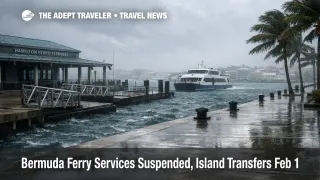
Bermuda suspended all public ferry services across the island on February 1, 2026, after deteriorating weather brought high winds and unsafe marine conditions. Visitors and residents who rely on ferries to move between Hamilton, Dockyard, and other terminals are the most exposed, especially if their day plan included timed check ins, tours, dining reservations, or a flight connection. Treat the ferry network as offline for the day, shift to road based alternatives, and build extra time into every transfer until operators confirm a safe restart window.
The change that matters for trip planning is simple and blunt: Bermuda ferry services suspended removes an entire layer of mobility, and it pushes demand onto buses, taxis, and limited road capacity at the exact moment weather can also slow driving and reduce reliability.
Who Is Affected
Travelers staying in Hamilton but planning a day in Dockyard, or the reverse, feel the hit first because the ferry is often the most predictable way to move between key visitor zones when roads get busy. When service is suspended systemwide, the first order impact is that people can be stranded on the wrong side of their day plan, which quickly turns into missed tour departure times, missed restaurant seating windows, and expensive last minute transport swaps.
Airport days carry higher stakes. If your itinerary connects to L.F. Wade International Airport (BDA), a ferry suspension can remove the buffer you thought you had, and the same weather system can also disrupt flight operations. Local reporting during this event window noted ferry cancellations and multiple flight cancellations tied to the high winds, which is exactly the combination that turns a normal transfer into a missed departure risk.
The disruption propagates beyond transport in predictable layers. When ferries stop, taxis and buses take the overflow, and that increases wait times and variability for everyone, including hotel shuttles, private drivers, and prebooked excursions that are scheduled tightly. If travelers choose to pause movement and wait for conditions to improve, hotels and short stay rentals can see more night extension requests, while attractions and restaurants see uneven demand as entire corridors arrive late or not at all.
What Travelers Should Do
Start with immediate actions and buffers. Assume ferries will not return until you see an explicit restart notice, then replan the day using buses and taxis as your baseline, not as a backup. If you must cross the island, leave earlier than you normally would, and plan to arrive with slack for slower traffic, longer taxi queues, and weather related slowdowns.
Use clear decision thresholds for rebooking versus waiting. If you are chaining ground transport to a flight, or to a fixed time tour, do not gamble on a late day ferry restart, or a last minute improvement in wind. Your trigger to pivot should be any official statement that service is suspended for the day, or any forecast language that gale conditions persist into the evening, because that usually means docking conditions remain unreliable even if rain bands come and go.
Over the next 24 to 72 hours, monitor three layers. Watch Marine and Ports advisories for when service returns, watch the Bermuda Weather Service wind warnings for whether conditions are easing or staying in a strong and gusty pattern, and watch your personal choke points such as taxi availability near terminals and the timing of your hotel checkout or flight check in. A useful mental model for how ferry suspensions create backlogs and uneven restarts, even after the weather begins to improve, is Storm Harry Malta Ferries Disrupted January 19.
How It Works
Bermuda's ferry network functions like a set of moving bridges that compress travel times across the harbor and between visitor heavy corridors. In normal operations, these routes reduce road pressure by shifting a meaningful share of demand onto the water, which is why a systemwide suspension immediately forces a mode shift to roads.
During this event, the weather setup described locally was sustained gale force wind with stronger gusts, which is precisely the condition that makes reliable docking and safe sailings hard to guarantee. Ferry operators do not only evaluate whether a vessel can move, they have to be confident it can keep a schedule, approach terminals safely, and dock without putting passengers and infrastructure at risk. That is why the network can snap from normal service to a full suspension, and why restart timing is typically tied to improved wind and sea state, not to a single clock time.
The second order ripple is where trips break. A ferry suspension pushes more travelers toward buses and taxis, which can raise wait times and concentrate delays at the same choke points, including major hubs in Hamilton and the approaches to popular visitor areas. When flights are also being canceled or rebooked during the same weather window, ground access becomes a primary failure point, and travelers can lose the day even if their new flight still operates.