

UK ETA Feb 25 Boarding Rule, Avoid Denied Boarding
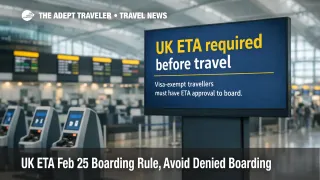
Carriers serving the United Kingdom are moving to strict, pre travel enforcement of the Electronic Travel Authorisation requirement for eligible visa free visitors on February 25, 2026. Travelers from visa exempt countries are the most affected group, because many are used to traveling with only a passport and a ticket. The practical next step is simple, confirm whether your passport needs an ETA, apply through official channels, and make sure the passport on your booking matches the passport linked to your approval.
This shift matters because the failure point moves forward in the journey. The UK ETA boarding rule turns a border compliance issue into an airline, rail, or ferry check at online check in, bag drop, or the counter, and the most common outcome for an unprepared traveler is a hard stop before departure rather than a problem you can solve on arrival.
For travelers, treat February 25, 2026, as a planning cliff, not an advisory. If you show up without the required permission, you cannot legally travel, and you should expect to be denied boarding even if your passport is valid and your ticket is confirmed.
Who Is Affected
Most short stay visitors who do not need a visa are in the ETA eligible category, including many travelers from Europe, the United States, Canada, Australia, and other visa exempt countries. The official rule of thumb is that you usually need an ETA rather than a visa when you are visa free for visits, and the definitive answer depends on your nationality and purpose of travel, not where you are departing from.
Exemptions are real, and they are where airport confusion tends to spike. You generally do not need an ETA if you are a British or Irish citizen, if you already hold a UK visa, or if you have permission to live, work, or study in the UK, including settled or pre settled status and right of abode. A key edge case is transit, because you do not need an ETA when transiting through a UK airport and staying airside without passing border control, but that exemption can collapse if your itinerary forces you landside for baggage, an overnight, a terminal change without an airside route, or a rebooking that requires you to clear control.
Connections through London Heathrow Airport (LHR), London Gatwick Airport (LGW), and Manchester Airport (MAN) are the highest risk for travelers who assume a short stop means fewer checks. If you are on separate tickets, planning a self transfer, changing airports across London, or building a tight same day onward flight, the ETA requirement can become the single point of failure that breaks the entire chain. Cruise travelers and rail passengers are also exposed because ferry terminals and rail operators must verify permission before boarding in the same way airlines do, and a missed embarkation or timed rail connection is often harder to fix than a missed flight.
If you want the broader checklist view beyond today's operational cutover, use UK Entry Requirements For Tourists In 2026. If you are connecting through London and are unsure whether your itinerary stays airside, UK ETA London Transit Requirements, February 25, 2026 is the companion read.
What Travelers Should Do
Apply as soon as your travel dates are firm, and do it through official channels, not third party sites that charge more for the same submission. UK Visas and Immigration typically returns decisions quickly, but the official guidance is to allow up to three working days, and you should treat that buffer as mandatory when your trip includes a tight connection, a weekend departure, or a complex itinerary with separate tickets.
Use a clear decision threshold for rerouting versus waiting. If you are within 72 hours of departure without an approval, or if you discover your ETA is linked to a different passport than the one on your booking, it is usually smarter to rebook to a later departure or a routing that does not touch the UK than to gamble on airport day resolution. Carriers cannot override the requirement at check in, and the downside is rarely limited to one missed flight, it is missed protected connections, lost cruise embarkations, and unplanned hotel nights in the departure or transit city.
Over the next 24 to 72 hours before you travel, monitor three things and keep your plan flexible. Watch for your decision email, verify your ticket's document details match the passport you used in the application, and recheck whether your connection stays airside the entire way. If irregular operations hit and you are rebooked, reassess immediately, because a single change that forces UK border control can flip a formerly exempt transit into an ETA required entry scenario.
How It Works
An ETA is a digital permission to travel, not a visa, and it does not guarantee entry on arrival. It is linked electronically to the passport you use to apply, which is why passport renewals, lost passports, and last minute document swaps can create a mismatch that shows up as a denial at check in. The official fee is £16, and the ETA is designed for short visits of up to six months for tourism, visiting family, and certain other permitted activities.
The operational change is that carriers become the enforcement gate. From February 25, 2026, airlines, rail operators, and ferry companies are expected to verify that ETA eligible passengers have valid permission to travel before they board. That shifts disruption into airport and terminal workflows, longer document check queues, more manual reviews when records do not match, and more last minute rebooking when travelers are stopped before departure.
The ripple runs through the travel system in predictable layers. At the source, more passengers get pulled into counter resolution, which can slow departure processing and create missed flights on the same aircraft rotation. The next layer is connections, where a missed UK hub departure can strand travelers for a full day on constrained long haul routes, and can also break interline protection if the passenger never boards the first leg. The third layer is ground, hotel, and cruise impact, because denied boarding and misconnects push travelers into unplanned overnights near airports, late arrivals that forfeit prepaid stays, and missed ship departures when the UK is the first link in a longer itinerary.
Sources
- Get an electronic travel authorisation (ETA) to visit the UK, GOV.UK
- Apply for an ETA, GOV.UK
- When you do not need an ETA, GOV.UK
- Electronic Travel Authorisation (ETA) factsheet, UK Home Office
- Electronic Travel Authorisation Guidance (PDF), GOV.UK
- Britain imposes new travel permit requirement on Europeans, Reuters
- Visa and immigration information, VisitBritain