

Turkish TK727 Kolkata diversion delays Istanbul links
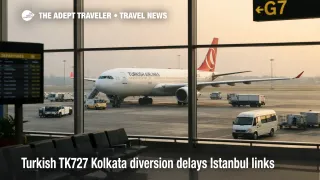
A Turkish Airlines widebody flight operating from Kathmandu, Nepal to Istanbul, Turkey diverted and made a full emergency landing at Netaji Subhash Chandra Bose International Airport (CCU) on February 3, 2026 after the crew reported a right engine warning. The passengers on TK727, also reported as THY727, were reported safe, and the aircraft was held in Kolkata for inspections and operational checks.
For international travelers, the main practical consequence is not the diversion itself, it is what comes next. A widebody diversion can remove an aircraft from the next schedule cycle, trigger a crew legality reset, and force downstream substitutions that change seat availability and connection reliability into Turkish Airlines' hub at Istanbul Airport (IST). If your itinerary relies on a tight connection at IST, or you are on separate tickets, treat the next day of travel as higher risk until Turkish confirms a stable recovery plan.
Who Is Affected
Passengers on TK727 are affected first, because the diversion typically turns a single flight into a rebooking and accommodation problem. Multiple reports put the onboard count around 236 passengers, and the aircraft type as an Airbus A330 300, with local officials describing a full emergency response on arrival at CCU.
Travelers connecting through Istanbul Airport are the next exposed group. TK727 is part of a long haul bank structure where arrivals feed onward departures to Europe, North America, and the Middle East. When an inbound long haul flight is delayed by many hours, or canceled outright, the disruption spreads quickly, because the replacement seat pool on the onward bank is usually thin, and displaced passengers compete for the same remaining inventory. This is where misconnects become multi day, not because airlines refuse to help, but because there are only so many seats that match visa requirements, time critical arrivals, and alliance or interline constraints.
A third group is travelers whose plans are built around separate tickets or self transfers, including travelers positioning to cruises, weddings, tours, or visas timed to a specific entry date. If your Kathmandu to Istanbul flight was supposed to connect onward on a separate booking, you should assume you may not be protected automatically, even if Turkish reaccommodates the first segment. You may need to proactively rebook the second ticket, and you may need to document the disruption for insurance or a refund claim, depending on your policy and fare rules.
What Travelers Should Do
Take immediate actions and add buffers. If you were on TK727 or scheduled to connect through Istanbul Airport within the next 24 to 72 hours, open your reservation and look for a protected reroute that lands you in your final city with a realistic connection buffer. If you have a hard deadline, prioritize arrival certainty over a perfect itinerary, because the first acceptable seat you can lock is often better than waiting for the ideal routing that never opens. If you booked through an agency, push for a confirmed reissue, not a waitlist, and ask for the new ticket number so you can verify it in your record.
Use decision thresholds for rebooking versus waiting. If your Istanbul connection is under 90 minutes, or your onward flight is the last departure of the day, it is usually smarter to rebook to a later bank or a next day departure while inventory still exists. If you have multiple daily options to your destination and you are on a single ticket, waiting can be reasonable, but only if you are already protected on a viable later option. If you are on separate tickets, your threshold should be stricter, because a missed self transfer can cascade into a full fare walk up purchase.
Monitor the right signals over the next 24 to 72 hours. Track whether TK727's aircraft is released and repositioned, and whether Turkish is operating normal widebody rotations on the Kathmandu, Delhi, Mumbai, and similar South Asia lanes into Istanbul. Also monitor your minimum connection time at IST after any rebooking, because gate changes and security re screening can erase small buffers even when the flight is on time. If you are forced to enter India during an overnight disruption, verify entry requirements for your passport before you accept a plan that requires clearing immigration, and use this reference, India Entry Requirements And New E Visa.
How It Works
An engine warning diversion is both a safety event and a network event. On the safety side, airlines follow established procedures that often include shutting down an affected engine, declaring an urgency call, and diverting to the nearest suitable airport with the right emergency response and maintenance support. Turkish Airlines confirmed TK727 received a technical fault alert related to the right engine after takeoff, and the carrier diverted the aircraft to Kolkata for checks.
On the network side, a long haul aircraft is a moving piece of capacity that is scheduled to operate multiple legs across multiple days. When one widebody is removed from service, the airline has to solve several problems at once: substitute an aircraft, re time crews within legal duty limits, recover baggage and catering flows, and protect onward connections that were built around a bank at the hub. Even if Turkish can swap in another aircraft, the swap may have a different seat count and cabin mix, which can bump standby and upgrade plans, and it can change how many disrupted passengers can be reaccommodated the same day.
The ripple spreads beyond aviation. If a diversion or cancellation pushes travelers into overnight stays, nearby hotel inventory tightens, and ground transfer demand spikes, especially for passengers who need visas or airport transfers they did not plan to buy. At the hub end, misconnects can create crowding at transfer desks, longer call center queues, and tighter same day seats on onward European flights, which then pushes some travelers into next day arrivals that disrupt tours, cruises, and timed check ins. The operational picture usually stabilizes once the airline either returns the original aircraft to the schedule or completes a clean substitution and crew reset, which is why the next schedule cycle, roughly 24 to 72 hours, matters more than the single landing headline.
Sources
- Turkish Airlines flight diverts to India after engine alert
- Emergency landing at Kolkata airport as Turkish Airlines flight diverted after engine malfunction
- Turkish Airlines flight diverted to Kolkata shortly after take off
- TK727 (THY727) Turkish Airlines Flight Tracking and History
- Turkish Airlines flight with 236 onboard lands in Kolkata after pilot flags possible engine fire