

Queen Mary 2 Long Beach Reunion With Queen Mary
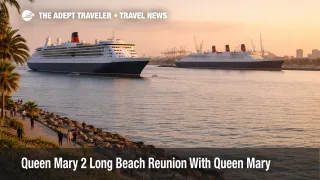
Queen Mary 2 arrived off Long Beach, California, and reunited with the historic Queen Mary on February 2, 2026, a rare side by side moment that Cunard said had not happened in roughly 20 years. The meetup affects both Cunard guests sailing on Queen Mary 2 and travelers planning to visit the permanently docked Queen Mary attraction in Long Beach. If you are heading to the waterfront to view the ships, or you have timed tours and dining booked nearby, plan for heavier crowds, slower road access, and the possibility that viewing windows shift if marine operations run early or late.
The Queen Mary 2 Long Beach reunion follows Queen Mary 2's first transit of the Panama Canal during Cunard's 2026 world voyage programming, which adds operational variables that matter to travelers, including pilotage windows, tug availability, and port sequencing. Cunard communications about the canal leg positioned the Southern California call as part of a larger world voyage routing, rather than a routine West Coast turnaround.
Who Is Affected
Cunard guests are the most directly affected because this kind of high profile call can change how shore time feels in practice, even when the published itinerary is unchanged. Longer gangway lines, tighter transportation capacity at peak hours, and higher demand for last minute reservations are common when a ship visit becomes a local event. If your plans depend on a precise hour, for example a private car pickup, a nonrefundable tour slot, or a dinner reservation with limited seating, treat the ship's timing as an operational target, not a fixed appointment.
Visitors to Long Beach are also affected because the Queen Mary is not just a static landmark, it is an operating attraction with tours, exhibits, dining, and overnight stays, and demand can spike when maritime milestones draw additional foot traffic to the waterfront. Travelers who visit for the ship's Art Deco interiors, museum style exhibits, and onboard hotel rooms should anticipate that popular time slots sell out faster around major ship moments.
There is also a second order planning ripple for travelers using the Los Angeles area as a gateway before or after a cruise. When a ship's arrival timing shifts, rideshare and taxi demand can surge in short bursts, hotels can see unusual one night compression, and travelers on separate tickets can be exposed if a late ship arrival collides with a same day flight, or a same day rail departure. This is especially relevant on long repositioning and world voyage segments, where a single late day can compress multiple downstream layers, including provisioning, crew flow, and port services across the next sequence of calls.
What Travelers Should Do
If you are visiting Long Beach to see the ships, treat it like an event day at the waterfront. Arrive earlier than you normally would, expect heavier traffic near the Queen Mary and shoreline viewpoints, and have a backup plan if your first choice for parking or access is full. If you are staying overnight on the Queen Mary, confirm check in timing and any tour reservations, and assume popular dining windows will be busier than a normal weekday.
If you are sailing on Queen Mary 2 and you have independently booked shore plans in the Los Angeles region, set a clear decision threshold for rebooking versus waiting. When an excursion, flight, or timed entry depends on a tight chain of transfers, the safer call is usually to move to an earlier slot, add a hotel night, or switch to a refundable option, rather than gambling on a precise all ashore time. On long voyages, the cost of a missed connection is not just a single activity, it can be an expensive scramble for transportation and lodging in a high demand market.
Over the next 24 to 72 hours around any major port call, monitor the signals that actually change outcomes. Watch Cunard's voyage updates for revised arrival or departure timing, and check local reporting for any temporary access limits near the piers or waterfront viewing areas. If you see a timing change, update your ground transportation first, then tours and dining, because vehicle supply is often the first constraint when schedules move.
Background
Queen Mary 2 is Cunard's active ocean liner, and Cunard used the Southern California stop to highlight continuity between the modern ship and the original Queen Mary, including a whistle connection that is part of the brand story for the reunion. The historic Queen Mary, launched in 1936 and retired from service in 1967, is permanently docked in Long Beach and operates today as a visitor attraction and hotel, with tours, exhibits, and dining on board.
From a travel system standpoint, a high visibility call is more than a photo opportunity. The first order effect sits at the port and attraction layer, crowding, access, and schedule variability around marine operations. The second order effects propagate outward into surface transportation, hotel demand, and the reliability of tightly timed personal itineraries, especially for travelers who built separate ticket connections around a specific port day. Because this reunion followed Queen Mary 2's first Panama Canal transit, it is also a reminder that canal passages, pilot boarding, and traffic sequencing can introduce small timing changes that ripple forward into subsequent port calls and traveler logistics.