

Seven Seas Mariner Illness Outbreak CDC Probe
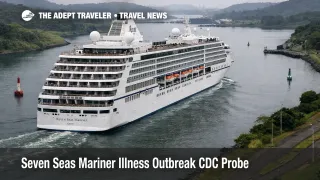
A gastrointestinal illness outbreak on Regent Seven Seas Cruises' Seven Seas Mariner has triggered a U.S. Centers for Disease Control and Prevention Vessel Sanitation Program investigation. The agency's outbreak report lists 27 total cases, including 21 passengers and six crew members, reported during a voyage from Miami, Florida, to Honolulu, Hawaii. Travelers on current and near term sailings should treat this as a practical planning signal, build more buffer on both ends of a cruise, and be ready to adjust flights and hotels if symptoms appear late in the trip.
The Seven Seas Mariner GI outbreak affects travel plans because onboard illness controls can disrupt routines, slow service, and increase last day and arrival day friction even when the itinerary itself continues.
The CDC's outbreak report covers voyage dates January 11, 2026, to February 1, 2026, and notes the cruise line reported the outbreak to the Vessel Sanitation Program on January 29, 2026, while the ship was still sailing. The CDC lists the causative agent as unknown, and says stool specimens were collected for testing, with confirmatory results pending.
Who Is Affected
The immediate affected group is anyone who sailed on Seven Seas Mariner during the January 11, 2026, to February 1, 2026 voyage, especially cabins with close contacts where symptoms can spread quickly through shared bathrooms and repeated surfaces. The CDC's final case counts show 21 of 631 passengers, and six of 458 crew, reported illness during the voyage, with diarrhea listed as the predominant symptom.
The next group is travelers booking similar long repositioning sailings that combine many port days, sea days, and repeated onboard touchpoints like dining venues, shows, elevators, and lounges. Even when the percentage of reported cases is small, the operational ripple can be larger than the medical tally, because intensified cleaning can change schedules, reduce venue availability, and create longer waits for service. Crew illness also matters, because it can thin staffing in housekeeping and food service, and those are the same layers that determine how fast the ship can clean and reset.
A third affected group is anyone with tight, same day air plans tied to the cruise. If symptoms start late in the voyage, the last 24 to 72 hours can become a logistics problem, not only a health problem, because travelers may need pharmacy runs, clinic visits, isolation time, delayed disembarkation routines, or last minute hotel extensions. That risk is highest for travelers who planned to land and immediately fly onward from Daniel K. Inouye International Airport (HNL), or who built a same day chain on separate tickets.
What Travelers Should Do
If you are currently onboard, or you sailed on the affected voyage and symptoms appear after you get home, report early and follow the ship or provider's isolation guidance. The CDC's case definition and reporting emphasis is not bureaucracy, it is how outbreaks get detected, and it is what triggers containment steps that reduce spread to adjacent cabins and shared spaces.
For upcoming sailings, build buffers that assume friction on the final two days. That means avoiding tight flight connections, avoiding prepaid, fixed time tours on arrival day, and choosing a hotel plan that can flex by one night without blowing up your budget. If you can only keep one protection move, protect the day you fly home, because that is where small health issues turn into expensive change fees, missed flights, and lost lodging value.
Decide in advance what would make you rebook versus wait. If you have a high stakes trip immediately after the cruise, such as a wedding, a work start date, or a nonrefundable inland tour, set a conservative threshold now, for example a guaranteed hotel night in the arrival city and a later flight the next day. If your post cruise schedule is flexible, waiting can be reasonable, but you should still monitor ship communications and the CDC posting for any change from unknown cause to a confirmed agent, because that can change how aggressively you reduce close contact and shared dining exposure.
Background
The CDC's Vessel Sanitation Program posts cruise ship gastrointestinal outbreaks when certain thresholds are met, and it tracks reports across voyages that include U.S. and foreign ports. In this case, the CDC posting shows the outbreak was reported during the sailing, the causative agent is currently unknown, and stool testing is pending, which is common early in an investigation when confirmation requires lab work and sufficient samples.
Operationally, gastrointestinal illness outbreaks propagate through the travel system in layers. The first order effects are onboard, isolation, enhanced cleaning, and changes to dining and service rhythms that can affect how you experience the ship day to day. The second order effects land on arrival and onward travel, because travelers may need extra recovery time, and because families and groups often move together, which can shift ground transportation plans, hotel check in timing, and flight changes. A long itinerary with multiple ports can add friction because people constantly reenter the ship from tours and local venues, increasing surface contact and crowd mixing even when the ship is actively cleaning.
If you want context on how CDC postings work and what onboard controls can look like for travelers, see Rotterdam Norovirus Outbreak Disrupts Cruise Routines.
Sources
- Seven Seas Mariner January 2026, Vessel Sanitation Program, CDC
- Outbreaks on Cruise Ships in VSP's Jurisdiction, CDC
- 27 people sick after GI outbreak on Regent Seven Seas cruise ship that departed from Miami, CBS News Miami
- CDC investigates new cruise ship outbreak after dozens report gastrointestinal illness, Fox News
- Seven Seas Mariner itinerary listing, CruiseMapper