

TSA ConfirmID U.S. Airport ID Fee Starts Feb 2026
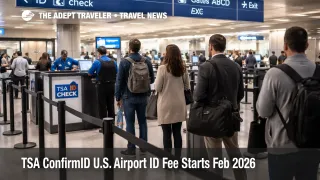
TSA has begun enforcing a new paid fallback process called ConfirmID at U.S. airport security checkpoints. The change affects adult travelers who show up without a REAL ID compliant driver's license or state ID, and without another acceptable identification document such as a passport. The practical next step is simple, verify your ID before you leave home, and if you are truly without acceptable ID, complete the ConfirmID process online, pay the $45 fee, and bring the receipt so you do not add avoidable friction at the checkpoint.
The program began February 1, 2026, and TSA's early rollout reporting says most travelers are already arriving with compliant documents. TSA has described "negligible operational impact" so far, largely because ConfirmID is being used by a small minority of passengers, and because most people are presenting REAL ID compliant cards or other acceptable IDs.
Who Is Affected
ConfirmID is aimed at a narrow, but operationally important, slice of travelers, anyone age 18 or older who arrives at the checkpoint without acceptable identification in hand. That includes people who never upgraded to a REAL ID, people who are traveling on a temporary paper license, and people who lost a wallet mid trip. TSA and partner reporting around the rollout has consistently framed this as a small percentage of total passengers, which helps explain why systemwide disruption has been limited even with a new paid step in the lane.
The travelers most likely to feel the impact are the ones with hard cutoffs and thin margins. Early morning departures, last flight out itineraries, flights with checked bag cutoff pressure, and any same day connection amplify the downside of extra minutes at the ID podium. The second order effect is not just your place in line, it is what happens after a miss, because reaccommodation inventory can vanish quickly, and the knock on costs move fast from airline change fees to added hotel nights and ground transportation.
For Adept Traveler readers, this is also part of a longer arc. In late 2025, TSA messaging and reporting centered on an earlier, proposed lower fee concept tied to modernized identity verification. ConfirmID is the implemented version travelers are dealing with now, at a higher price point, and with clearer instructions around paying ahead of time. See TSA ConfirmID Fee For Flights Starts Feb 1, 2026 and TSA $18 Fee For No Real ID At Airport Security for the lead up and the traveler playbook that still applies.
What Travelers Should Do
If you are traveling in the next few days, treat identification as a trip critical item, not a check in detail. Before you leave for the airport, confirm you have a REAL ID compliant card or another acceptable ID that TSA recognizes for checkpoint entry, and keep it accessible rather than buried in checked luggage or a bag you might gate check. This is the cleanest way to avoid both the $45.00 (USD) fee and the risk of additional screening time.
If you do not have acceptable ID, use ConfirmID as an emergency bridge, not as a routine habit. Pay the fee in advance through the federal payment portal, keep the receipt available offline on your phone, and bring a printed copy if you can. Then add time buffer like you mean it, because the entire point of ConfirmID is that you will need extra processing steps, and TSA has been explicit that verification is not guaranteed even when you pay.
Over the next 24 to 72 hours, monitor two things that can change your risk materially. First, watch your airport and airline for queue and staffing advisories, because a small number of ConfirmID cases can slow an ID podium during peak banks even if the overall percentage is low. Second, decide your personal threshold for rebooking versus waiting, especially if you are on the last flight that protects a cruise embarkation, a wedding, or a nonrefundable first night hotel, because the cost of a miss can dwarf the $45.00 (USD) fee.
How It Works
REAL ID requirements for domestic flying have been in force since May 7, 2025, which is why travelers have increasingly experienced tougher outcomes when they arrive without compliant identification. A U.S. passport book or passport card can also satisfy the federal standard, which is why many travelers have avoided disruption even if their driver's license is not REAL ID compliant.
ConfirmID sits on top of that enforcement reality as a paid, time bound attempt to verify identity when acceptable ID is missing. The fee is $45.00 (USD), and the payment is tied to a 10 day travel window, which matters if a traveler assumes it behaves like a permanent credential. TSA has framed the fee as cost recovery, shifting the added workload of identity verification away from taxpayers and onto the people who trigger the extra process at the checkpoint.
Operationally, the disruption propagates in predictable layers. First order effects begin at the checkpoint, where an identity verification case takes longer than a routine ID scan, and where even a small number of longer transactions can slow the line during peaks. Second order effects spread to airline operations when passengers miss flights and need reaccommodation, tightening standby lists and filling later departures, which then stresses crew flow and aircraft rotations downstream. A third ripple often hits the traveler budget, because late day misses can force an overnight stay when same day options are gone, and that can cascade into ground transfer changes and lost prepaid bookings.
Sources
- TSA Successfully Rolls Out TSA ConfirmID (PR Newswire)
- Travelers without REAL ID Could Pay $45 Fee for TSA's ConfirmID beginning February 1, 2026 (Defense Travel Management Office)
- TSA ConfirmID Program Fee (Pay.gov)
- $45 Fee for flying without a REAL ID just kicked in (Business Insider)
- New TSA fees start for travelers without Real ID or passport (Axios)
- U.S. Passports and REAL ID (U.S. Department of State)