

Belgium Strike Days Hit Brussels Airport Transfers Feb 10
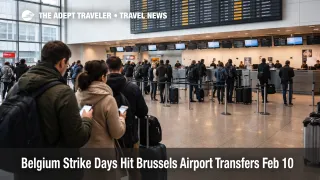
Belgium is facing another round of multi sector labor action that can make getting around feel uneven, even when parts of the system keep running. Union confederations have framed February 10, 2026, as an interprofessional action day, and another strike day is set for February 12, 2026, which matters most for travelers who depend on city transport to reach rail stations, museums, and airports on time. The practical move is to treat both dates as reliability risk days, build a larger transfer buffer, and avoid chaining tight connections across multiple modes.
The Belgium February 10 strike travel problem is not only whether a specific line is canceled, it is that the feeder layer becomes unpredictable. When buses and trams thin out, taxi demand spikes, pickup times stretch, and a normal 20 minute hop to a station can turn into a missed check in cutoff.
Who Is Affected
City break travelers in Brussels, Belgium, Antwerp, Belgium, Ghent, Belgium, Liege, Belgium, and Charleroi, Belgium are the most exposed group because their itineraries often rely on short local trips that have no slack. Day trippers are also at risk, especially anyone trying to stitch together a museum time slot, a midday train, and a dinner reservation in another city.
Airport bound travelers are exposed in a specific way. Brussels Airport is rail connected, but that advantage erodes when the last mile into the rail station, or the fallback taxi plan, becomes unreliable. Brussels South Charleroi relies heavily on road access and scheduled coach links, so even a partial disruption can make arrival times less predictable.
Rail passengers should separate two ideas that often get mixed together. A national rail shutdown is not the base case for February 10 or February 12 after reporting on the rejected rail strike notice, but that does not guarantee an easy day. If more travelers pivot to rail because city transport is thin, trains that do run can feel crowded, and connections that normally work with minimal buffer can break.
What Travelers Should Do
Start by protecting your highest stakes deadlines. For flights, aim to arrive at the terminal earlier than you normally would, and pre decide your backup mode, such as a pre booked taxi, a hotel shuttle where available, or an earlier rail departure into the airport station. For city plans, move the first activity later, or position closer to it the night before, because strike day friction is usually worst when everyone is trying to move at the same time.
Use a simple decision rule for rebooking versus waiting. If your plan requires two or more transfers, or if a delay of 45 minutes would cause you to miss a flight bag drop cutoff, an international rail departure, or a timed entry you cannot easily reschedule, rebook off February 10 or February 12 if you still can. If you have slack, you can keep the date, but only if you cut complexity, reduce mode changes, and accept that a taxi or rideshare may become part of the plan.
Over the next 24 to 72 hours, monitor operator updates rather than headlines. Check the relevant city or regional operator status the evening before, then again early in the morning, because the real traveler impact is determined by staffing levels and last minute operational decisions. If your itinerary crosses multiple systems, keep the calendar view handy via Europe Transport Strike Dates 2026 for Flights and Trains, and if your airport plan depends on specific rail calling patterns, review how a single missing stop can break the chain in EuroCity Brussels Rotterdam Skips Brussels Airport.
How It Works
Multi sector strike days propagate through travel in layers, and the weak link is often not the headline mode. The first order effect is direct capacity loss, fewer bus and tram trips, fewer staffed depots, and slower response to disruptions, which makes headways wider and pickups less reliable. Even when an operator runs some service, travelers feel it as uncertainty, because the timetable is no longer a dependable promise.
The second order ripple shows up where travel systems depend on synchronized arrivals. When local transport thins, more people shift into fewer viable routes, rail platforms and airport drop off zones see surges, and the recovery room that normally absorbs small delays disappears. That is how a city action day can spill into missed flight check in windows and last minute hotel nights, even if the airport itself is operating.
Belgium has seen this pattern repeatedly during transport actions, and the best mitigation is to simplify the chain. If you are traveling between cities, consider building a longer buffer at the departure station, and avoid same day plans that require tight interchange timing. For more context on how Belgian transport strikes can affect metro, rail, and airport access at the same time, see Belgium Transport Strikes To Disrupt Travel, Nov 24-26.