

Europe Transport Strike Dates 2026 for Flights and Trains
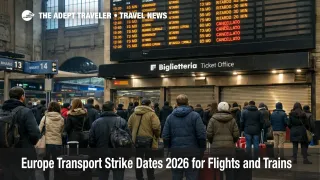
Europe's transport strike pattern is staying elevated into early 2026, and travelers are now dealing with a rolling, multi country calendar rather than isolated one day disruptions. Italy's official Transport Ministry strike list, updated January 20, 2026, shows clustered actions across rail, local transit, and aviation through early March. Belgium has also posted a multi day national rail disruption window that will run on an alternative timetable late January. The practical effect is that travelers planning city pairs and connections across peak winter travel weeks have less schedule slack, and fewer same day backup options when something cancels.
The Italy calendar matters because it combines different layers of the system in close succession. A rail action can break airport access and city to city timing, while an air traffic control, ATC, staffing action can slow arrivals and departures even if airlines keep most flights on sale. Italy's published schedule includes a four hour EasyJet Airlines and ENAV action on Saturday, January 31, 2026, a 23 hour Trenord rail action starting Monday, February 2, 2026, a national ITA Airways action on Monday, February 16, 2026, and additional rail and ATC related actions later in February and early March. The authoritative reference point is the Transport Ministry strike listing, which is updated as notices are filed and amended.
For Italy specific context already tracked on Adept Traveler, see Italy Rail Strike Disrupts Trains January 20, 2026 and Verona ENAV Strike May Delay VRN Flights Jan 31.
Who Is Affected
Independent travelers stitching together rail, flights, and timed activities are the most exposed group, especially when they are using separate tickets or relying on tight station transfers. When rail frequency drops, demand compresses into fewer departures, and that reduces the odds of a quick rebook even if some trains run. Italy's regional networks are a common weak link because they are the feeder layer that makes long distance rail and airport moves work, including the links that many travelers use to reach Milan Malpensa Airport (MXP) and other gateways.
Air travelers are affected in a different way. During ATC or navigation service provider actions, capacity constraints can create airborne holding, departure metering, and knock on delays that land outside the exact strike window. This is why mid afternoon banks can feel fragile even when the official action is only a few hours. The January 31, 2026 listings that include ENAV personnel and EasyJet crew are a good example of how an airport specific capacity change and an airline specific labor action can stack on the same day.
Belgium rail passengers should plan for a compressed, multi day disruption, not a single bad commute. SNCB NMBS says train availability will be limited from Sunday, January 25, 2026, at 10:00 p.m. through Friday, January 30, 2026, for the last train, and that an alternative service will be put in place based on staff availability. For travelers, that means fewer departures to choose from, and a higher chance that a missed connection becomes a multi hour wait, or a forced overnight.
Portugal remains a watch item because recent actions have included broad public service disruption, and operators have actively discussed minimum service questions in late 2025. In practice, Portugal strike days tend to shift pressure onto taxis, rideshares, and intercity buses, particularly when urban rail or metro service is reduced. Monitoring the operator pages and arbitration decisions is the only reliable way to know whether minimum services are in force for a specific day.
What Travelers Should Do
Act immediately if you have hard start commitments, such as flights, cruise embarkation days, paid tours, or event tickets. Move travel off known strike dates where you can, and if you cannot, add buffer by traveling earlier in the day, booking a changeable backup departure, or placing a hotel night before a high stakes departure so a missed connection does not collapse the trip. In Italy, build plans around the reality that "some service runs" still does not mean your specific train or connection will hold.
Use a clear decision threshold for rebooking versus waiting. If a delay of two to four hours would force an overnight, break the last practical connection of the day, or trigger fees you cannot absorb, reroute or rebook as soon as you see your date on an official calendar. If your plans are flexible, you can wait longer, but only if you have a realistic same day alternative, and you are not chaining multiple segments where one cancellation breaks the whole sequence.
Over the next 24 to 72 hours before travel, monitor three channels in parallel, the official strike calendar for the country, your operator's strike page for guaranteed services or minimum service rules, and the live status tools on the morning of travel. For Italy rail, operators publish strike handling rules and, in some cases, guaranteed service information that can help you pick safer departures, but you should still treat only explicitly protected options as "planable" for tight connections.
How It Works
Strikes propagate through transport in two waves. The first order effect is direct capacity loss, fewer crews, fewer dispatchers, fewer trains, fewer staffed counters, or reduced ATC throughput. That shows up as cancellations, retimed departures, and longer platform or gate holds. In Italy, the Transport Ministry strike list is the earliest structured signal for what may be affected, and it is more actionable than social media chatter because it captures sector, scope, and the declared time window.
The second order ripple is where traveler costs and uncertainty jump. When rail or ATC capacity is reduced, the system loses recovery room, and small delays become hard to unwind. Fewer departures mean fewer seats to reassign, call centers and station staff saturate, and alternative modes reprice. Coaches can sell out on the most obvious city pairs, taxis and rideshares surge around stations and airports, and hotels near hubs see last minute demand spikes when same day plans break.
Minimum service regimes and "guaranteed service" lists help, but they do not restore normal network behavior. They typically protect essential mobility, not tight itineraries, and they can shift demand into protected bands, which increases crowding and makes day of rebooking less forgiving. That is why the safest planning posture for early 2026 is to treat known strike dates as reliability risk days, and to build schedules that can absorb cancellations without turning into expensive, cascading failures.