

Lufthansa Germany Flight Strike Disrupts Feb 12, 2026
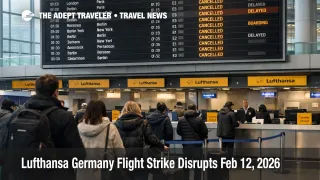
Lufthansa is preparing for widespread disruption on flights departing Germany on Thursday, February 12, 2026, after the Vereinigung Cockpit pilots union called a 24 hour strike covering Lufthansa's core airline and Lufthansa Cargo departures from German airports. A separate union action involving cabin crew at Lufthansa CityLine adds another layer of risk on the same day, particularly for short haul feeder flying that normally funnels passengers into the group's hubs. Travelers should expect mass cancellations, thin same day rebooking, and connection chains that break even when the long haul segment itself is not on strike.
The Lufthansa Germany flight strike matters because a one day departure shutdown at the hubs can cascade across Europe, even for itineraries that do not start in Germany, due to aircraft and crew positioning across the network.
Who Is Affected
Passengers booked on Lufthansa operated departures from German airports are the primary target set, including flights leaving Frankfurt Airport (FRA) and Munich Airport (MUC), plus departures from other German gateways where Lufthansa and CityLine operate scheduled service. Travelers on Lufthansa Cargo routings are also exposed if their shipments are booked on affected departures, which can matter for time sensitive trips that rely on equipment arriving on schedule.
You are also affected if you are not flying out of Germany but you depend on German feeder legs, for example a morning CityLine or Lufthansa short haul sector into Frankfurt or Munich that connects to a long haul flight. When feeder capacity collapses, the long haul aircraft can still operate with empty seats, but your itinerary fails if you cannot reach the hub in time.
Star Alliance itineraries are where the ripple can be most visible. When Lufthansa banks cancel, partner airlines can see misconnected passengers pushed into their remaining seats, which raises standby pressure and can eliminate good rebooking options within hours. Even if you hold a ticket on a different carrier, the knock on effect can show up as delays and gate changes when airports and handlers juggle reaccommodation volume and late aircraft.
Travelers with fixed start events are the highest stakes group. Cruise embarkations, escorted tours, trade fairs, weddings, and prepaid timed entries are where a one day airline strike turns into a lost trip cost, not just an inconvenience.
What Travelers Should Do
Act now if you have a February 12 departure from Germany, or a February 12 connection through Frankfurt or Munich. Check whether your booking is Lufthansa operated versus a Lufthansa Group or partner marketed flight, then make sure your contact details are in the reservation so automated rebooking and notifications reach you. If you can move the trip, shifting the fragile segment to February 11 or February 13 is usually more reliable than trying to fight for same day seats after cancellations start posting.
Use a clear threshold for rebooking versus waiting. If missing the flight would force you to miss a cruise, a tour start, or a separate ticket connection, treat February 12 as a no buffer day and rebook preemptively. If you are traveling for something flexible, waiting can be reasonable, but set a deadline, for example, if your flight is not confirmed by the evening of February 11, rebook to the next day before inventories disappear.
Over the next 24 to 72 hours, monitor the right signals. Lufthansa's flight status tools and strike advisories will show which flights are canceled, rebooked, or still planned, and the pilots union notice confirms the strike window and scope for German departures. Also watch for February 13 recovery messaging, because even if Lufthansa resumes normal schedules on paper, the real world recovery depends on where aircraft are parked overnight and whether crews can legally operate the first departures of the day.
For a related Germany transfer risk pattern this week, see Germany Strikes Hit Local Transport Feb 10 11.
Background
Airline strikes propagate through the travel system in layers, and hub carriers like Lufthansa amplify that effect. The first order impact is straightforward: departures are canceled, crews are not available, and the airline cannot execute its planned bank structure at Frankfurt and Munich. Because Lufthansa's schedule is built around timed waves of arrivals and departures, when a wave is removed, the connections that depend on it disappear, which is why travelers can lose an onward long haul even if that long haul flight is not the segment directly targeted.
The second order ripple is positioning. Aircraft that would normally overnight at outstations end up stranded elsewhere, and crews that would normally rotate through the hubs hit duty time limits. That creates rolling delays into February 13 as the network resets, with late starts, aircraft swaps, and more cancellations on short haul routes that are used to rebuild the long haul feed. Airports and ground handlers also get hit by a surge of rebooked passengers, which can lengthen lines, slow baggage recovery, and reduce the odds of finding a clean same day reroute.
For many travelers, the most practical mitigation is building redundancy across modes. Lufthansa's guidance for domestic Germany disruptions often includes rail substitution options for certain routes, which can preserve the hub connection if you can reach the airport in time, but that only works if you plan the transfer buffer and seat availability before disruption peaks.