

Boston Hingham Ferry Suspended Through Feb 13
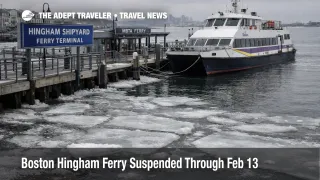
Ice in Boston Harbor has kept MBTA commuter ferry service to and from Hingham suspended through Friday, February 13, 2026. The operational change travelers feel is not just a single canceled sailing, it is an extended interruption that turns a predictable South Shore ferry into a multi step trip with a bus transfer and different boarding patterns. Travelers headed to downtown Boston or Boston Logan International Airport (BOS) should plan for longer and more variable travel times than the published Hingham timetable, and should decide early whether the replacement routing still protects any tight connections.
The MBTA has routed passengers into an alternate plan that uses shuttle buses and shifts the water portion of the trip to Hull, where ferry operations are less constrained by the ice around Hingham's harbor area. Local reporting describing the replacement plan indicates the bus shuttle runs between Nantasket Beach and the Pemberton Point ferry terminal area in Hull, and it is designed to preserve access to Logan and Long Wharf via the remaining ferry service pattern.
Who Is Affected
Regular Hingham ferry riders are the first group affected, especially anyone who normally relies on the ferry for rush hour timing, parking at Hingham Shipyard, or a low stress ride into the city. The second group is airport bound travelers who use the ferry to reach Boston Logan, because an extra transfer introduces more ways to lose time before check in, bag drop cutoffs, and security queues.
Day trippers and leisure travelers are also exposed because the replacement plan can change return timing and create end of day uncertainty. If your plan depends on arriving downtown by a specific hour for a timed museum entry, a tour departure, or a restaurant reservation, the replacement routing increases the odds that you arrive later than planned. The same is true in reverse for returning to the South Shore, where a late departure from downtown can become a missed last connection if delays stack.
The broader constraint is that harbor ice does not behave like a short storm window. Ice can shift with tides, redevelop overnight, and create conditions where safe maneuvering and docking become the limiting factors, which can keep service fragile even when snowfall is not the headline issue. Reporting this week has also described icebreaking support efforts and the operational challenge of keeping channels clear enough for reliable ferry movements.
What Travelers Should Do
If you need to travel on February 13, treat the replacement routing as a higher variability itinerary than the normal direct ferry. Check the latest service status before you leave home, and again shortly before you commit to the bus pickup, because the whole point of the plan is to adapt to ice conditions that can change during the day. For Logan trips, build your schedule around airport deadlines, not around the published ferry clock you are used to.
Set a decision threshold that protects your downstream plans. If you have a same day flight, or you are on separate tickets where a missed leg is expensive, it is rational to switch modes earlier rather than hoping the shuttle plus Hull ferry chain behaves like a direct run. The replacement plan can work, but it introduces an extra link, and that extra link is what breaks tight itineraries when delays compound.
Over the next 24 to 72 hours, monitor three things, the MBTA's posted service updates via the channels you normally use, local advisories about harbor ice conditions, and any notice that service is resuming at Hingham rather than remaining on the bus to Hull plan. The most important signal is not a single trip running, it is whether the suspension language is removed and a normal stop pattern is restored, because that is what turns the route back into a reliable connection for the airport and downtown.
How It Works
Harbor ice disrupts ferry operations differently than wind or rough seas. The first order constraint is safe movement in tight harbor approaches and docking areas, where ice can block channels, reduce maneuvering margin, and raise mechanical risk when slush and ice interfere with vessel systems. That is why service can remain suspended even when the broader weather looks calm.
The second order ripple is how the disruption propagates across the travel system once a direct ferry becomes a bus plus ferry chain. A bus transfer adds variability at the roadway layer, including traffic, loading time, and the risk of missed handoffs at the pier, and it pushes more travelers into different parking and pickup patterns than they planned. The next ripple is at the airport and downtown layer, where a late arrival can convert into missed check in windows, missed hotel check in timing, and shifted tour start times, which is costly because those downstream products often have hard cutoffs.
For travelers looking at this as part of a broader New England winter pattern, it is also worth comparing how persistent ice, not just storms, can repeatedly interrupt marine schedules across the region, as seen in recent ferry disruption reporting on Cape Cod routes. Hyannis Nantucket Harbor Ice Cancels Ferries