

NCLH Orders 3 Fincantieri Ships For 2036, 2037
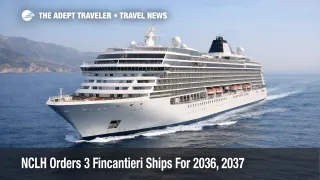
Norwegian Cruise Line Holdings Ltd. said it reached an agreement with Italian shipbuilder Fincantieri to design and build three new cruise ships, with one vessel assigned to each of its brands, Norwegian Cruise Line, Oceania Cruises, and Regent Seven Seas Cruises. Travelers who care about long term ship supply and onboard product, especially repeat cruisers who choose brands by hardware, are the ones most likely to pay attention now. The practical next step is to treat this as an early signal about future capacity and ship classes, then wait for the later announcements that will actually determine where, and when, these ships sail.
The NCLH Fincantieri ships 2037 update is that NCLH is extending its newbuild pipeline with three Italy built vessels scheduled for delivery between 2036 and 2037, reinforcing the company's stated plan for measured growth rather than a near term capacity surge.
Who Is Affected
This matters most to travelers who book far ahead, follow specific ship classes, or concentrate spend with one of the three brands because they like a consistent onboard experience. For Norwegian Cruise Line fans, the company positioned the Norwegian brand ship as a sister ship to its previously announced Norwegian newbuilds, signaling that the biggest capacity additions remain tied to the large ship pipeline NCLH has already telegraphed for the 2030s.
For Oceania Cruises guests, the new ship is framed as a sister ship to Oceania Sonata, which points toward continuity in the line's newer generation mid size luxury platform, rather than a pivot to a different size tier. For Regent Seven Seas Cruises guests, the ship is framed as a sister ship to Seven Seas Prestige, a cue that the luxury brand's near term design direction continues, with future differentiation likely to come from suite mix, dining concepts, and itinerary deployment rather than a sudden class reset.
The ripple effects for travelers show up in how the travel system prices cruises, and supports them, long before the first sailing. At the source, shipyard slots are scarce, and NCLH is effectively reserving capacity in Italy through the end of 2037, which can reduce schedule uncertainty compared with operators who have not locked in build positions. From there, the second order impacts spread into itinerary planning and distribution, because travel advisors and loyalty focused travelers often treat new ships as anchor products for future seasons, which can shape group blocks, and early demand, when booking windows open. A third layer hits air and hotel planning indirectly, because new ship deliveries can shift where a brand chooses to homeport, and which regions it emphasizes, changing which gateway airports and pre cruise hotel markets feel pressure in the first seasons after launch.
What Travelers Should Do
If you are booking in the next 6 to 24 months, treat this announcement as context, not an action trigger. It does not change near term itineraries, and it does not create new cabins you can book today, but it can help you decide whether to stay loyal to a brand you already like, or to diversify if you are worried about future supply, and pricing, in the segments you sail most.
If you are the type of traveler who waits specifically for the newest hardware, set a clear decision threshold now: either book the best itinerary and cabin you can get on today's ships, or commit to waiting for the first bookable seasons tied to these 2036 and 2037 deliveries. Waiting only makes sense if you are willing to accept that early season new ship sailings often carry higher fares, tighter suite availability, and more schedule change risk, because operators refine operations and deployments as the ship enters service.
Over the next 24 to 72 hours, monitor what gets clarified beyond the headline. The traveler useful details will be the ship classes and any stated technical direction that affects comfort and experience, plus any hints about deployment regions once the brands begin to talk about intended itineraries. If you are bargain focused instead, keep your attention on current inventory and promotions, because future newbuild capacity does not reliably reduce near term pricing, especially when sailings are already running strong. For examples of how demand cycles, and deal structures, can move faster than capacity, see Virgin Voyages Wave Deal 2026 80% Off Second Sailor, and for how new hardware can change cabin mix decisions even on smaller ships, see Star Seeker Miami Christening, Windstar Suite Choices.
Background
A newbuild agreement is an early milestone in a long sequence that usually runs from concept and preliminary design, to contract execution and financing, to steel cutting, to delivery, and only then to the first revenue sailing. In its announcement, NCLH emphasized that the three ships are planned as sister ships to existing, or previously announced, platforms, which usually means the broad design, size band, and onboard layout philosophy are already established, and the next updates will be about refinements rather than reinvention.
NCLH also framed the financial mechanics in a way that matters for delivery confidence. The company said pre delivery payment obligations are immaterial until delivery, and it expects to use Export Credit Agency financing to fund the majority of vessel costs at delivery, which is a common structure in large commercial shipbuilding. For travelers, the practical relevance is that financing structure and yard slot security can influence whether delivery dates hold, which in turn affects when new itineraries actually appear, and how far in advance you can book them with confidence.
Sources
- Norwegian Cruise Line Holdings Enters Into Agreement With Fincantieri for Three New Cruise Ships
- Fincantieri secures order from Norwegian Cruise Line Holdings for three new cruise ships
- Norwegian Cruise Line Holdings Adds Three Ships Extending Orders To 2037
- More newbuilds for NCL, Oceania Cruises, Regent Seven Seas