

ATTA 2026 Africa Travel Trends Report Highlights
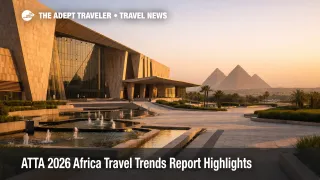
ATTA says its 2026 Travel Trends report points to a clear pivot in why travelers are choosing Africa, with cultural immersion, heritage storytelling, conservation-led experiences, and slower, more meaningful journeys showing up as core demand drivers. The association is also using the trend release to push early applications for its two flagship trade events that shape what gets packaged and sold into 2026, Experience Africa for qualified UK and Europe-facing buyers, and Essence of Africa for international buyers. For travelers, the practical takeaway is that 2026 Africa itineraries are being built less around fast highlight loops, and more around deeper place-based routing that rewards extra days, expert guides, and low-friction logistics.
The trend emphasis matters because it changes what sells out first. When culture and heritage move from add-on excursions to the main reason for the trip, the choke points become timed museum entry, specialist guiding capacity, and limited premium inventory in the best-located neighborhoods, rather than just safari lodge availability. ATTA points to North Africa's city-break appeal rising alongside major cultural moments, including the Grand Egyptian Museum's opening in Giza, Egypt, and Rabat's designation as UNESCO World Book Capital 2026, both of which can pull demand into specific weeks and shoulder seasons that used to be quieter.
Who Is Affected
Leisure travelers planning Africa in 2026 are the main audience for the trend signals, particularly mature, higher-spend travelers who prioritize context, comfort, and expert interpretation, plus diaspora travelers building heritage and ancestry-based trips. ATTA's CEO, Kgomotso Ramothea, frames the shift as demand for deeper connection, learning, and reflection, which tends to push bookings toward specialist tour operators, museums, historians, and community-led experiences that cannot scale quickly.
Travel advisors and tour operators are affected because the product mix that converts is changing. ATTA is explicitly tying the trends to its buyer-supplier marketplaces, Experience Africa 2026 in London from June 22 to 24, 2026, and Essence of Africa 2026 in Zanzibar from October 20 to 22, 2026, both built around pre-scheduled meetings and curated attendance. Those events influence which destinations and suppliers get shelf space, which in turn shapes availability, routing options, and pricing travelers see in 2026.
Destination impacts are uneven. ATTA highlights North Africa and West Africa for culture and heritage travel momentum, and it flags Algeria and Angola as destinations to watch as investment, access, and interest in less-visited places converge. That combination can be good news for travelers who want something different, but it also means you should be realistic about limited airlift, fewer English-speaking guides in some corridors, and longer transfer times outside major gateways.
What Travelers Should Do
If you are building a culture-first trip, start by locking the non-negotiables that have fixed capacity, then build the itinerary around them. For Egypt, that often means museum tickets and expert guiding in Cairo, plus a routing choice between faster domestic flights and slower overland or river sequences. Before you commit deposits, confirm visa and entry steps for your passport, especially if you are combining Cairo with Upper Egypt or the Red Sea, using Egypt Tourist Entry Requirements For 2026 as a planning baseline.
If you are considering slow travel, decide up front what pace counts as "worth it" for you, because multi-country itineraries fail when they are overstuffed. A useful threshold is whether you can give each primary stop at least three full days on the ground, not counting travel days. If you cannot, you are usually better off trimming one country and upgrading the guiding, accommodations, or internal transport, rather than trying to sample everything.
Over the next 24 to 72 hours of your planning cycle, monitor three things that can change the value of a 2026 Africa trip quickly, air connectivity on your exact dates, entry and visa rules, and high-demand inventory for cultural and conservation-led experiences. If you want a Nile-focused slow itinerary, track new river product and sailing patterns, because newer ships can reshape availability and pricing, and they can bundle access that is hard to replicate independently, as described in A&K Sanctuary Unveils Nile Seray, 64-Guest Nile Cruise. If you are targeting emerging destinations, also watch infrastructure and investment signals that can improve the traveler experience, including projects mapped in UAE Africa Tourism Plan To Fund $6 Billion Projects.
Background
ATTA's trend framing sits on a simple system dynamic. When traveler demand shifts toward culture, heritage, and conservation impact, suppliers respond by creating more guided, place-based product, and destinations respond by promoting signature cultural anchors and improving access. The first-order effect is at the source, limited-capacity experiences such as museum entry windows, specialist guiding, community visits, and conservation activities become the critical path items that define the trip's feasibility and cost.
The second-order ripple shows up across at least two other layers. On air networks, longer stays and multi-country routing increase dependence on regional connections, which raises the penalty for delays and missed links, and it can push travelers to build in buffer nights in gateway cities. On hospitality and ground operations, slow travel concentrates nights into fewer bases, which increases competition for the best-located properties, and it can shift demand toward rail and river corridors where the experience is the transport. ATTA's event strategy reflects that same system logic, curated buyer-supplier meetings can accelerate which products scale, and which destinations rise, because distribution decisions happen months before travelers see the final packages.