

Port of Los Angeles Outage Delays Quantum Boarding
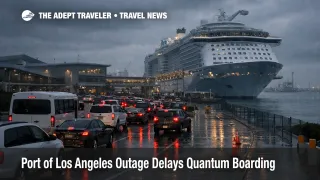
A power outage at the Port of Los Angeles disrupted terminal operations and delayed embarkation for Royal Caribbean's Quantum of the Seas at the World Cruise Center in San Pedro on February 18, 2026. Guests scheduled to board that day were pushed into a later start time, which is the worst case operational shape for a cruise terminal because it compresses arrivals into a narrow window. If you planned your timing around an early arrival from Los Angeles International Airport area hotels, rideshares, or parking shuttles, the plan is now fragile, and you should retime everything around the cruise line's latest instructions.
The practical reality is simple. A port side utility failure breaks the terminal's throughput, then the crowd stacks up outside, then the curbside becomes a parking lot. Even after power returns, the system does not instantly recover, because screening lanes, baggage handling, and check in desks have to spin back up, and staffing has to be rebalanced for the surge.
Who Is Affected
Embarking guests on Quantum of the Seas are the direct blast radius. Families with lots of baggage, travelers with mobility needs, and anyone arriving on a tight schedule from the airport are the most exposed because they have the least flexibility when the terminal tells them to wait.
Cruisers using timed ground transport are also exposed, especially rideshares and prepaid cars that were booked to match the original boarding appointment. When a cruise line pushes arrival later, drivers do not magically become available later, and the market response is predictable: fewer available vehicles, higher prices, and longer pickup times right when the terminal is trying to ingest a wave of arrivals.
The second order impact hits the entire San Pedro access corridor. Storm driven hazards, downed line risk, and cleanup activity can keep roads unreliable even after electricity is restored, and that can snarl the last miles into the terminal. The City of Los Angeles issued storm preparedness guidance for the same weather cycle, including wind and marine warnings covering San Pedro and the Port of Los Angeles area, which is consistent with the kind of conditions that trigger outages and messy road access.
What Travelers Should Do
If you are boarding today, stop optimizing for convenience and start optimizing for certainty. Anchor to the most recent Royal Caribbean communication about when to arrive, and do not show up early hoping to talk your way in, because ports and cruise lines enforce windows when they are managing a backlog. Keep bags portable, keep essential documents and medications on your person, and assume you may be waiting outdoors before you can enter.
Your decision threshold is the final check in cutoff, not the published sail away time. If your transfer plan cannot reliably get you to the terminal with a conservative buffer after the updated boarding start, you should change the plan immediately. That can mean rebooking a private car for a later pickup, switching from rideshare to a hotel shuttle plus taxi fallback, or adding a same day hotel day room near the port if you need a controlled place to wait with luggage.
Over the next 24 to 72 hours, monitor three things like an operator. First, Royal Caribbean app notifications, texts, and email for any revised arrival appointments and final onboard times. Second, local road conditions into San Pedro because a cleared outage does not mean cleared traffic. Third, your own transfer vendor, because many will quietly shift pickup logic when traffic turns ugly, and you need that confirmed before you commit.
How It Works
Cruise embarkation is a throughput system, not a hospitality experience. The terminal is built around steady flow, bag drop, screening, check in, and gangway processing, all powered by a mix of physical infrastructure and networked systems that are useless when utilities fail. A port power outage does not just turn off lights, it can interrupt baggage conveyors, security lanes, device charging, and the basic ability to process passengers at speed.
The first order effect is obvious: boarding starts later, lines get longer, and the terminal access road becomes congested. The second order ripple is where travelers get burned. A compressed embarkation window drives curbside gridlock and forces baggage screening to operate in surge mode, which increases delays and raises the odds that people miss a hard cutoff because they assumed "I arrived at the port" equals "I am safe." It does not. You are safe when you are checked in and past the last gate.
There is also a downstream itinerary risk. Quantum of the Seas can sometimes recover time at sea, but recovery is not free, and it depends on distance, weather, and port slot constraints. If the ship sails materially late, the line may protect later operational commitments by trimming time in an early call, shifting arrival times, or adjusting sequence. That matters for travelers with tightly timed shore plans, return flights after the cruise, or hotel check ins at the next destination.
If this pattern feels familiar, it should. Los Angeles has already seen Quantum of the Seas embarkation timing disruptions in 2026 for unrelated causes, and Long Beach has seen a major cruise departure delay cascade into itinerary changes when systems fail. For background and comparable failure modes, see Los Angeles Quantum of the Seas Embarkation Delay and Carnival Firenze IT Outage Delays Long Beach Sailings.
Sources
- Royal Caribbean Ship Hit by Delays After Los Angeles Port Power Failure
- Royal Caribbean Power Outage Disrupts Los Angeles Departure, Thousands Waiting
- City Crews Continue Preparedness Measures Ahead of Second Round of Wet Weather This Week
- Daytime Lane Closure of Vincent Thomas Bridge for Pothole Repairs, Thursday, Feb. 19