

Reno Tahoe Airport Snow Delays Flights Feb 20, 2026
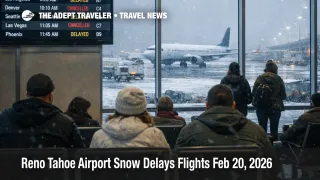
Snow and winter storm conditions in the Reno, Nevada, and Lake Tahoe corridor are creating a real risk of delays and cancellations at Reno-Tahoe International Airport (RNO). The airport is open and operating, but airlines are canceling or delaying select flights based on runway conditions at Reno and weather or constraints at origin and destination airports. If you are traveling for a ski weekend or a same day resort changeover, the practical move is to treat today as an irregular operations day, protect your rebooking options early, and build extra time for the ground leg into the mountains.
Reno's airport team has been running snow operations through the event, including continuous runway and taxiway monitoring and repeated plow cycles. In storms like this, airports often prioritize keeping one primary runway at a higher operational standard rather than spreading resources thin, which can reduce arrival and departure throughput even when the field remains technically open. That is why you can see a flight schedule that looks mostly intact, while the same day reliability, connection timing, and recovery options quietly get worse.
Who Is Affected
Travelers departing or arriving at Reno-Tahoe International Airport (RNO) are the core group, especially anyone on limited frequency routes where a single cancellation can erase most same day alternatives. Leisure travelers arriving for ski trips are exposed because they often stack multiple tight dependencies, a flight arrival, a rental car or shuttle pickup, and a mountain road transfer with chain controls or intermittent closures.
Connecting passengers are also exposed, even when they do not touch Reno directly. When Reno flights cancel, the aircraft and crews assigned to later legs can be displaced. That can show up as a late inbound aircraft at a hub, a swapped aircraft type that reduces seat count, or a crew duty limit problem that triggers later cancellations. The FAA's daily planning outlook has also been flagging winter weather friction in "ski country," which is a useful shorthand for a system that loses slack when mountain airports and corridors get constrained. That matters because once slack is gone, airlines protect their largest hubs first, and thinner markets like Reno can be the first place where reaccommodation becomes scarce.
Anyone relying on ground transport into the Sierra is part of the same blast radius. Even if your flight lands, chain requirements and winter road constraints can delay, or derail, the transfer leg, and that can create missed lodging check ins, lost prepaid ski lessons, and last minute hotel stays near Reno when the mountains are not safely reachable.
What Travelers Should Do
Start with immediate actions and buffers that preserve options. Pull up your flight status in your airline app, then check the inbound aircraft, and its prior legs, because the earliest warning sign is often that the plane never leaves the previous airport on time. If your airline has issued a waiver, use it early, because waivers are only valuable while seats exist.
Use a decision threshold for rerouting versus waiting. If your itinerary is time critical, for example a same day resort check in, prepaid lift access, a group transfer departure, or a tight onward connection, treat any sustained delay trend as a trigger to move. If you are protected on a single ticket and you have multiple later same day options, waiting can be rational, but your cutoff should be when you are down to the last flight that still gets you in without an overnight and without arriving after your ground transport window collapses.
Over the next 24 to 72 hours, monitor three things, airline waiver language, runway and visibility updates at Reno, and Sierra road conditions for the transfer corridors you actually need. If you decide to shift to an alternate airport, do it with a clear cost model, not vibes. Sacramento International Airport (SMF) can be a strong alternative when Tahoe roads are passable but Reno air operations are constrained, while San Francisco International Airport (SFO) adds more flight inventory but can introduce its own weather and flow program risks. Las Vegas can work for some itineraries when you can tolerate a longer drive or when you are repositioning to a different resort base, but it is not a magic escape hatch if the Sierra road leg is the real constraint. For broader network context on how weather driven "capacity days" propagate into missed connections and thinner same day options, see Flight Delays and Airport Impacts: Feb 19, 2026.
How It Works
Airport winter operations are not just about whether snow is falling, they are about whether runways can be kept within friction, contamination, and visibility limits that allow safe arrival and departure rates. When snow removal cycles are active, an airport may rotate between plowing and arrivals, or consolidate traffic onto one runway, which effectively reduces capacity. Airlines then make flight by flight decisions based on the combined picture, the Reno runway status, the weather at the other endpoint, how many crews and aircraft are available, and whether canceling a thin route protects a larger bank elsewhere.
The disruption then propagates through the travel system in predictable layers. First order effects start at the field, arrival rates drop, departures meter, and aircraft turn times stretch because de icing and ramp movement take longer. Second order effects ripple into the network, aircraft and crews drift out of position, hubs lose spare seats, and rebooking gets harder, especially for smaller airports where there might only be one or two remaining departures that day. A third layer hits the ground leg, because even a successful arrival can still fail the trip if chain controls, intermittent closures, or slow traffic make the mountain transfer unreliable. That ground constraint feeds back into the air side too, as stranded travelers book hotels near Reno, overrun rental car inventory, and compete for the next day's limited flight seats.
Sources
- Passenger Information, Weather Alert, Reno-Tahoe International Airport
- Winter storm impacting flights at the Reno-Tahoe International Airport
- FAA Daily Air Traffic Report, Friday, February 20, 2026
- Caltrans Road Information, I 80 Chain Requirements
- Area Forecast Discussion, National Weather Service Reno, February 20, 2026