

United MileagePlus Card Miles Change Starts April 2
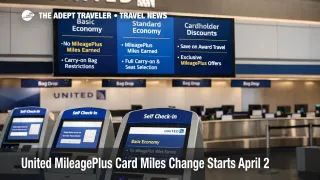
United is reshaping how MileagePlus members earn and redeem miles to push more travelers toward its cobranded cards. For tickets purchased on or after April 2, 2026, United will award higher base miles per dollar to MileagePlus members who hold an eligible United credit or debit card, while reducing the base earning rate for members who do not. The practical shift is simple, the program now treats "having the card" as a gate for the best economics, not just a nice add on.
At the published tier level, the change means a general MileagePlus cardmember earns six miles per dollar on eligible United flights, while a general member without a United card earns three. The same pattern climbs by status level through Premier 1K, where United says cardmembers earn 12 miles per dollar and noncardholders earn nine. Those figures are the flight earning side, separate from the additional miles you earn from the payment transaction itself when you actually pay with the United card.
United is also tightening the bargain fare on ramp. Under the new rules, MileagePlus members must be a United cardholder to earn miles on Basic Economy tickets. If you have been using Basic Economy as a low cost way to keep earning a trickle of miles, that strategy ends unless you carry an eligible card.
On the redemption side, United says cardholders will get at least 10 percent off the mileage price of United operated award tickets, and Premier members with an eligible United card will get at least 15 percent off. Several consumer and industry outlets also report that United is expanding access to lower priced awards that used to be restricted to higher elite tiers, which is another way of making "cardholder" the practical membership line for better deals.
Who Is Affected
The biggest winners are frequent United flyers who already hold a United card, especially those who redeem miles often for United operated awards. They get more miles on the flight earning side, plus the award discount, which can compound quickly if you book multiple trips a year on points.
The biggest losers are MileagePlus members who do not hold an eligible United card, and who buy Basic Economy or who rely on miles accrual from occasional paid trips to fund one bigger redemption. The new earning rates lower the miles you earn on paid tickets, and Basic Economy becomes a no earn fare unless you hold the card. This is a structural nudge away from casual participation, because it reduces the "free" value you used to get simply by flying.
Business travelers sit in the middle, because corporate programs often require use of a corporate card, and they often police compliance tightly. United told corporate customers that business travelers who are the primary cardholder of a United credit card will still receive the higher cardmember accrual rate even when travel is booked using a corporate card, as long as they include their MileagePlus number in the reservation. United also says those travelers will earn even more miles if they do pay with their United card, which is the pressure point that can quietly challenge corporate policy.
The second order impact shows up outside the loyalty ledger. When an airline makes the value gap between cardholders and noncardholders this large, it can change booking behavior, which then changes revenue management. More travelers will aim their spend to one carrier to justify the annual fee, and that can shift demand patterns on competitive routes, especially for business heavy corridors. Over time, that can influence schedule choices, upgrade competition, and award seat availability, because airlines allocate inventory based on who they are trying to attract and retain.
What Travelers Should Do
If you have United trips coming up, check the purchase date on any ticket you have not bought yet, because the trigger is tickets purchased on or after April 2, 2026, not travel flown later in the year. If you are considering Basic Economy, decide whether you care about earning any miles on that ticket, and if you do, either move to a higher fare family or confirm you have an eligible United card attached to your MileagePlus profile before you purchase.
If you redeem miles on United operated awards, do the math like an operator, not like a fan. Estimate how many awards you book in a year, apply a conservative 10 percent discount assumption, and compare that to the annual fee of the United card you would actually carry. If the award discount savings plus the incremental miles earned do not clearly beat the fee, you are paying for vibes, not value.
Over the next 24 to 72 hours, monitor the details United publishes about what counts as an "eligible" card for earning and discounts, and how the award discount is displayed in search, because implementation details determine whether the benefit is truly automatic or buried behind toggles and eligibility checks. Also watch how corporate travel managers respond, because if large programs push back, you may see policy guidance about when, or whether, employees can chase airline rewards without violating payment rules.
How It Works
MileagePlus flight earning is a multiplier applied to the fare, and in most cases to carrier imposed surcharges, not a simple rebate on the total receipt. United is changing that multiplier based on two attributes, your elite status, and whether you hold an eligible United card. Separately, if you pay with a United card, the card itself earns miles on the transaction, which is why United can advertise very large "total miles per dollar" numbers when you combine flight earning and card spend earning.
Award discounts are a different lever. United is effectively lowering the mileage price of United operated awards for eligible cardholders, which increases the purchasing power of your miles without changing the cash price of tickets. This matters because it can widen the gap between travelers who redeem frequently and those who mainly earn miles passively, and it can also change how quickly a redemption becomes possible for a given traveler.
This is also consistent with United's recent pattern of building more program value around payment products and member engagement. If you want more context on United's broader loyalty and payments push, see United and Southwest Bring Back Debit Cards and United MileagePlus, Instacart add $0 delivery tied to flights. For a deeper, systems level look at how travel payments and loyalty infrastructure behave under stress, and why airlines treat payments as a strategic battleground, see Cosmic Rays, Bit Flips, and the Airbus A320 "Icarus" Recall.
Sources
- United to Expand MileagePlus Credit Cardholder Benefits, Business Travel News
- United overhauls loyalty program benefits to boost co branded credit card adoption, Reuters
- United Gives MileagePlus Credit Cardholders More Miles and Exclusive Flight Discounts, PR Newswire
- United shakes up MileagePlus, tightens basic economy, The Points Guy
- United Makes Major Changes to Miles Earning Rates, NerdWallet