

Cape Liberty Blizzard Delays Royal Caribbean Sailingv
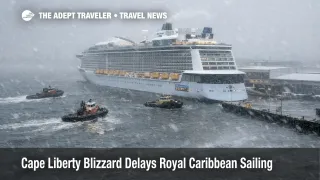
Royal Caribbean is warning that cruise departures from Cape Liberty Cruise Port in Bayonne, New Jersey, may not sail on schedule because the February 22, 2026 blizzard setup includes high winds and rough seas in the New York Harbor approaches. The most exposed travelers are anyone planning same day arrival into the New York area, plus guests who built tight outbound flight plans for the end of the voyage. The practical move is to treat your embarkation day like a winter irregular operations day, arrive earlier than you think you need, and be ready for the line to tighten enforcement of assigned check in windows when the sailing plan shifts.
The constraint here is marine safety, not terminal readiness. National Weather Service marine forecasts for New York Harbor call for gale conditions developing Sunday night into Monday, with winds strengthening and visibility dropping in snow and mixed precipitation. When winds and seas cross operational thresholds, ports can slow or pause pilot and tug movements, which means ships can remain alongside longer than planned until the harbor transit is safe. That is the same failure mode described in earlier New York Harbor disruptions, where the binding constraint becomes pilotage and safe channel transits, not whether the ship is fueled or the terminal is staffed. For background on how those harbor constraints propagate, see New York Harbor pilotage halt delays cruise departures.
Who Is Affected
Embarking guests on the February 22, 2026 Cape Liberty sailing are affected first, especially if they planned to arrive by air the same morning, or planned a long drive into Bayonne with no buffer for road closures and slowdowns. A delayed sailing can also change the cadence inside the terminal, because turnaround work still has to happen, and boarding waves are often metered to avoid crowding when timing is uncertain. In plain terms, if you are late to your assigned arrival window, the line has less slack to absorb you, even if the ship is still physically alongside.
Families, groups, and travelers on separate tickets carry extra risk because they are more likely to have inflexible pieces, such as nonrefundable hotel nights, prepaid transfers, and flights that are expensive to change once the region enters storm recovery mode. Guests who booked pre cruise hotels in Manhattan, New York, or near Newark, New Jersey, should also expect pricing and availability pressure when large numbers of travelers decide to add a buffer night at the same time.
Travelers planning post cruise flights later in the week should also pay attention, because weather driven changes can stack. If the ship departs late, it may arrive back late, and a late return can compress disembarkation and airport transfer windows for the next wave of travelers. This is the same chain reaction travelers saw in prior winter disruptions at Cape Liberty, where a maritime delay quickly became an aviation and lodging problem once thousands of people tried to rebook into the same limited inventory. For a recent example tied to a winter storm return disruption at the same homeport, see Bayonne Odyssey Return Delayed, Royal Caribbean Impact.
What Travelers Should Do
Act as if the ship will not sail on the original clock. If you have not yet traveled, move inbound flights earlier on February 22, 2026, or add an overnight buffer on February 21, 2026, so you are already in the region when roads and airport operations degrade. If you are driving, plan extra time for parking, rideshare delays, and reduced highway speeds, and assume the terminal area will be slower than normal.
Use a simple decision threshold for rebooking versus waiting. If missing embarkation would force you to buy last minute flights to a downline port, or would wipe out nonrefundable hotel and cruise costs, pay for the buffer now, and protect the whole trip. If you are already local, and you can tolerate a later sailing without domino costs, waiting can be rational, but only if you stay inside Royal Caribbean's assigned arrival guidance and can get to the terminal safely when called.
Over the next 24 to 72 hours, monitor three streams, Royal Caribbean app alerts and emails for revised boarding and departure timing, National Weather Service marine updates for New York Harbor wind thresholds, and your own airline and hotel change rules in case the trip becomes a two night buffer instead of one. The goal is not to perfectly predict the final sailing time, it is to keep your inbound plan robust when the harbor is the binding constraint.
How It Works
Cape Liberty departures depend on a tight chain that starts offshore, not at the curb. Even if the terminal is open and check in is staffed, the ship still needs a safe window to transit the harbor with pilots, tugs, and channel traffic management aligned. When a winter system pushes strong winds into the harbor entrance and approaches, pilot transfers can become unsafe and tug operations can be constrained, so the port effectively meters ship movements until conditions fall back under thresholds.
That first order constraint creates second order ripples across the travel system. A delayed sailing shifts passenger arrival behavior, which concentrates demand into fewer hotel nights, fewer rideshare windows, and fewer workable departure times for trains and flights. At the same time, regional airports are often managing their own storm programs, so reaccommodation seats can be scarce and expensive. The result is that what looks like a cruise delay can quickly become a lodging and aviation scramble, especially for travelers who tried to "just make it" with same day arrival and a thin margin.
Sources
- Royal Caribbean reroutes and delays ships because of blizzard
- Severe Winter Storm Forces Odyssey of the Seas to Stay at Homeport Overnight
- Cape Liberty (New York), New Jersey, Odyssey of the Seas itinerary page
- National Weather Service Marine Forecast, New York Harbor, ANZ338
- Major Winter Storm Today into Monday, NWS New York Upton briefing
- Blizzard warnings issued for New York area as storm heads to East Coast