

Global Entry Paused, Plan Longer U.S. Passport Lines
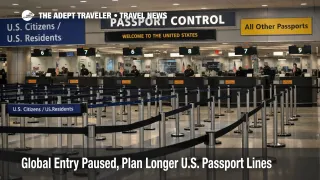
Global Entry paused shutdown conditions are now a real return trip problem, not a paperwork headline. As of February 22, 2026, DHS has halted Global Entry arrival processing during the partial government shutdown, while TSA PreCheck is continuing but may be adjusted airport by airport depending on staffing and resources. For travelers arriving internationally on February 24, 2026, and beyond while the pause lasts, the pain point shifts to U.S. passport control lines and connection math, especially at hubs with heavy evening arrival banks.
One practical update versus earlier shutdown chatter is the clearer operational split, PreCheck mostly preserved, Global Entry still offline. That changes how to budget time, because outbound security may feel normal in some airports, but inbound processing on the way home can degrade fast, and it is harder to "fix" once you are in the arrivals hall.
Global Entry Paused Shutdown: What Changed For Return Trips
DHS says U.S. Customs and Border Protection has halted Global Entry arrival processing as an emergency measure during the shutdown. That means eligible members are being pushed back into standard primary inspection workflows, which generally increases average waits and increases variability across arrival banks.
TSA PreCheck is still operating, but DHS and major reporting describe a case by case posture, meaning some airports could consolidate lanes or change how strictly they staff expedited screening if staffing constraints tighten. The key traveler takeaway is that the shutdown impact is no longer symmetrical, outbound security may be manageable, inbound passport control is the more predictable choke point right now.
Which Arrivals And Connections Are Most Exposed
The most exposed itineraries are international arrivals that need a tight domestic connection after clearing passport control, collecting bags when required, rechecking, and reclearing security. If Global Entry normally made that chain reliable for you, expect a higher miss rate now, particularly on late afternoon and late evening arrivals when many long haul flights land in clusters.
The biggest exposure concentrates at major U.S. gateways that handle high volumes of international arrivals and are listed among CBP's Global Entry airport locations, including Hartsfield Jackson Atlanta International Airport (ATL), John F. Kennedy International Airport (JFK), Newark Liberty International Airport (EWR), Miami International Airport (MIA), Los Angeles International Airport (LAX), San Francisco International Airport (SFO), Chicago O'Hare International Airport (ORD), Washington Dulles International Airport (IAD), Dallas Fort Worth International Airport (DFW), and Houston George Bush Intercontinental Airport (IAH). Smaller gateways can still snarl if one widebody arrival bank hits with limited booths open, but the hubs above are where missed connections cascade into rebooking pressure fastest.
What Travelers Should Do Now
If you are returning to the United States during the pause, build a bigger immigration plus recheck buffer than you normally would. For most travelers, that means choosing a longer scheduled connection for international to domestic, and avoiding last flight of the night domestic legs when an overnight becomes the default failure mode if you misconnect.
Use Mobile Passport Control where it is available and where the airport actively supports it. MPC is a free CBP app that lets eligible travelers submit passport and customs information in advance, then use a dedicated lane at participating entry points, which can meaningfully cut time versus the standard line even without Global Entry. The decision threshold is simple, if your return itinerary has a tight domestic link, and your arrival airport supports MPC, set it up before you land, because you cannot "download your way out" once you are already trapped in a long primary inspection queue.
Monitor your arrival airport's operating posture before you fly. Because TSA PreCheck operations may be adjusted airport by airport, build extra time for the outbound side too if you are traveling through a stressed hub, and treat any announced checkpoint consolidations as a signal to arrive earlier than your usual routine.
Why The Lines Worsen Under This Split
Global Entry works by diverting pre screened travelers out of the standard primary inspection workload, which reduces demand on the same officer staffed booths that everyone else needs. When that diversion disappears, a higher share of passengers feeds the same inspection capacity, so queues lengthen, and waits become more sensitive to arrival surges.
The second order effects are where travelers feel it most. Missed domestic connections increase rebooking volume, push more passengers into late day standby lists, and raise the odds of forced overnight stays near hub airports when remaining seats dry up. That stress can also spill into longer customer service lines, slower baggage delivery during peak waves, and more last minute itinerary churn, because the disruption happens at a point in the journey where options are already constrained.
Sources
- 1 Week into Democrats' Shutdown, DHS Implements Emergency Measures
- Department of Homeland Security suspends Global Entry and reverses course on TSA PreCheck
- DHS says TSA PreCheck still operational after announcing suspension
- Mobile Passport Control (MPC) | U.S. Customs and Border Protection
- Airports with Global Entry | U.S. Customs and Border Protection
- TSA PreCheck Open, Global Entry Paused Amid Partial Government Shutdown