

India Women Chauffeur Tours, Cholan Launches First
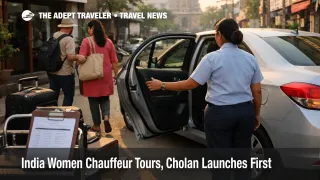
Cholan Tours says it is introducing professionally trained women chauffeurs to run multi day and long distance trips across India, positioning the move as a first for the country's chauffeur driven touring segment. The company announcement dated February 23, 2026, says the program includes advanced driving and safety training, plus structured support such as safe accommodation for drivers during overnight routings. Cholan also says it has signed an MoU with the Government of Tamil Nadu aimed at appointing 100 women drivers for tour operations in the state.
The women chauffeur driven tours India concept matters for travelers because it changes who you can request behind the wheel on long road legs, which is where fatigue, comfort, and safety perception can swing itinerary decisions. It also creates a new planning variable, availability, because early demand is likely to concentrate around specific routes, dates, and group types while the driver pool scales.
Women Chauffeur Driven Tours India: What Changed
Cholan Tours says women chauffeurs will now be available for extended hour, multi day, and long distance touring, not just short city transfers. The company frames this as an expansion of access to a category of driving work that has historically been male dominated, and it says each chauffeur will be trained in route knowledge, safety protocols, and hospitality standards.
In practical traveler terms, this is a product change, not a policy change. It should show up at the booking stage as a requestable driver preference for certain itineraries, and on the ground as a different service option for families, women only groups, and solo women travelers who value a higher comfort threshold during long overland legs.
Who This Service Fits Best
This will be most relevant for itineraries where road time is the trip, not an afterthought. Think multi city Golden Triangle style routing, temple and heritage circuits, hill station approaches, and wildlife lodge transfers where a single driver can be with you across multiple days and hotels. It is also a fit for travelers who are already comfortable with private touring in India but want a higher sense of control over the touring environment, especially on early morning departures, late night arrivals, and long highway stretches.
For solo women travelers, the biggest benefit is psychological load reduction, the trip can feel simpler when you are not constantly recalibrating personal boundaries with a new driver each day. For families, especially with older parents or teens, it can be an easy way to lower friction without changing the itinerary itself. For women only groups, it can be the difference between choosing a private vehicle itinerary versus staying locked into rail and domestic flights.
This does not remove the need for smart planning. India is not a visa free destination for most visitors, and entry process mistakes can still ruin a trip long before the car shows up. If your trip is time sensitive, confirm your documentation and timelines early, and use a checklist like India Entry Requirements And New E Visa so the paperwork does not become the weak link.
What Travelers Should Do Now
Start by treating "women chauffeur availability" as a bookable constraint, not a vibe. Ask whether a women chauffeur can be confirmed in writing for your exact dates and route, and whether the assignment is locked for the full itinerary or only for certain legs. If the answer is "request only," assume it may not clear during peak periods, and decide whether you want to hold dates, adjust routing, or keep a backup plan with standard chauffeurs.
Next, ask about duty hour expectations and rotation. Long distance touring is where fatigue risk lives, especially with dawn starts, night drives, and aggressive day counts. A serious operator should be able to explain how they manage rest, handoffs, and overnight planning, and what happens if a driver must be swapped mid tour. Cholan says it has support systems including safe accommodation for drivers during tours, which is a good sign, but you still want the operational details for your route.
Finally, price and routing discipline matter. If you are choosing this primarily for comfort and confidence, do not undermine it with an itinerary that forces late arrivals, rushed departures, and unrealistic drive times. Build buffer nights, avoid back to back 6 to 8 hour road days when you can, and prioritize daylight driving on unfamiliar corridors. The tradeoff is simple, a slower itinerary usually costs more in hotels, but it often saves the trip by reducing misconnects, missed check ins, and exhaustion.
Why This Is Happening, and How It Could Ripple
Cholan is framing the program as both a service enhancement and a workforce initiative, expanding long route driving into a more inclusive employment pathway. The company's statement also links the rollout to a Tamil Nadu MoU aimed at appointing 100 women drivers for tour operations, which suggests an intentional scale plan rather than a one off marketing stunt.
The first order effect is straightforward, more travelers who prefer women chauffeurs may feel comfortable choosing road heavy itineraries, or choosing private touring at all. The second order effect is competitive pressure. If this works operationally, other destination management companies and transport vendors will either replicate the model or partner to avoid losing certain traveler segments, especially women only group travel and high touch family itineraries.
There is also a supply chain angle. Long distance private touring depends on driver availability, training quality, and retention. A structured program that improves job stability can reduce last minute driver churn, which is one of the quiet causes of late pickups, rushed drives, and inconsistent service across multi day trips. If the training pipeline and support systems hold, travelers should see the benefit as reliability, not just representation.