

Israel Travel Advisory, U.S. Urges Leaving Soon
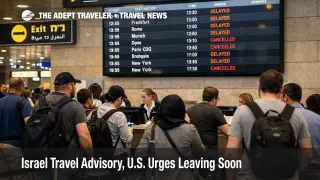
U.S. officials are signaling a tighter risk posture for Israel travel, and the practical takeaway is simple, the travel window can shrink fast once airlines start cutting schedules. An Israel travel advisory update on February 27, 2026 authorized the departure of non emergency U.S. government personnel and family members from Mission Israel, and it explicitly notes that travelers may wish to consider leaving while commercial flights are available.
The advisory language also warns that increased regional tensions can cause airlines to cancel or curtail flights into and out of Israel, which matters because cancellations cascade into rebooking scarcity, higher fares, and tighter seat inventory through nearby hubs. If you are already in Israel, this is less about panic and more about timing, the system works until it does not, and the switch can be abrupt.
Israel Travel Advisory Update, What Changed for Travelers
The operational change is the State Department authorization for non emergency personnel departures and the Embassy warning that restrictions on where employees can travel inside Israel, Jerusalem's Old City, and the West Bank can tighten with little or no notice. Even if you are not a government employee, those restrictions are a useful proxy for how quickly movement conditions and access rules can change in specific areas.
The advisory also restates the current risk posture, reconsider travel to Israel and the West Bank due to terrorism and civil unrest, and do not travel to Gaza due to terrorism and armed conflict, with additional "do not travel" geographic bands near certain borders. For travelers, that combination usually translates into more checkpoints, higher disruption odds for day trips, and a higher chance that tour operators, insurers, and corporate travel policies tighten their own rules.
Which Itineraries Are Most Exposed Right Now
Short trips with fixed, non movable commitments are the most exposed, conferences, weddings, cruise or tour joins, and any itinerary where a single missed outbound flight breaks the trip. The second high risk segment is anyone flying on tight schedules out of Ben Gurion International Airport (TLV), especially early morning departures, same day long haul, or connections that rely on a single bank of flights.
Travelers with onward plans that depend on crossing points, day trips into the West Bank, or visits that touch sensitive zones should treat the "movement can be restricted without notice" language as a real planning constraint, not boilerplate. If the trip requires being in a specific neighborhood at a specific time, the exposure is not only the destination, it is the ability to move predictably and leave quickly if conditions tighten.
What Travelers Should Do Now
Travelers already in Israel who can leave without breaking a high stakes obligation should make a decision window while options are still abundant. The best threshold is flight availability and reroute depth, if you can still see multiple viable routings, seats, and departure times for your preferred day, that is the window where you still have leverage.
If you stay, plan like airline capacity can drop with little warning. That means avoiding tight airport arrival buffers, keeping your documentation and contingencies ready, and thinking through what you would do if your carrier cancels and the next available seat is not same day. If your trip purpose cannot tolerate a forced overnight or a multi day reroute, act earlier rather than waiting for a "bigger" signal.
Over the next 24 to 72 hours, monitor two things, the State Department and Embassy security messages for any new geographic restrictions, and airline schedule changes, including reductions, waiver announcements, or sudden flight cancellations. If you want a regional comparison point for how fast U.S. posture can shift under the same Iran linked tension pattern, see Beirut Embassy Drawdown Raises Lebanon Travel Risk.
Why This Risk Can Turn Into Flight Disruption Quickly
The mechanism is airline risk management under fast moving security conditions. Once the perceived risk rises, airlines and airports can face crew positioning issues, insurance and security constraints, and passenger demand spikes in a narrow exit window. That combination tends to produce a familiar pattern, first, schedule trims and selective cancellations, then, rebooking congestion and scarcity, then, knock on impacts in nearby hubs as displaced passengers compete for the same last seats.
Reuters reported the U.S. move as authorization for non emergency personnel departures due to safety risks, and broader reporting has linked it to concern about military conflict risk with Iran. Financial Times also described other governments issuing similar warnings in the region, which can amplify outbound demand, and make availability tighter faster than travelers expect.