

South Pacific Cruise Itinerary Change Scrambles Port Days
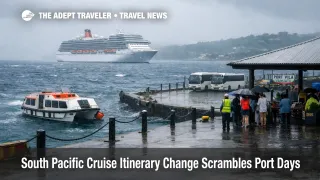
South Pacific cruise itinerary changes are now showing up as day to day schedule moves, not just forecast risk. On an 11 night sailing from Brisbane, Australia, Carnival Luminosa canceled its planned call at Port Vila, Vanuatu, and moved its Fiji call at Lautoka up by a day, a classic weather avoidance swap that can break shore plans and any flights or hotels tied to the original port calendar. Vanuatu officials have linked the cancellation to inclement weather in the area, while regional warnings have highlighted damaging winds, heavy rain, and dangerous seas in parts of Vanuatu during the same window.
South Pacific Cruise Itinerary Changes, What Shifted First
For this specific sailing, the key operational change is sequencing. Carnival Luminosa's planned Port Vila call on February 26, 2026, was dropped, and the ship replaced the next day's scheduled sea day with an earlier arrival into Lautoka, Fiji, according to passenger communication described in cruise reporting. If the remaining ports hold, the practical takeaway is that the same destinations can still happen, but on different days and sometimes with different arrival windows, which is where pre booked excursions, ferry style day tours, and private transfers tend to fail.
This matters because Port Vila and Lautoka tours are often sold as day specific, capacity limited products. When a ship swaps days, operators may not be able to restaff, retime tenders, or honor third party reservations, especially on short notice. Even when the cruise line refunds ship sold excursions, independent bookings can become a claims and cancellation policy problem, not an automatic refund.
Which South Pacific Cruisers Are Most Exposed
The most exposed travelers are those who built fixed timing around the original itinerary. That includes anyone who booked flights into or out of Brisbane tightly around embarkation or disembarkation, anyone holding non refundable hotels in Brisbane to match the original return morning, and anyone who booked private shore excursions in Port Vila that require a specific docking day.
A second group at risk is travelers with "stacked" plans, for example cruise plus an onward island hop, a wedding, a dive liveaboard, or a timed event in Fiji or New Caledonia. When one port drops and a later port shifts earlier, the ship may protect overall itinerary safety and comfort, but your personal calendar can take the hit.
What Travelers Should Do Now
First, treat the cruise line app and onboard bulletins as the single source of truth for the next 24 to 72 hours, then re confirm every third party component against the updated day and time. If you booked excursions through the cruise line, check whether they are being held for a possible later call, or canceled and refunded, because some lines will keep reservations "alive" in case the ship can safely return to the missed port later.
Second, set a decision threshold for flight positioning. If your embarkation requires same day flying into Brisbane, arriving at least one day early is the cleanest hedge during active South Pacific weather, because a delay cascade can hit both flights and the ship's schedule. If you are disembarking and flying home the same day, widen your airport buffer, and favor later departures where possible, because an overnight schedule adjustment can move arrival timing, customs timing, and baggage timing in ways that are not visible until the ship is back alongside.
Third, monitor official weather and sea state warnings for the island groups on your route, not just generic forecasts. The safety limiter for cruise calls is often swell and wind that makes docking or tendering unsafe, even when the system is not a named cyclone. In late February 2026, Vanuatu warnings have specifically referenced very rough seas and heavy swells in affected areas, which is exactly the condition that forces port cancellations and day swaps.
Why Storm Avoidance Reshapes Port Order So Fast
Cruise itinerary changes in the South Pacific propagate quickly because many ports are tender sensitive and exposed to open water swell. Even moderate shifts in wind direction and wave period can shut down safe tender operations, and the ship has limited "make up" options because it still must manage fuel, crew work limits, daylight arrival constraints, and the distance between island groups.
First order effects are straightforward, a missed call, a swapped day at sea, and reshuffled tour start times. Second order effects are where the real cost shows up, misaligned flights in gateway cities like Brisbane, more last minute hotel changes, and a scramble for replacement tours in ports that still happen, because demand bunches into fewer available days and operators are already booked.
Sources
- Carnival Luminosa Shifts Itinerary to Steer Clear of Developing Storm
- Cruise Visit Update, Carnival Luminosa, Port Vila Cancellation
- TC Warning Number 6 on Tropical Cyclone URMIL
- Warnings, VMGD
- Vanuatu province given all clear as Cyclone Urmil moves slowly away
- 11 Day Fiji and South Pacific Cruise, Carnival Luminosa
- Queensland Flood Risk Rises, Tropical Low Watch
- Australia Entry Requirements For Tourists 2025 2026