

Southwest Assigned Seating Tweaks Target Bin Space
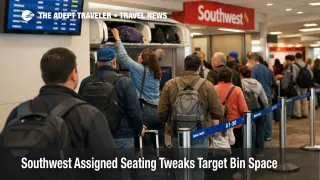
Southwest assigned seating changes are already being adjusted after a rough first month, with the airline telling customers it will refine how boarding groups work to improve overhead bin availability near assigned seats. The airline has also tied the fix to hardware, larger overhead bins that it says can hold up to 50 percent more bags, with at least 70 percent of the fleet slated for the upgrade by the end of 2026. Assigned seating began on January 27, 2026, ending the airline's long running open seating model, and the early feedback has focused on families getting split up and on bin space becoming a scramble even for travelers who paid for premium seat options.
Southwest Assigned Seating Changes: What Is Being Refined
The immediate change is not a rollback of assigned seats, it is a boarding logic tweak aimed at matching bin access to seat assignments. In a customer letter reported by The Dallas Morning News, Southwest's Tony Roach said the airline is refining the boarding group process so travelers are more likely to find overhead space close to where they are seated, while still protecting fast boarding and deplaning.
Southwest is also leaning on a clearer premium promise. The airline says it will add new signage that reserves overhead space for customers who bought premium seat options that include extra legroom and dedicated bin space, which is meant to reduce conflicts between assigned seating and first come bin behavior.
Which Southwest Travelers Feel This First
Families and groups feel this first because assigned seating turns a boarding pass into an expectation, and the failure mode is visible when parents and kids end up separated. If seat assignments are changed after booking, or if a family books late and the system cannot keep seats together, the "assigned" label can create more friction at the gate and onboard than open seating did.
Frequent flyers and business travelers feel it in a different way. When overhead space runs out near an assigned seat, the traveler cost is time, extra aisle congestion, and the risk of a forced gate check that can break a tight connection. That is why Southwest is focusing its refinement language on "near your seat," not just "more bin space."
Dallas Love Field Airport (DAL) travelers should also expect the first weeks of any process change to show up as longer boarding dwell times on some flights, especially on peak business routes, because bin placement behavior is one of the fastest ways to slow the aisle down.
What To Do Before Your Next Southwest Flight
If you are traveling with family and you cannot tolerate a split seating outcome, treat seat selection as a risk you need to actively manage. Confirm your seat assignments in the app after any schedule change, aircraft swap, or same day rebooking, and do it again after check in, because those are the moments when seating maps can shift.
If overhead bin access matters to your trip, for example you have a tight connection or medical gear that cannot be checked, your decision threshold should be early boarding rather than hoping for "normal" bin availability. Southwest says Priority Boarding is available starting 24 hours before departure, and it replaced prior products tied to the open seating era, so plan around that window rather than assuming your loyalty tier will automatically solve bin proximity.
If your itinerary is already tight, build margin for the boarding phase itself. A smooth boarding process is one of the few variables that can keep a short connection viable on a busy day, and when it is not smooth, the delays tend to be uneven, not evenly distributed across the day. For a broader view of how small process frictions stack into missed connections, see Flight Delays and Airport Impacts: March 2.
Why Bin Space And Boarding Groups Became The Pressure Point
Open seating worked because passengers self sorted, and the main constraint was boarding order. Assigned seating flips that, it creates an implicit contract that "my seat is mine," but it does not automatically create a matching contract for "my bin space is mine." When bin space is scarce near the front, or when boarding groups do not align with where bags need to go, travelers start backtracking, stopping, and negotiating in the aisle. That is the mechanism that turns a seating change into a reliability and customer experience problem.
Southwest is trying to attack the problem in two layers, process and hardware. The process layer is refining boarding groups and reserving some overhead areas for premium purchasers. The hardware layer is larger bins, including an earlier Southwest media release describing an elevated cabin design direction that includes larger overhead bins on newer aircraft deliveries.
The second order effect is that this is not only about comfort, it is about turn times and network recovery. When boarding takes longer, departure banks get less predictable, crews get pushed closer to duty limits, and misconnect risk rises for travelers who are already navigating congested hubs and constrained schedules. If Southwest's refinements work, the traveler benefit should show up as fewer last minute gate checks, less aisle gridlock, and fewer "assigned seat, no bin" surprises, especially during peak periods.
Sources
- Assigned Seating, Southwest Customer Enhancements
- Southwest Showcases Elevated Aircraft Cabin Design, Southwest Media
- Southwest Airlines Announces Changes To Assigned Seating Process, The Dallas Morning News
- Southwest launches assigned seats, revamped boarding process, The Points Guy
- Southwest Airlines moves to assigned seating, WFAA