

Arran Ferry Cancelled: Troon to Brodick March 3
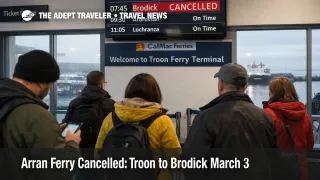
CalMac cancelled the 7:45 a.m. sailing departing Brodick on Tuesday, March 3, 2026, on the Troon to Brodick route, a same day change that can break tight island plans, especially day trips and itineraries chained to rail connections in Ayrshire. In its service updates, CalMac said the cancellation was due to MV Alfred berthing overnight in Troon. For travelers, the practical issue is not just losing one crossing, it is losing the early window that many schedules quietly rely on to make check out, work meetings on the mainland, and onward rail or coach departures realistic.
The nut graf is simple. The Troon to Brodick ferry cancellation on March 3, 2026, removes an early departure that many Arran itineraries treat as the anchor, and that pushes more demand into later sailings, with higher risk of missed connections and last minute ground transport costs.
Troon to Brodick Ferry Cancellation: What Changed
The specific operational change is the loss of the 7:45 a.m. Brodick departure on March 3, 2026, on the Troon to Brodick corridor. If you planned to leave Arran early to reach Troon, then continue by rail through Ayrshire, this is the exact kind of single sailing loss that turns a "normal" connection into a gamble, because you lose your recovery margin before the day even starts.
On the mainland side, the cancellation also matters for travelers arriving into Troon later in the morning and expecting the system to be calm. When an early sailing drops, displaced foot passengers and vehicles often concentrate into fewer departure options, which can create longer waits, fuller standby conditions, and more pressure on taxis at both ends.
Which Arran Itineraries Are Most Exposed
Day trippers are the most exposed group because their plan often has no overnight buffer, and their return trip is time boxed by dinner reservations, timed rail departures, or work obligations. If the first sailing out of Brodick disappears, many day trips stop being a "reliable loop" and become "Arran plus a recovery plan."
Island stays are next, especially travelers checking out of accommodation on Arran and trying to hit fixed mainland commitments. A missed morning ferry can become a forced late check out negotiation, an extra hotel night, or a scramble for a later sailing that may already be absorbing displaced demand.
Vehicle bookings are a separate pain point. When a single departure drops, the knock on effect is not only later arrival, it is the possibility that your preferred vehicle slot is no longer available on the sailing you now need. Even if you can travel as a foot passenger, your car may not move with you without a rebooking conversation.
What Travelers Should Do Now
Start with a connection reality check, because the biggest losses come from stacking tight links. CalMac's own route guidance is explicit about check in expectations: vehicles are expected to check in 30 minutes before departure, and foot passengers 10 minutes before departure. If you were already running a thin margin between a ferry arrival and a train departure, the safer move is to replan around a later rail service, or to protect the mainland leg with extra buffer that assumes the port area can be slower than normal.
Set a decision threshold for rebooking versus waiting. If your mainland plan includes a fixed appointment, a flight, or a prepaid timed entry, treat this as a rebook now event, not a wait and see event. The early sailing being cancelled is a signal that the day's operating plan has already shifted, and that usually raises the odds of follow on congestion as the day fills.
Then choose the most realistic contingency routing. CalMac lists alternatives to reach Arran via Ardrossan to Brodick, and via Claonaig or Tarbert to Lochranza, and it advises travelers to check service status for the latest information. In practice, the best option depends on whether you are traveling with a vehicle, and how time sensitive your mainland connections are. If you pivot to an alternate route, do it early enough that you are not competing for the same shrinking set of vehicle spaces as everyone else.
Finally, monitor the right channels, and do it before you leave home, or before you leave your accommodation. CalMac pushes live updates through its service update channels, and it also offers SMS subscription codes by route for status alerts. The useful habit is to check status again before you start driving to the terminal, and again before you commit to a rail connection on the mainland, because the cost of a late pivot is usually a taxi, a missed train, or an unplanned overnight.
Why One Cancelled Sailing Ripples Into Mainland Connections
The mechanism is simple, and it shows up in almost every island corridor. First order, a sailing is removed, and everyone who was supposed to move in that time window is forced into later departures. Second order, later sailings become more crowded, which can degrade vehicle availability and push foot passengers into longer waits. Third order, the disruption spreads beyond the ferry, because ground transport at both terminals, including taxis and local buses, often scales poorly when demand spikes suddenly.
The Troon to Brodick route also has a built in "connection trap" for foot passengers who are mixing ferry and rail. Even when there is a terminal to station shuttle, the practical reliability of the chain depends on boarding and unloading timing, plus the time it takes to move through the terminal area. When one early sailing cancels, the later arrivals can bunch up, and that is when rail connections start to fail, not because trains stop running, but because the traveler's margin gets eaten by queues, waiting, and last minute changes.
Sources