

FAA Orders Merit Based Pilot Hiring Certification
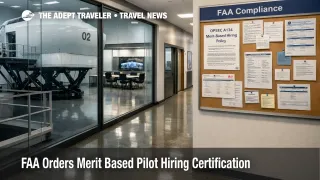
The FAA now requires U.S. airlines to certify that pilot hiring is exclusively merit based, or face potential federal investigation, under a directive dated February 13, 2026. The immediate, real world impact for travelers is likely close to zero because airlines already hire pilots who meet strict licensing, training, and checking requirements, and industry stakeholders say the mandate does not change day to day selection decisions. Where it could matter over time is in how airlines and partner programs talk about, fund, and structure outreach that expands the pilot pipeline, which can influence capacity, schedule reliability, and staffing resilience in a tight labor market.
Merit Based Pilot Hiring Certification: What Changed
The change is procedural and compliance driven. The FAA published Notice N 8900.767 creating a mandatory operations specification, OpSpec A134, that applies to Part 121 certificate holders and requires airlines to ensure pilot hiring is "exclusively merit based." Airlines that do not commit can be subject to federal investigation, per the Department of Transportation's public framing of the mandate.
In practical traveler terms, this is not a new credential, screening step, or document you will see at check in. It is a behind the scenes compliance attestation aimed at how carriers describe and run pilot selection, not at changing the baseline qualifications that already gate who can sit in the cockpit. Stakeholders involved in pilot hiring told Travel Weekly they do not expect airlines to change their hiring standards or outcomes because the system is already built around qualifications and performance gates.
Who Is Most Exposed, and Who Is Not
Most travelers should not expect any near term itinerary impact. Airlines still need qualified pilots, and the path to an airline cockpit is constrained by licensing, hours, training checks, and carrier specific qualification programs. That combination limits how much any airline can deviate from competency based selection, regardless of broader workforce strategy.
The more meaningful exposure is indirect and slow moving, and it sits with anyone traveling on routes and schedules that are already capacity sensitive. If the industry becomes more cautious about how it sponsors, markets, or measures outreach designed to widen the pilot candidate pool, the long run effect could be a smaller pipeline relative to demand, which can show up as fewer frequencies, slower growth, and less recovery slack when irregular operations hit. Boeing's long range outlooks continue to point to large hiring needs, including a substantial North America requirement over the next 20 years, which is why airlines have treated pilot pipeline expansion as an operational priority, not only a branding goal.
This also lands unevenly across the workforce because the current pilot population is still not representative of broader U.S. demographics, especially for women. BLS occupational breakout tables and industry reporting commonly cited in hiring discussions put women in the single digits for aircraft pilots and flight engineers, with other groups also below their share of the general population, though those figures cover working pilots broadly, not only major airline pilots. That gap is the reason many airlines and nonprofits have focused on early stage exposure and scholarship support, which is separate from lowering standards.
What Travelers Should Do Before Departure
For trips already booked, there is nothing to do. Do not expect a new disclosure, a new airport process, or a new reason to change flights based on this policy alone. The traveler relevant signal here is not safety degradation, it is whether pilot staffing and training throughput remains strong enough to support schedules as demand grows.
If you are booking travel where schedule reliability matters more than fare, the decision threshold stays the same as it was before this mandate. Favor earlier departures and avoid last flight of the day itineraries when you have a hard start obligation, because pilot and crew disruptions, regardless of cause, have fewer same day recovery options late in the operating day.
Over the next 24 to 72 hours, the most practical monitoring is not political commentary, it is whether airlines, Airlines for America, and regulators publish clearer implementation timelines and scope boundaries for OpSpec A134. If airlines begin reframing their training academy and scholarship messaging, that is your early indicator of how they plan to keep the candidate pool large while staying compliant. For related FAA system level constraints that can affect schedules, see Chicago O'Hare Summer Flight Cap Planned by FAA and, for deeper context on how FAA constraints ripple into network reliability, see U.S. Air Traffic Control Privatization: Reality Check.
How Pilot Hiring Actually Works, and Why This Likely Changes Little
The key mechanism is that pilot hiring is already bottlenecked by hard qualification gates. To fly for an airline in passenger service, candidates must meet FAA licensing requirements, and then pass carrier training and checking before operating line flights. That structure makes it difficult for any carrier to hire meaningfully outside performance and competency standards, which is why multiple hiring stakeholders told Travel Weekly they see the certification as a compliance statement more than an operational reset.
Where the policy can still matter is in how airlines describe "pipeline building" efforts that happen before hiring decisions. United's 2021 announcement around United Aviate Academy set a public goal about the composition of its student body, paired with a target of training thousands of pilots by 2030, and similar efforts across the industry have relied on partnerships with nonprofits and scholarship programs to widen access to flight training. None of that is the same as changing cockpit standards, but it does shape how many qualified applicants exist years later. If the compliance environment discourages certain kinds of targeted recruitment, it can reduce the size of the future candidate pool unless airlines replace it with broader, economically focused access moves, like need based financing, geographically expanded training capacity, or partnerships that reduce cost barriers without using protected class targets.
Bottom line, travelers should treat this as a policy signal about how the federal government wants airlines to document pilot hiring practices, not as a change that alters who is flying tomorrow. The real travel relevance is second order, and it will show up, if at all, in how quickly airlines can staff growth, and how much slack the system has when disruption hits.
Sources
- New Mandatory OpSpec A134, Merit-Based Pilot Hiring (FAA)
- FAA Notice N 8900.767 PDF (FAA)
- Trump's U.S. Transportation Secretary Sean P. Duffy Doubles Down on Purging DEI From Our Skies (DOT)
- US airlines must certify use of merit-based hiring for pilots (Reuters)
- How airlines are addressing pilot hiring after DEI ban (Travel Weekly)
- United Sets New Diversity Goal: 50% of Students at New Pilot Training Academy To Be Women and People of Color (United)
- Pilot and Technician Outlook 2025 to 2044 (Boeing)
- Employed people by detailed occupation, sex, race, and Hispanic or Latino ethnicity (BLS)