

Colombia Election Border Closure Disrupts Travel
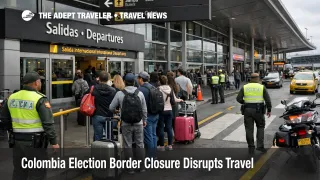
Colombia is tightening movement controls for the March 8, 2026 congressional elections and party primaries, and that matters for anyone trying to cross a land or sea border this weekend. Colombian authorities said land and sea borders will close from 600 p.m. local time on Saturday, March 7, until 600 a.m. local time on Monday, March 9, while the U.S. Embassy in Bogotá warned U.S. citizens that protests, police deployments, and alcohol sale restrictions could disrupt road access and travel facilities across the country. For travelers, the practical message is simple, avoid last minute border moves, build more buffer for airport access, and reconsider nonessential intercity plans during the weekend window.
This is also a security story, not just an election logistics story. The U.S. State Department's current Colombia advisory remains Level 3, Reconsider Travel, due to crime, terrorism, civil unrest, and kidnapping, and it specifically warns that demonstrations can shut roads and highways without notice and interrupt travel within and between cities. That does not mean all travel in Colombia stops this weekend, but it does mean routine disruption can turn into a missed border crossing, a long road delay, or an airport access problem faster than travelers may expect.
Colombia Election Border Closure: What Changed
The new operational fact is the fixed border closure window. Colombia's government said the measure is part of its public order plan for the March 8 vote, and the presidency said the package also includes a temporary alcohol restriction, commonly known as ley seca, tied to election security. The U.S. Embassy then translated that into traveler facing language on March 6, warning that demonstrations are possible nationwide and that road or travel facility closures could follow.
For most travelers, the biggest immediate consequence is not at airports, but at the edges of an itinerary. Anyone planning to enter or leave Colombia by land or sea during the closure window should assume that option is effectively off the table until Monday morning, March 9. Even air travelers who are not crossing an international border overland should factor in slower road movement, extra checkpoints, and possible local transport disruption near terminals, bus stations, and city approaches if protests materialize.
Which Travelers Face the Most Disruption
The most exposed travelers are those trying to make cross border moves into Ecuador, Panama, Brazil, Peru, or neighboring maritime routes during the weekend, because a closed land or sea border removes the fallback option entirely. A second high risk group is travelers with same day airport runs from outlying areas, especially if those plans depend on highways, long taxi transfers, or regional bus links that can be slowed by police deployments or demonstrations.
There is also a wider risk backdrop here. Reuters reported that Colombia is deploying 246,000 military and police personnel to safeguard the vote because authorities fear disruption from illegal armed groups. Separately, the Associated Press reported last week that a U.N. human rights report warned Colombia could revert toward pre 2016 peace deal conditions, with about 94,000 people displaced in 2025, an 85 percent increase, and violence that could undermine the elections. That context does not prove a nationwide travel shutdown, but it does explain why travelers should treat this weekend as a serious movement management problem rather than a routine election day inconvenience.
What Travelers Should Do Now
Travelers already in Colombia should front load movement where possible. If you must reposition before an international flight, do it before Saturday evening rather than gambling on border or road conditions after the closure starts at 6:00 p.m. local time on March 7. If your plan involves a land or sea exit, rework it now around an air itinerary or move before the deadline.
For airport travelers, the right threshold is buffer. Leave earlier than usual for the airport, avoid tight check in and connection assumptions, and do not rely on a just in time transfer from another city. The Embassy specifically advised travelers to build in extra time or reconsider plans, monitor local news, avoid demonstrations, comply with authorities, keep vehicle windows and doors closed and locked, review personal security plans, and consider sheltering in place if routes or airports become inaccessible.
Over the next 24 to 72 hours, watch for three things, whether demonstrations stay localized or spread into major corridors, whether airport access roads remain fluid in the main cities, and whether your carrier or transport provider starts warning about late arrival risk. This weekend is more about access reliability than a formal national aviation shutdown, so the smartest move is to preserve flexibility and avoid itinerary elements that fail if a single road segment closes.
Why the Disruption Spreads Beyond the Border
Election restrictions like this affect travel in layers. The first order effect is obvious, land and sea border crossings stop during the official window. The second order effects are what catch travelers out, road traffic shifts, hotel demand can rise near airports or terminal cities, same day intercity connections get riskier, and police deployments or protests can turn a normally manageable transfer into a missed departure.
Colombia's broader security environment makes those knock on effects more important. The State Department says demonstrations in Colombia can shut down roads and highways without notice and reduce access to public transportation, while also noting that airports and transportation centers can be targets of criminal or terrorist activity. In other words, the Colombia election border closure is not just a border story. It is a weekend network reliability story, where the weak point may be the road to the airport, the missed intercity link, or the border crossing backup plan that no longer exists.
Sources
- Security Alert: 2026 Colombian Elections March 7-9, 2026
- Ley seca y cierre de fronteras: medidas del Gobierno para garantizar normal desarrollo de elecciones del 8 de marzo
- Decreto 0188 del 27 de febrero de 2026
- Colombia Travel Advisory
- Colombians to elect new Congress, choose three presidential candidates
- Human rights situation in Colombia is backsliding, UN warns as nation heads into elections