

Europe EES Border Checks Replace Passport Stamps
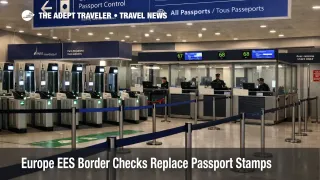
Europe's new biometric border regime is no longer a future concept, it is entering its final phase. The Entry/Exit System, or EES, began rolling out on October 12, 2025, and will be fully operational at all external border crossing points of the 29 European countries using the system on April 10, 2026, when routine passport stamping is replaced by electronic records. For U.S. and other non EU short stay visitors, that means a first Schengen entry is more likely to involve fingerprint capture, a facial image, and a slower border process than the old stamp and wave through model. The main traveler takeaway is simple, Europe is still straightforward for short visits, but first arrivals now need more buffer, and April and early summer are the period when some airports and land crossings could still be smoothing out queues.
The basic legal requirements for most U.S. tourists are not changing on April 10. Americans still travel visa free for short stays, and the separate ETIAS pre travel authorization is not yet live, with the European Union saying it will start in the last quarter of 2026 and that no action is required from travelers right now. That distinction matters, because the April 10 change is about what happens at the border, not a new application U.S. travelers must complete before departure.
Europe EES Border Checks: What Changed
The biggest correction to common traveler chatter is timing. April 10, 2026 is not the day EES starts. It is the day the phased rollout ends, and the day electronic border records fully replace manual stamping across the whole EES area. EU and eu LISA materials say the system has been operating progressively since October 12, 2025, with countries introducing it step by step at different border points during the transition period.
At the border itself, the core process is straightforward. EES registers passport data, entry and exit records, and biometric data for non EU nationals traveling for short stays. On a first entry after enrollment is required at that crossing point, travelers can be asked to provide fingerprints and a facial image. The official EU traveler guidance also says repeat travelers whose data is already in the system should usually move faster because officers can verify existing records rather than create a new one, though data may occasionally need to be collected again.
For background on how the rollout has worked so far, see EU Entry/Exit System begins October 12 with phased rollout and Europe 2025 Travel Rules Tighten Borders And Costs.
Which Travelers Will Feel This Most
The travelers most likely to notice the change are non EU, non EEA short stay visitors arriving at an external Schengen border for the first time under EES, especially at busy long haul airport banks, ferry terminals, and mixed traffic land crossings. The system applies across 29 participating countries, which include 25 EU member states plus Iceland, Norway, Switzerland, and Liechtenstein. It is a border process for outside arrivals, not for moving between Schengen countries once you are already inside.
Families and travelers who are used to building tight onward plans should pay the closest attention. The first order effect is a longer border stop while biometric data is checked or collected. The second order effect is what that delay can break, rail tickets, separate ticket connections, private transfers, timed museum entries, and same day cruise or tour handoffs. That is why the operational risk is less about whether Europe is still accessible, and more about whether your itinerary has enough slack immediately after arrival. EU guidance also says travelers with biometric passports may be able to use self service tools such as kiosks, e gates, or other automated steps where available, which should help, but availability still depends on the specific crossing point.
What Travelers Should Do Before Europe Trips
For trips that begin after April 10, the smart move is to treat the first entry into the Schengen area as a slower control point than it used to be. Keep your passport ready, remove hats or sunglasses if asked for a facial image, and do not build a tight same day connection after an external arrival unless it is on one protected ticket with a generous connection window. The more fragile the onward plan, the more valuable extra buffer becomes.
Do not confuse EES with ETIAS. There is no ETIAS application you need to buy or complete for spring or summer 2026 travel as of now. The official EU position is still that ETIAS starts in the last quarter of 2026, and the bloc will announce the specific date later. Anyone trying to sell an ETIAS for an immediate 2026 Europe trip is ahead of the official timeline.
A basic passport remains the key document, but travelers should make sure it is the same biometric passport they plan to use throughout the trip, because self service options and stored records depend on that identity matching cleanly at the border. If your itinerary starts with a major Schengen gateway and then continues on a separate ticket or train, the best decision threshold is simple, rework the plan if a long border line would cause a domino failure. Europe EES border checks are manageable, but they reward buffer and punish over tight scheduling.
Why Europe Is Dropping Passport Stamps
The policy goal is to digitize short stay border records, automate overstay detection, and expand automated border processing. The European Commission says manual passport stamps do not allow automatic detection of overstayers, while EES is meant to register entries and exits more accurately, reduce identity fraud, and support wider use of self service and automated border control tools. That is the mechanism behind the change, Europe is trading a familiar souvenir stamp for a data driven border record that should be faster on repeat trips once the system settles.
That also explains the likely traveler experience in 2026. First entries may feel slower because travelers are being enrolled into the system. Repeat entries should be more efficient once fingerprints and facial data are already on file, assuming the crossing point has the right equipment and staffing. So the short term reality is more friction at some borders, while the long term bet is smoother repeat processing and more consistent enforcement of the 90 days in 180 rule. For U.S. travelers, the practical message is not "Europe got harder," it is "Europe's border check got more digital, and the first trip under the fully live system may take longer."
Sources
- Entry/Exit System (EES), Travel to Europe
- FAQs about EES, Travel to Europe
- What Is the EES?, Travel to Europe
- Entry/Exit System, European Commission
- EES vs ETIAS: Main Differences To Know for Travellers, European Commission
- European Travel Information and Authorisation System (ETIAS), Travel to Europe
- How the New Digital Borders System Works, European Commission