

Vietnam Jet Fuel Warning Puts April Flights at Risk
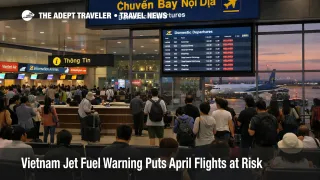
Vietnam is moving from fuel price pressure to a real flight planning problem. Reuters reports the Civil Aviation Authority of Vietnam warned of jet fuel shortage risk from early April, told airlines to review schedules, especially domestic routes, and told airports to prepare extra parking space as import channels from China and Thailand tightened. For travelers, that shifts the problem from abstract market stress to a plausible reduction in published flying, with the biggest exposure on multi city Vietnam trips that depend on domestic lift to reach international gateways or island and leisure stops.
The Vietnam jet fuel shortage now matters because the official warning is no longer just about higher operating costs. It is about whether airlines can keep existing schedules intact into April, and whether travelers should lock in simpler routings before carriers start trimming frequencies.
Vietnam Jet Fuel Shortage: What Changed
What changed is the threshold of the warning. Reuters says the regulator told the transport ministry on March 9 that Vietnamese airlines face jet fuel shortage risk from the beginning of April and the following months, and that airports should prepare more parking space for domestic carriers. That parking instruction matters because it signals officials are planning for the possibility that some aircraft may be grounded or fly less if supply tightens.
The supply problem is also broader than one missing import channel. Reuters reports Vietnam imports more than two thirds of its jet fuel, with about 60 percent previously sourced from China and Thailand, while supplies from Singapore have also eased. In separate documents seen by Reuters, importers Petrolimex and Skypec said they could only guarantee jet fuel supply through March, and Skypec urged the regulator to restrict air transport to essential domestic routes if the shortage drags on.
Which Vietnam Itineraries Are Most Exposed
The highest exposure is on trips that use Vietnam as a domestic network, not a single city stay. Travelers flying into Noi Bai International Airport (HAN), Tan Son Nhat International Airport (SGN), or Da Nang International Airport (DAD) and then connecting onward inside the country are more vulnerable than visitors staying in one gateway city. If airlines are pushed to protect only essential flying, the first stress is likely to show up in thinner domestic frequencies, off peak rotations, and leisure heavy links rather than the most important trunk flights, though Vietnam has not yet published route by route cuts. That last point is an inference from the regulator's warning and Skypec's call to preserve essential domestic routes, not a confirmed airline schedule decision yet.
That matters for real itinerary design. A traveler planning Hanoi, Da Nang, and Ho Chi Minh City, or using a domestic leg to reach a beach or island stay, may suddenly be dealing with fewer daily options, worse recovery after a missed connection, and a higher chance that a fare stays bookable until the carrier trims it later. Even if international long haul service holds up better than domestic flying, reduced feeder capacity can still break the trip by making the gateway transfer less reliable.
What Travelers Should Do Before April
Travelers with April departures should simplify now if the trip depends on multiple domestic segments. The safer move is to favor open jaw or two city plans over four stop loops, leave at least one buffer night before a long haul departure, and avoid same day domestic to international connections unless the airline is ticketing the journey as one protected itinerary. Travelers still early in planning should price the trip both ways, once with the full domestic sequence they wanted, and once with fewer internal flights, then decide how much convenience they are willing to risk for flexibility.
The next decision point is official publication, not rumor. Watch for airline schedule changes, airport notices about reduced frequencies, and government action on emergency supply measures. Vietnam's finance ministry has already proposed cutting the most favored nation import tariff on diesel and aviation fuel to zero through April 30, 2026, a sign that authorities are trying to ease supply stress before it becomes a wider transport problem. Travelers who need Vietnam soon should also keep core planning details current, including documents and route flexibility, and use verified guidance like Vietnam Entry Requirements For Tourists In 2026 and related fuel disruption coverage such as Pakistan Fuel Shortage Warning Hits Travel Planning.
How the Fuel Shortage Could Spread Through Travel
The mechanism is straightforward. If importers cannot secure enough jet fuel, airlines either pay much more, reduce flying, or both. Reuters reports Vietnam's regulator also warned that even if supply stabilizes, high jet fuel prices could make many routes unprofitable, while importers said tighter credit lines are adding financing pressure on top of the physical supply squeeze. That means the problem can spread through the system in two ways at once, fewer liters available, and less economic room to keep marginal flying on sale.
The second order effects are where travelers usually get caught. If one domestic bank is trimmed, hotel sequencing changes, tour days get reshuffled, and the remaining flights become more valuable and less forgiving. Reduced domestic lift can also concentrate passengers into fewer departure windows, which makes reaccommodation harder when weather, maintenance, or airport congestion hits. In other words, the Vietnam jet fuel shortage does not need a dramatic nationwide shutdown to damage itineraries. It only needs enough schedule thinning to remove the slack that normally makes multi city trips work.
Sources
- Vietnam braces for flight cuts from April after China, Thailand ban jet fuel exports, Reuters
- Vietnam airlines may face fuel shortages from April due to Middle East crisis, Reuters
- Price hikes, outlook cuts, What airlines are doing as fuel costs surge, Reuters
- Finance ministry proposes zero import tariff on petroleum amid Middle East tensions, Government News
- Vietnamese, Chinese FMs agree to make new breakthroughs in substantive cooperation, VietnamPlus