

U.S. Airlines See Spring Demand Beat Fuel Shock
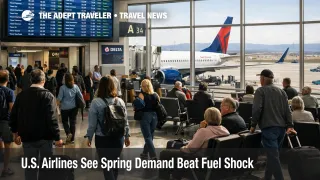
U.S. airline spring demand looks stronger than expected heading into late March, and that is giving carriers more room to absorb at least part of the fuel shock tied to the Iran war. Delta Air Lines and American Airlines both raised first quarter revenue expectations on March 17, 2026, while JetBlue also said demand had strengthened, even with fuel costs up sharply. For travelers, the practical takeaway is that broad demand has not cracked, which makes steep last minute bargains less likely if fuel stays high and airlines keep pushing fares upward.
The change from earlier Iran war coverage is that this is no longer only an airspace, rerouting, and cancellation story. It is now also a pricing power story. Airlines are signaling that demand is strong enough to support fare increases, and Delta's chief executive said the industry had already pushed through two fare increases in the past two weeks. That matters because strong bookings reduce the odds that carriers will simply eat higher fuel costs for long.
U.S. Airline Spring Demand: What Changed
Delta said consumer and corporate demand accelerated into March, raised its first quarter revenue forecast to high single digit growth from an earlier 5 percent to 7 percent range, and kept its earnings outlook in place. The airline also said sales over the past week were up about 25 percent from a year earlier, and that it logged eight of the 10 highest sales days in its history this quarter, including five in March. American Airlines separately said its first quarter revenue is now expected to rise more than 10 percent, above its earlier 7 percent to 10 percent view, while JetBlue said demand strengthened across both peak and off peak periods and across both premium and core cabins.
That combination matters more than a normal upbeat airline conference update because it lands during a genuine cost shock. Reuters reported that jet fuel prices have jumped more than 50 percent since U.S. and Israeli strikes on Iran in late February, with fuel recently trading around $150 to $200 per barrel, versus roughly $100 before the conflict. In other words, airlines are not talking up demand in a benign cost environment. They are doing it while one of their largest expenses is moving sharply against them.
Which Travelers Benefit, and Who May Pay More
Travelers who already booked spring trips may benefit first. If a seat was sold before the sharpest part of the fuel spike, the fare was priced under older assumptions, and the airline usually cannot fully reprice that ticket after the fact. That is why travelers holding existing bookings may be insulated more than people still shopping for late March, April, or early summer trips. This is the same basic timing problem Adept covered in Iran Fuel Spike Threatens Airfares, Not All at Once, but the new airline revenue guidance makes the pressure look more durable.
The travelers most exposed now are people booking close in, travelers who need peak day departures, and passengers shopping constrained hub to hub or long haul itineraries where competition is thinner. Corporate travelers may also find less pricing relief than usual if premium and business demand stays healthy, because Delta said strength was broad based across corporate travel, international routes, premium leisure, and domestic main cabin bookings. The tradeoff is simple, strong demand is good for airline balance sheets and schedule confidence, but it usually weakens the traveler's bargaining position on price.
This also suggests the near term U.S. airfare story may split into two lanes. One lane is operational disruption, where weather, shutdown effects, or airspace problems break itineraries. The other is structural price pressure, where trips still operate, but they cost more. Adept's earlier Travel Costs Rise as Iran War Pushes Up Oil Prices already showed that spring travel inflation was broadening beyond airfare alone. Tuesday's airline updates strengthen the case that aviation demand is not yet weak enough to force widespread discounting.
What Travelers Should Do Now
Travelers who need to book soon should treat timing as the main decision point. If the trip is fixed, especially for school breaks, business travel, weddings, or cruises, waiting for a major fare drop is becoming a weaker bet. Stronger than expected booking trends give airlines more cover to raise prices or hold the line on already higher fares.
Travelers with flexibility should compare trip shapes, not just trip dates. A nonstop may now be worth paying for if it avoids a disrupted or fuel sensitive connection pattern, while a one stop through a crowded hub may save money only on paper if delays, missed connections, or overnight risks increase the real cost. This is especially true during a spring period that is already seeing network strain from weather and staffing pressure at some U.S. airports.
Over the next 24 to 72 hours, watch three things. First, whether more carriers echo Delta and American with stronger revenue or fare commentary. Second, whether airlines add more explicit fuel surcharges or fare increases rather than just talking about pricing discipline. Third, whether oil and jet fuel stay elevated long enough to push the story from a margin issue into a broader consumer airfare issue. If those signals build together, spring travelers should expect fewer real bargains, not more.
Why Demand Is Holding Up Despite Higher Fuel Costs
The mechanism is fairly simple. When travel demand is strong, airlines can recover a portion of higher fuel costs through fare increases, tighter capacity management, and stronger yields in premium cabins and close in bookings. Delta's Ed Bastian said the industry has historically been able to recapture fuel increases with a two to three month lag, and he said Delta had flexibility to cut capacity if fuel prices remain elevated. That means airlines do not need every ticket to rise immediately, they need enough demand strength over time to prevent margins from collapsing.
The first order effect is higher airline operating cost. Reuters reported Delta sees as much as a $400 million increase in fuel costs in March alone, while American also said higher fuel prices had added about $400 million to its first quarter fuel expense versus its earlier assumptions. The second order effect is that stronger airline pricing can spill into the rest of the trip, because more expensive air travel can reshape hotel sequencing, destination choice, same day connection strategy, and even whether travelers shorten trips to protect budgets.
The bigger point is that optimism from airlines does not automatically mean a better deal for travelers. It means the industry believes demand is sturdy enough to keep selling through a difficult cost environment. That is good for schedule resilience and revenue forecasts. It is less good for anyone hoping that the Iran fuel shock would force carriers into broad spring discounting.