

SAS April Flight Cuts Hit Nordic Easter Plans
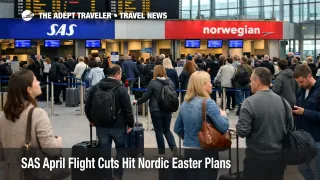
SAS April flight cuts have turned fuel stress into a real Nordic timetable problem just ahead of Easter travel. Reuters reported on March 17 that SAS will cancel about 1,000 flights in April after jet fuel prices doubled in 10 days, and on March 18 Norwegian said it would add 120 extra flights across the Nordic region between March 25 and April 12 as displaced demand rises. For travelers, this is no longer just a fare story. It is now a frequency and reaccommodation story, especially on short haul routes where missing one departure can break the rest of the day.
This is also a meaningful change from earlier coverage of the fuel shock. Until now, many airlines were still treating higher oil and jet fuel costs mainly as a pricing problem. SAS is now among the first European airlines to turn that pressure into published schedule damage, while Norwegian is trying to capture some of the displaced traffic with extra near term flying. That makes Scandinavia one of the clearest European test cases for whether fuel stress stays manageable through higher fares, or spreads into wider timetable cuts.
SAS April Flight Cuts: What Changed
What changed is scale and visibility. SAS normally operates about 800 daily flights, according to its chief executive's comments reported by Reuters, and the airline now expects to cancel roughly 1,000 flights in April after already trimming a couple of hundred in March. SAS has not yet published a full public route by route breakdown in the reporting reviewed here, which means travelers should assume the first pressure point is frequency rather than total market exit, especially on short haul segments with multiple daily departures.
Norwegian's response matters because it creates a temporary relief valve exactly when Easter positioning and school holiday demand start to tighten the system. Reuters said Norwegian will add 120 flights in the Nordic region between March 25 and April 12. That does not fully replace what SAS is removing across all of April, but it does improve the odds of finding seats during the most immediate crunch window, especially for travelers willing to shift departure times, airports, or even carriers.
Which Nordic Itineraries Are Most Exposed
The most exposed trips are the ones that depend on short haul frequency, not necessarily the ones with the longest distance. That includes same day feeder flights into long haul banks, business day returns between Nordic capitals, and Easter leisure trips that rely on a precise chain of air, hotel, and onward ground bookings. When a network carrier cuts frequency instead of shutting an entire corridor, the damage shows up as thinner recovery options. A canceled morning flight hurts more when the next workable seat is late afternoon, or on another airline at a higher fare.
Travelers connecting through Copenhagen, Stockholm, Oslo, and other Nordic hubs should pay close attention to the weak point in their itinerary. The main risk is not only the canceled flight itself. It is the missed long haul departure, the lost first hotel night, the broken cruise or rail handoff, or the need to rebuy a positioning segment at late notice. That is why regional feeders and multi city itineraries are more brittle than simple point to point trips, even if the total distance is shorter. Adept's recent fuel coverage has shown the same pattern in Asia, where domestic and regional links tend to come under pressure before flagship long haul service does.
What Travelers Should Do Before April Travel
If you are flying SAS in April, check whether your route has multiple daily departures and whether your booking is tied to a long haul connection, cruise embarkation, or fixed event. Those are the itineraries where rebooking earlier usually protects more value than waiting for a better option later. Travelers on simple city pairs with several same day alternatives can afford to watch for schedule changes a bit longer, but anyone with a tight chain of onward bookings should start mapping backup flights now.
Norwegian's added flights matter most from March 25 through April 12, so that is the first window to search if your SAS booking changes or if you are planning a Nordic trip around Easter. The tradeoff is straightforward. Waiting may preserve the original ticket if SAS reaccommodates you acceptably, but booking a backup early may save the itinerary when remaining seats tighten. The right choice depends on whether your trip can absorb a late arrival, an overnight stop, or an airport change.
For passengers whose flight is canceled on an EU covered itinerary, EU Regulation 261 generally requires a choice of refund, earliest possible reroute, or reroute at a later date under comparable conditions, and airlines must provide care during long waits where required. That does not guarantee compensation if extraordinary circumstances apply, but it does shape your immediate leverage when a cancellation lands. Over the next 24 to 72 hours, watch for three signals, published route level cuts from SAS, more competitor rescue capacity, and any copycat reductions from other European airlines facing the same fuel shock.
Why Fuel Stress Is Now Spreading Into Schedules
The mechanism is simple, even if the network effects are messy. Reuters reported that the U.S., Israeli war against Iran and the closure of the Strait of Hormuz helped drive a rapid jump in fuel costs, with European jet fuel prices doubling and Asian prices rising almost 80 percent since late February. Fuel is typically one of an airline's largest costs, and SAS had said last year it had not hedged fuel consumption for the following 12 months. That leaves the airline more exposed when a price spike hits quickly.
This is why the Nordic story matters beyond Scandinavia. The first order effect is visible, fewer flights, fewer same day options, and harder reaccommodation. The second order effect is broader, more pressure on rival carriers, tighter Easter inventory, more strain on rail and ferry substitutes, and a greater chance that other European networks start trimming weaker frequencies instead of absorbing the cost through fares alone. In that sense, SAS April flight cuts are not just a local disruption. They are an early signal of what a deeper European fuel shock would look like in traveler terms. Travelers should monitor that risk now, not after more airlines publish cuts.
Sources
- Airline SAS to cancel 1,000 flights in April due to high fuel prices, DI reports
- Norwegian Air adds 120 flights after SAS cancellations
- Global airlines hike fares, cut routes as fuel costs balloon
- Vietnam Flight Cuts Watch Expands Across Asia
- Jet Fuel Shortages Spread as Hormuz Risk Deepens
- Italy Airport Strikes Today, What Travelers Should Do