

Uber Elite Launches in California for Airport Transfers
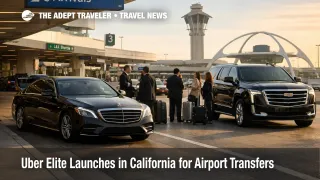
Uber Elite airport transfers are now part of Uber's premium push in California, with the company launching the new chauffeur style product on March 12, 2026 for invite only users in Los Angeles, California, and San Francisco, California. The offer matters most for executives, frequent flyers, and business travelers who care less about the cheapest ride and more about predictable airport pickups, baggage claim assistance, and booked in advance service. For travelers, the practical takeaway is simple, this is not a same day replacement for standard rideshare. It is a reservation first product that needs at least one hour of lead time, and it is aimed at higher end airport and city transfers rather than everyday local rides.
The bigger shift is not just the car class. Uber says Elite trips use commercially licensed professional chauffeurs in luxury vehicles that are less than three years old, and the company has built the product around Reserve, airport meet and greet, special requests, and 24 hour phone support. That pushes Uber closer to a managed chauffeur booking experience inside its app, especially for travelers who already use Uber Black or corporate travel profiles.
Uber Elite Airport Transfers: What Changed
Uber announced Uber Elite on March 12, 2026 as its newest luxury ride experience, initially available by invitation in Los Angeles and San Francisco, with New York City listed as the next launch market and more U.S. and international cities to follow. The company says early access is going first to frequent Uber Black users and Uber for Business clients before a broader rollout to all riders.
What travelers are actually getting is more structured than a normal premium rideshare. Uber says Elite bookings come with professional chauffeurs, luxury class sedans and SUVs, optional in terminal airport meet and greet at baggage claim, bottled water, chargers, mints, hand sanitizing towelettes, and the ability to submit special requests in app. It also says standard pickups include up to 15 minutes of complimentary wait time, while airport pickups include up to 60 minutes.
This is also a booking behavior change. Elite is reservation only, not an on demand tap and go product. Riders must book at least one hour ahead, and can reserve as far as 90 days in advance through Uber Reserve, in the main Uber app, or through Uber for Business delegate booking.
Who Benefits Most From Uber Elite
Uber is clearly targeting travelers whose main pain point is not finding a ride, but reducing friction at the edges of a trip. That includes executives landing into major airports, assistants booking transport for senior staff, travelers arriving with checked bags, and anyone trying to lock in a polished transfer before a meeting, event, or long haul flight. In those cases, baggage claim pickup and longer wait windows matter more than shaving a few dollars off the fare.
The fit is weaker for travelers who need spontaneous flexibility. Because Uber Elite requires advance reservation, it is not the right tool for irregular operations where a flight cancels, lands very early, or reroutes unexpectedly and the traveler does not yet know where or when they will emerge. For those trips, Uber Black, taxis, or standard rideshare may still be the more resilient option. That is an inference from the product's reservation only structure and timed booking rules, not a separate claim from Uber.
It also fits into Uber's broader attempt to control more of the travel journey, not just the ride itself. That makes this launch easier to understand alongside Uber Buying SpotHero, Parking Reservations Coming to App, which showed Uber moving deeper into airport and event trip planning, and Uber Women Drivers Option Goes Nationwide in U.S., which expanded another trip planning control inside the platform.
What Travelers Should Do Before Booking
Travelers considering Uber Elite should treat it like a pre arranged airport transfer, not like a luxury version of ordinary rideshare. Book it when the arrival time is reasonably stable, when checked bags or a formal pickup matters, or when an assistant needs to handle the booking through a business profile. The strongest use case is a known airport arrival, hotel transfer, or meeting run where timing and presentation both matter.
Waiting may make more sense if your trip is still volatile. A traveler facing possible delays, missed connections, or uncertain arrival timing may be better off holding off on Elite until flight plans stabilize, especially because the product is built around advance reservation rather than immediate dispatch. On the other hand, if the goal is reducing uncertainty on an important arrival, reserving earlier is the point of the product.
Over the next few months, the main things to watch are city expansion, pricing transparency, and whether airport meet and greet becomes available consistently at major hubs instead of as a niche add on. Uber has confirmed Los Angeles and San Francisco as the initial invite only markets and says New York City is next, but it has not yet published a full city by city rollout timetable or a public list of airport availability.
Why Uber Is Pushing Further Into Chauffeur Service
The mechanism here is straightforward. Uber already had premium products, but Uber Elite moves further into traditional chauffeur territory by combining licensed drivers, newer luxury vehicles, airport handoff service, and corporate delegate booking inside one reservation flow. That matters because airport transfers are one of the highest friction parts of a trip, especially after a long haul arrival, when the traveler is tired, carrying luggage, and less tolerant of pickup confusion.
The first order effect is a cleaner premium transfer option in cities where Uber has the fleet partners to support it. The second order effect is that Uber becomes more competitive with black car and hotel arranged transfer services, particularly for corporate programs that want bookings, support, and trip management inside one platform. Bloomberg Law reported Uber is partnering with fleet companies that employ chauffeurs and cited vehicle examples including Cadillac Escalade, Lucid Air, and Lincoln Navigator, which reinforces that this is a fleet backed service model, not just a relabeled peer to peer ride.
The tradeoff is that this kind of service scales more slowly than mainstream rideshare. It depends on licensed chauffeur supply, compliant fleet partners, and airport process coordination. So while Uber is signaling a larger premium travel ambition, travelers should not assume Uber Elite will appear quickly in every airport market just because the product now exists.