

AmaSofia Returns March 29 After Rhine Engine Failure
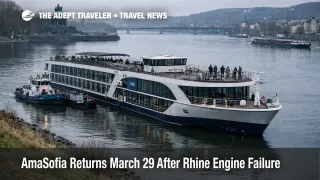
AmaSofia is now scheduled to resume cruising on March 29, 2026 after the AmaWaterways ship lost power on two of its three engines during its inaugural Rhine sailing and had to be towed to Koblenz, Germany. That shifts this story from a live breakdown into a recovery test for a brand new vessel, with the most immediate impact falling on guests booked on the canceled or substituted March 22 departure and on travelers who were planning to sail the ship in the final days of March. The disruption appears ship specific, not a broader Rhine navigation problem. Travelers with near term AmaSofia bookings should verify the assigned vessel, routing, hotel components, and transfer details before departure.
AmaSofia March 29 Restart: What Changed
The key change is that AmaWaterways is no longer trying to salvage the inaugural sailing itself. After the March 18 propulsion failure, the line disembarked passengers from that first voyage, sent the ship back for repairs, and began reworking later departures instead of presenting the issue as a short onboard delay. Travel trade reporting said the March 22 sailing would not operate on AmaSofia itself, while AmaWaterways continued selling March 29 departures on the ship's Rhine program.
That matters because the traveler question has changed. Earlier in the week, the issue was whether repairs in Koblenz could preserve the inaugural itinerary. Now the practical issue is whether the AmaSofia March 29 restart holds, whether substituted guests are still getting a workable vacation, and whether the line's recovery plan protects cabin category, transfers, and pre and post cruise timing closely enough for booked travelers to proceed without changing flights or hotels. The March 29 date is therefore less a routine sailing and more a readiness signal for the ship's near term Rhine season.
Which AmaWaterways Guests Face the Most Disruption
The hardest hit group is the passengers originally booked on the March 22 departure. Public reporting says some displaced guests were moved to other AmaWaterways ships, including nearby Rhine vessels, while other guests were offered alternate routing and hotel arrangements rather than the originally booked AmaSofia itinerary. That is better than a simple cancellation with no substitute, but it still changes the product in meaningful ways because river cruising depends on ship, route sequence, docking pattern, and scenic timing, not just the fact that a vacation still takes place somewhere in Europe.
The second group to watch is anyone booked on the AmaSofia March 29 restart or on the next few departures after that. A brand new ship returning from an unscheduled repair window can operate normally, but travelers should treat the first post repair sailing as more exposed to timing changes, last minute vessel swaps, and minor itinerary adjustments than a settled mid season departure. Travelers with tight independent rail tickets, nonrefundable hotel nights, or same day flights at the end of the cruise have more exposure than travelers using line packaged transfers and flexible air. In an earlier Adept Traveler article, AmaSofia Rhine Engine Failure Hits Inaugural Cruise the core risk was described as ship specific rather than a river wide shutdown, and that still looks right.
What Travelers Should Do Before AmaSofia Sailings
Booked guests should confirm four things before leaving home. First, verify the actual operating ship name, not just the booking number. Second, confirm embarkation city, hotel night, and transfer instructions, especially if you were originally on the March 22 sailing. Third, check whether your flight and hotel cancellation windows are still open. Fourth, ask whether any route elements have changed, particularly scenic Rhine Gorge timing or any shift to a different itinerary pattern. Those checks matter more than the published brochure sequence right now.
For the AmaSofia March 29 restart itself, the best threshold is simple. Proceed if AmaWaterways confirms the ship, routing, and embarkation plan in writing, and your trip can absorb normal river cruise flexibility. Push for alternatives if the sailing depends on one exact ship experience, mobility accommodations tied to a particular cabin layout, or tightly chained independent arrangements that leave little room for a transfer or hotel change. River cruising usually breaks first at the edges of the trip, airport transfers, rail links, overnight hotels, and timed shore plans, before it fails as a total vacation. Travelers who want a broader planning baseline can compare the structure of this product with Adept Traveler's River Cruise page.
Why the AmaSofia Breakdown Still Matters
The confirmed mechanism remains straightforward. Around 4:00 a.m. local time on March 18, AmaSofia lost power on its port side engine and then its starboard engine, leaving only the bow engine operating. The crew chose to anchor and await assistance rather than continue toward the Rhine Gorge under degraded propulsion. That was an operationally conservative decision in a busy corridor, and it helped contain the event to one ship rather than turning it into a larger navigation problem.
What happens next is less about the original failure than about confidence in the recovery chain. First order, travelers need the ship to return to service without another interruption. Second order, they need proof that vessel substitutions, hotel nights, and transfer protection are being handled cleanly enough that a Rhine vacation does not unravel at the connection points. There is no sign in current reporting that low water or a broader Rhine operating problem caused this event, and Adept's European River Cruise Water Levels, Week Of March 23, 2026 points to pressure points elsewhere rather than a systemwide Rhine shutdown. For now, AmaSofia March 29 restart should be read as a near term ship recovery story, not a wider Europe river cruise warning.