

CDC Dengue Notice Flags 16 Travel Destinations
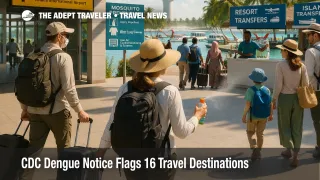
The CDC updated its Global Dengue travel health notice on March 23, 2026, keeping the alert at Level 1, Practice Usual Precautions, but flagging 16 countries where travelers may face increased dengue risk. The change matters most for spring and summer trips to tropical and subtropical destinations, and for itineraries that rely on open air transfers, beach stays, island resorts, or older lodging without strong mosquito controls. This is not a no travel warning. It is a signal that dengue exposure is running above normal in specific places, and that travelers should treat bite prevention as a core part of the trip, not an optional add on.
CDC Dengue Travel Notice: What Changed
The updated CDC dengue travel notice says the agency is seeing either higher than usual local dengue activity, or a higher than expected number of dengue cases among U.S. travelers returning from 16 countries: Afghanistan, Bangladesh, Bolivia, Colombia, Cook Islands, Cuba, Guyana, Maldives, Mali, Mauritania, New Caledonia, Pakistan, Samoa, Sudan, Timor Leste, and Vietnam. CDC's advice is straightforward, use an EPA registered insect repellent, wear long sleeves and long pants outdoors, and sleep in an air conditioned room or a room with window screens.
The operational significance is moderate, not extreme. A Level 1 notice is the lowest CDC travel health notice level, so this does not mean travelers should cancel routine trips. It does mean the baseline planning assumption has shifted. Travelers should now expect dengue risk to be part of normal trip prep in these destinations, especially in lower elevation urban zones, resort areas, and places where mosquito exposure rises around dawn, dusk, rainfall, standing water, or weak indoor climate control.
Which Travelers Face the Most Dengue Risk
The travelers with the highest practical exposure are not necessarily the ones staying the longest. Short leisure trips can still create meaningful risk when the trip includes outdoor dining, boat transfers, beach resorts, jungle excursions, or guesthouses with open windows and limited screening. Visiting friends and relatives travel can also raise exposure because travelers often stay in residential settings rather than tightly controlled hotel environments. CDC notes that anyone who lives in or travels to an area with dengue risk can be infected.
The medical downside is the reason this update deserves attention even at Level 1. CDC says dengue symptoms can include fever, headache, nausea, vomiting, rash, muscle and joint pain, and minor bleeding. Severe dengue can escalate within hours and may lead to hemorrhage, shock, organ failure, and death. That is a bigger travel problem than a routine mosquito nuisance because it can turn into hospitalization abroad, insurance complications, delayed return flights, and a hard to diagnose illness after travelers get home.
One widely shared claim needs correction here. The dengue vaccine is not a general pre trip option for most U.S. travelers. CDC says there are no dengue vaccines currently approved for use in U.S. travelers who are visiting, but not living in, dengue endemic areas. In the United States, Dengvaxia is recommended only for certain children ages 9 to 16 with laboratory confirmed prior dengue infection who live in endemic U.S. areas.
What Travelers Should Do Now
For trips that are already booked, the immediate move is not cancellation. It is upgrading pre departure preparation. Pack repellent before leaving, not after arrival. Favor rooms with sealed windows, screens, or strong air conditioning. Rework excursions that depend on dawn or dusk exposure if you know you will be outdoors for long stretches. Families traveling with young children, pregnant travelers, and older adults should be stricter about hotel choice and exposure windows, because a casual resort setup can quickly become the weak point in the itinerary.
The next decision point is lodging and daily movement. Rebook or upgrade if your current property is heavily open air, lacks window screens, or has poor cooling. Wait and monitor if your trip is centered on better controlled urban hotels with limited outdoor exposure. For island and beach itineraries such as the Maldives, Cook Islands, Samoa, or parts of the Caribbean, the tradeoff is obvious, premium indoor control may cost more, but it reduces the part of the trip most likely to create mosquito exposure.
After travel, do not dismiss a sudden fever as jet lag or a generic travel bug. CDC says dengue illness can take up to two weeks to develop, with illness generally lasting less than a week. Travelers who develop fever, severe headache, vomiting, rash, or unusual bleeding after returning from a risk area should seek medical advice quickly and mention the destination. Fast recognition matters because severe dengue can worsen rapidly.
Why This Is Happening, and What Comes Next
CDC describes dengue as a year round risk in many parts of the world, with outbreaks commonly occurring every two to five years. The agency's current notice is built partly on ArboNET traveler surveillance, which compares current traveler cases against historical patterns by country and month. In plain language, CDC is not just reacting to headlines abroad. It is also watching whether more U.S. travelers are returning sick than would normally be expected for that destination and season.
That matters for travelers because dengue risk is dynamic, not fixed. CDC's broader dengue guidance says almost half of the world's population lives in areas with dengue risk, and mosquito exposure is usually concentrated below 6,500 feet. So the next likely shift is not a single all clear moment. Instead, the list of flagged destinations can change as case numbers, seasonality, rainfall, local mosquito conditions, and traveler surveillance data move. Travelers headed to any dengue prone destination should check the CDC destination page again shortly before departure, even if their country is not on the current 16 country list.