

United A321XLR, Coastliner Add Premium Seats
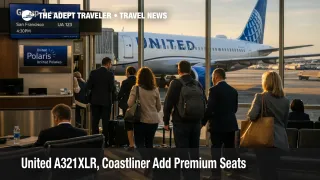
United premium narrowbody seats are becoming a bigger booking variable after the airline unveiled two new Airbus subfleets on March 24, 2026, the long range A321XLR and the domestic A321neo "Coastliner." For travelers, the shift is not just about nicer seats. It changes which United narrowbody flights will have lie flat Polaris suites, premium economy, lounge access on some domestic routes, and fewer total seats than the older Boeing 757s they replace. The short version is that aircraft type now matters more on United than it did before, especially on Newark and West Coast transcontinental flying, and on thinner international routes where the A321XLR will start replacing 757 service later this year.
United Premium Narrowbody Seats: What Changed
The headline change is a 100 aircraft premium narrowbody plan split between 50 A321XLRs and 50 A321neo Coastliners, with the first aircraft from both subfleets due to enter service this summer. United says the Coastliner will fly only between its West Coast hubs in San Francisco and Los Angeles and Newark and New York, while the A321XLR will take over some existing international Boeing 757 routes before opening additional destinations in Europe and South America. By early 2028, United expects 40 Coastliners and 28 A321XLRs in service.
The cabin mix is the real product story. The Coastliner will have 20 lie flat Polaris seats, 12 Premium Plus seats, and 129 economy seats, for a total of 161 seats. The A321XLR will also have 32 premium seats, including Polaris suites with privacy doors, and United says those aircraft will be its most premium narrowbody international jets, with a snack bar in the rear economy cabin as well. United built both products to replace and expand on parts of its Boeing 757 fleet, which typically has about 16 business class seats on the routes being targeted now.
Which Travelers Benefit Most From The New Fleet
The biggest winners are premium transcontinental travelers, long haul travelers on thinner international routes, and anyone using miles or elite status on routes where cabin density directly affects upgrade odds. On Coastliner routes, United is effectively bringing a widebody style Polaris experience to domestic narrowbody flying, and for the first time those domestic Polaris passengers will also get access to United Polaris lounges. That makes the product more relevant for travelers connecting onward to Asia or Europe through Newark, or for business travelers who already compare premium transcon products across United, Delta, and American.
Internationally, the A321XLR matters because it lets United fly long, thinner routes with a smaller aircraft while still keeping a meaningful premium cabin. That can support more selective Europe and South America growth without committing a larger widebody to every market. It also means travelers should expect product variability to tighten around aircraft assignment. A route that used to mean a 757 with an older premium cabin may soon mean a much better business class seat, but only on the flights actually operated by the new subfleet. In an earlier Adept Traveler article, American Flagship Suites Rollout On More Planes In 2026, the same core traveler lesson showed up on the competitor side too: premium seat rollouts expand choice, but only if the aircraft assignment holds.
What Travelers Should Do Before Booking
Treat aircraft type as part of the fare, not a minor technical detail. If you are booking San Francisco or Los Angeles to the New York area on United later this year or in 2027, check whether the flight is scheduled on a Coastliner rather than a standard narrowbody. On international routes that still show a 757 today, watch for the A321XLR swap, because that will be the strongest signal that the onboard product has materially improved. If your trip is long enough that sleep, lounge access, or premium economy makes a real difference, a flexible fare can be worth paying for.
Inside the final 72 hours before departure, the decision threshold is simple. If the aircraft type changes and the seat map loses the premium layout you booked for, decide quickly whether the itinerary or the cabin matters more. On these small premium subfleets, early swaps and uneven rollout are normal. Waiting too long usually means worse rebooking options, especially on the busiest Newark, San Francisco, and Los Angeles banks. Travelers connecting beyond Newark should be even more careful, because a premium heavy narrowbody can improve the onboard experience while still leaving little slack if a late swap disrupts the day.
United's regional announcement matters in the same way on shorter trips. The new 41 seat CRJ450, due to start this fall from Denver International Airport (DEN) and Chicago O'Hare International Airport (ORD), will add a seven seat first class cabin and a new storage layout in front. That is a niche change, but it gives travelers from smaller cities another reason to verify aircraft type when a regional connection is a big part of the trip value.
Why United Is Doing This, And What Happens Next
United is making a network and revenue bet, not just a cabin refresh. Reuters reported the airline is pushing harder into premium travel even while planning for elevated fuel costs, arguing that premium travelers, corporate accounts, and loyalty members are more resilient when fares rise. A smaller long range aircraft like the A321XLR also gives United more flexibility than a widebody on marginal long haul routes, while the Coastliner lets it push a more premium product into one of the most competitive domestic markets in the country.
The next milestones are close. United says the first Coastliner starts flying this summer, the first A321XLR routes also begin this summer, and the airline's new premium heavy Boeing 787-9 enters international service on April 22 between San Francisco International Airport (SFO) and Singapore Changi Airport (SIN). The likely next phase is uneven but clear: more premium seats on more United flights, more route level variation by aircraft, and more reasons for travelers to check seat maps before assuming one United business or premium economy product is the same as another.