

U.S. TSA Shoes Policy Faces New Security Scrutiny
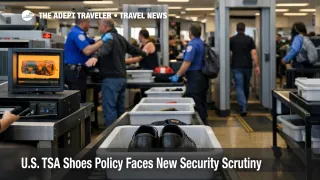
TSA shoes policy is under new scrutiny in the United States after CBS News reported on March 25, 2026, that a classified DHS watchdog audit found serious vulnerabilities in airport screening, including concerns tied to the 2025 decision to let most domestic travelers keep their shoes on. There is no new rule requiring passengers to remove shoes again today, but the report raises a fresh operational question for travelers heading into a busy spring period, whether checkpoint screening is being asked to carry more risk while staffing and throughput are already under pressure. For now, travelers should assume the current shoes-on policy remains in place, but they should also build more buffer for standard screening lanes and watch for any last-minute checkpoint changes or secondary screening delays.
TSA Shoes Policy: What Changed
The immediate change is not at the checkpoint, it is in the oversight picture around the checkpoint. CBS reported that a DHS inspector general audit used red team testing, undercover attempts to move simulated weapons or explosives through screening, and found serious vulnerabilities in TSA procedures. According to that report, one area of concern involved the July 8, 2025 policy shift that allowed domestic passengers to keep their shoes on during screening. TSA still publicly states that passengers traveling through domestic checkpoints can keep shoes on under that policy, so travelers should not assume a nationwide reversal unless the agency says so directly.
What makes this more consequential is the lag in response. CBS reported that the final audit was issued on November 1, 2025, and that DHS and TSA still had not produced the required management decision explaining whether they agree with the findings and what corrective actions they will take. That means the traveler facing system remains in a gray zone, with vulnerabilities identified, no announced policy reversal, and no public sign yet of a completed corrective response.
Which Travelers Face the Most Checkpoint Risk
The highest exposure is not evenly spread across every flyer. Standard screening passengers at large U.S. hubs are the group most likely to feel the practical effect if checkpoint staffing is thin, lane configurations change, or officers rely more heavily on secondary screening to compensate for unresolved vulnerabilities. Travelers using TSA PreCheck still move through a different process, but even that does not eliminate the wider problem if the checkpoint as a whole is understaffed or running slower than normal. TSA's public guidance also makes clear that shoes may still need to come off if additional screening is triggered.
The risk rises further for people on tight domestic departures, short check-in windows, and itineraries that break if the first flight is missed. That includes cruise passengers, travelers with last-flight-of-the-day departures, and anyone connecting onward to timed rail, tours, or nonrefundable hotel arrivals. In an earlier Adept Traveler article, TSA Shutdown Delays Deepen at U.S. Airports the broader checkpoint strain was already clear, and in TSA Quits Push U.S. Airport Lines Higher Before March 27 that pressure had intensified again as the shutdown dragged on.
What Travelers Should Do Now
Do not overreact by expecting a mandatory shoes-off return before your next trip. That is not what has been announced. The smarter move is operational, not symbolic. If you are flying without PreCheck, arrive earlier than you would have before the 2025 rule change, especially at major hubs and during the morning departure bank. If your trip fails when a 20 to 30 minute checkpoint delay turns into 60 minutes, you need more buffer now, not after TSA issues a new bulletin.
The next decision point is whether your itinerary can survive a normal flight day with an abnormal checkpoint. If the answer is no, rebook to an earlier departure, move to a less constrained airport, or protect the trip with extra ground time before embarkation, check-in cutoff, or connection. Waiting may save a schedule change fee, but early adjustment is often cheaper than same-day recovery when later flights are full. That tradeoff is sharper now because the shoes-on scrutiny arrives while checkpoint staffing remains under stress.
Why The Oversight Fight Matters Next
The bigger issue is not really footwear, it is screening design under strain. If red team testing found that a newer screening setup exposed gaps, and if DHS then delayed the formal management decision needed to respond, the system can drift into a bad equilibrium, one where the public facing process looks simpler while the back-end risk picture is less settled. First order, that raises the chance of extra screening, slower queues, or uneven checkpoint practices. Second order, those delays spill into missed departures, weaker same-day reaccommodation, more overnight hotel demand, and higher pressure on alternate airports and ground transport.
What happens next depends on whether DHS and TSA finally issue the overdue management response, and whether Congress or the House Homeland Security Committee forces more detail into public view. Until that happens, travelers should treat the current policy as active, but treat airport security screening as less predictable than the simpler shoes-on experience might suggest. In practice, that means the rule has not changed yet, but the risk math around getting through the checkpoint may have.