

India E-Arrival Card Raises March Entry Risk
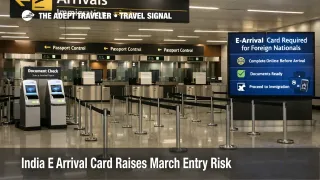
Travelers heading to India now have a narrower margin for error on arrival paperwork. The India e-arrival Card has been available through official government channels since October 2025, and the U.S. State Department says the old paper arrival form will be accepted only until March 2026, while Air India is already telling passengers that foreign nationals must complete the digital form before-arrival. That mismatch in public guidance is the main near term risk. Travelers who wait for an onboard paper card may still get through during the transition, but they are also taking a bet on airline staff, airport practice, and timing at the border that no longer looks smart for late March trips.
India e-arrival Card: What Changed
The operational change is not the existence of the form, it is the end of the paper fallback. The State Department's India page says foreign travelers have had the option to submit an electronic arrival form since October 2025, that it can be filed through the Indian visa website up to 72 hours before travel, and that paper cards continue only until March 2026. India's official visa portal also says foreigners and OCI card holders can submit the e-arrival Card online within 72 hours before-arrival through indianvisaonline.gov.in, boi.gov.in, or the official Indian Visa Su Swagatam app, and it stresses that the form is arrival information, not a visa.
The hard edge for travelers is that carriers and border staff do not need to enforce this transition in exactly the same way to create friction. Air India's passenger documentation page already describes the India Digital Disembarkation form as a pre-arrival requirement for foreign nationals. Even if some airports or airlines still tolerate paper cards during the final transition days, the safer reading is that digital completion has moved from convenience to expected practice.
Which Travelers Need To Care Most Before Departure
This is most relevant for foreign nationals flying into India on short notice, especially tourists and business travelers who are used to handling arrival paperwork in the cabin rather than before departure. It also matters for passengers on complex itineraries, overnight connections, package tours, and premium fares booked through agents, because a document miss at check in can spill into missed long haul segments, hotel changes, and rebook costs. OCI card holders should pay attention too, because India's official visa portal says they can also complete the e-arrival Card online within the same 72 hour window.
The second order problem is inconsistency. When one official source still describes the digital form as an option during the transition, but a major carrier describes it as mandatory, the pressure point shifts to the airport counter. Airline agents tend to enforce the more conservative reading when they are unsure, because boarding a passenger with incomplete documents creates downstream liability. That means the practical risk may show up before departure, not only at immigration in India.
For readers who need the broader visa and document picture, In an earlier Adept Traveler article, India's New E-Arrival Card: What Travelers Need To Know covered the launch phase, and the guide India Entry Requirements And New E Visa remains the best internal reference for the wider entry process.
What Travelers Should Do Before Departure
The safest move is simple. Treat the India e-arrival Card as mandatory now, not as a form you might still be able to fill out on paper later. Complete it through indianvisaonline.gov.in, boi.gov.in, or the official Indian Visa Su Swagatam app within 72 hours before your scheduled arrival, then keep the confirmation available on your phone and as a printed backup. The Indian government portal is clear that the form is separate from a visa, so travelers still need a valid Indian visa or OCI status as required for their trip.
The next decision point is timing. If you are still more than 72 hours from arrival, set a reminder rather than filing too early. If you are inside that window, do it before online check in opens, not while you are already in the airport queue. That reduces the odds of a counter delay, a manual document dispute, or a rushed data entry mistake after a long international connection. Travelers should also carry the same passport used for the visa or eVisa approval, because India's document matching is built around that record.
What to watch over the next few days is not a dramatic policy rewrite, but a quiet enforcement hardening. If Indian authorities publish a final cutoff date inside March 2026, or if more airlines adopt Air India's stricter wording, the remaining paper fallback will stop being something travelers can rely on at all. Until then, the correct play is to behave as though the transition is already over. That is the cleaner way to protect an itinerary, and it keeps your India e-arrival Card from becoming the small paperwork miss that breaks a long haul trip.
Why The Paper Phaseout Can Snarl Arrivals Next
India is moving the same way many destinations have moved, shifting arrival data collection upstream so immigration officers and carriers receive passenger information before the traveler reaches the desk. In principle that should reduce paper handling and shorten processing at busy airports. In practice, transition periods create friction because some travelers still expect cabin crew to distribute forms, some airlines update faster than others, and border practice can vary during the switchover.
That is why this is more than a minor paperwork footnote. First order, unprepared passengers risk slower processing, extra questions, or check in disputes. Second order, the same confusion can back up airline counters, stretch arrival hall queues, and complicate onward domestic flights, prepaid transfers, and first night hotel arrivals if passengers land late. The formal paper cutoff is close, the digital filing window is already defined, and the public guidance is conservative enough that travelers should not wait for the transition to become painful before changing their behavior.