

Hawaii Electric Flights Move Toward Mokulele Launch
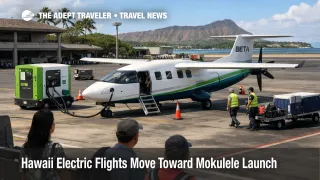
Hawaii electric flights moved from concept toward an actual rollout on March 12, 2026, when Surf Air Mobility and BETA Technologies announced a purchase agreement and launch partnership built around Mokulele Airlines' interisland network. For travelers, the near term change is not a new booking option yet. The first operational step is planned cargo flying in Hawaii, with passenger service still dependent on certification of BETA's passenger configured ALIA aircraft and the buildout of charging and maintenance support. Anyone booking Hawaii interisland travel this year should read this as a structural shift in where short haul aviation may be heading, not as an immediate schedule change.
Hawaii Electric Flights: What Changed
What changed is that Surf Air Mobility, Mokulele's parent company, stopped talking in general terms and made a formal aircraft commitment. BETA said Surf Air placed a firm order for 25 all electric ALIA conventional takeoff and landing aircraft, with options for up to 75 more, and that Hawaii is intended to be the launch market for cargo first, then passenger service. The companies also said Surf Air plans a factory authorized maintenance, repair, and overhaul presence in Hawaii, plus charging equipment deployment at agreed locations. That matters more than a concept rendering, because it ties the Hawaii plan to aircraft orders, infrastructure, maintenance, and an operating airline that already serves short sectors.
The practical limit is still certification. BETA's March 12 announcement says Surf Air expects to start with cargo under Mokulele Airlines in Hawaii, then move into passenger operations only after certification of the passenger aircraft. SFGATE reported Surf Air president Louis Saint-Cyr saying testing of an electric cargo plane could begin within about nine months, with passenger flying hoped for roughly a year and a half later, but that remains a target rather than a guaranteed launch date.
Who Benefits First From Mokulele's Electric Shift
The strongest fit is for short interisland travel where flight times are already brief and airport infrastructure already exists. That is why Hawaii makes sense as an early proving ground. BETA explicitly said Hawaii's short haul routes, inter island demand, and high fuel costs make it a logical launch market, while SFGATE reported Mokulele's average flight length at 51 miles across 10 routes serving nine airports. In operational terms, short sectors reduce range pressure and make quicker turn economics more plausible than they would be on longer mainland regional routes.
Cargo is likely to benefit before passengers do. That is a serious distinction for travelers, because the first order effect may show up in freight, airport operations, and proof of reliability before it shows up in seat maps. Passenger benefits, if the rollout works, would likely be quieter flights, lower direct operating costs over time, and better fit for thin short haul links where fuel burn and maintenance burden matter disproportionately. But travelers should not assume cheaper tickets or broader route maps right away. Early fleets usually arrive in small numbers, certification gates can slip, and new technology tends to enter service on a controlled basis before it scales.
In an earlier Adept Traveler article, Hawaiian Hawaii Airport Renovations Through 2029 the focus was how airport modernization will change gate areas, charging, and passenger flow at Hawaii airports over several years. This new Surf Air and BETA plan points at another layer of change, the aircraft themselves and the support systems they would need around them.
What Travelers Should Do Before Passenger Service Starts
For now, travelers should treat Hawaii electric flights as a watch item, not a booking lever. If you are flying between islands in 2026, book based on today's operating carriers, frequencies, and airport convenience, not on expected electric service. If your trip depends on a specific short hop, especially to smaller airports, the smarter move is to watch for certification milestones, route filing, and published schedules rather than trying to front run the announcement cycle.
There are two decision thresholds worth using. First, do not change a current itinerary until a carrier publishes actual passenger service for sale. Second, once Surf Air or Mokulele begins naming airports, start checking whether the route is replacing an existing turboprop segment, adding frequency, or simply serving cargo first. Those distinctions will determine whether this is a genuine traveler convenience story, a sustainability story with little immediate passenger effect, or eventually both.
Travelers planning niche Hawaii trips that already rely on small plane access should also remember that electric aviation will not erase Hawaii's basic network constraints. As Kalaupapa Saints Tour Reopens Molokai Access shows, some island access remains tightly shaped by small aircraft, permits, limited capacity, and fragile timing. New aircraft technology can improve operating economics, but it does not automatically create abundant inventory or instant flexibility.
Why Hawaii Is a Logical Test Bed, and What Happens Next
The broader mechanism is straightforward. Hawaii's interisland system combines short stage lengths, concentrated airport demand, and some of the cost pressures that make electric aircraft attractive if the technology can hold up in daily operations. BETA said Surf Air wants to combine existing passenger demand and established airport infrastructure to launch commercial electric passenger service in Hawaii, and the companies plan demonstration flights in 2026 while building regulatory and political support.
The state policy backdrop also helps explain why Hawaii is in play. The Hawaii Department of Transportation's Energy Security and Waste Reduction Plan says aviation accounts for 2.5 percent of global greenhouse gas emissions and 23 percent of emissions in Hawaii, excluding military aviation. The same plan frames electrification as a core strategy and identifies future airport infrastructure work tied to electric and hydrogen aircraft. That does not mean Hawaii has promised a fast passenger rollout, but it does mean the state's transport planning is aligned with the kind of airport charging and electrification work early operators would need.
What happens next is more important than the announcement itself. Watch for demonstration flights in 2026, charging equipment deployment, certification progress on BETA's passenger aircraft, and specific statements about which Mokulele operated routes would convert first. If those pieces line up, Hawaii could become one of the earliest U.S. markets to move scheduled electric passenger flying from pilot phase into real commercial use. Until then, the story is best understood as a credible launch path with meaningful execution risk still ahead.
Sources
- BETA Technologies Announces Aircraft Purchase Agreement and Launch Passenger Operations Partnership with Surf Air Mobility
- Hawaii could see electric passenger planes launch by 2027, SFGATE
- Mokulele Airlines' parent company aims to bring electric passenger service to Hawaii, Hawaii News Now
- HDOT releases final energy security and waste reduction plan
- Energy Security and Waste Reduction Plan, Hawaii Department of Transportation